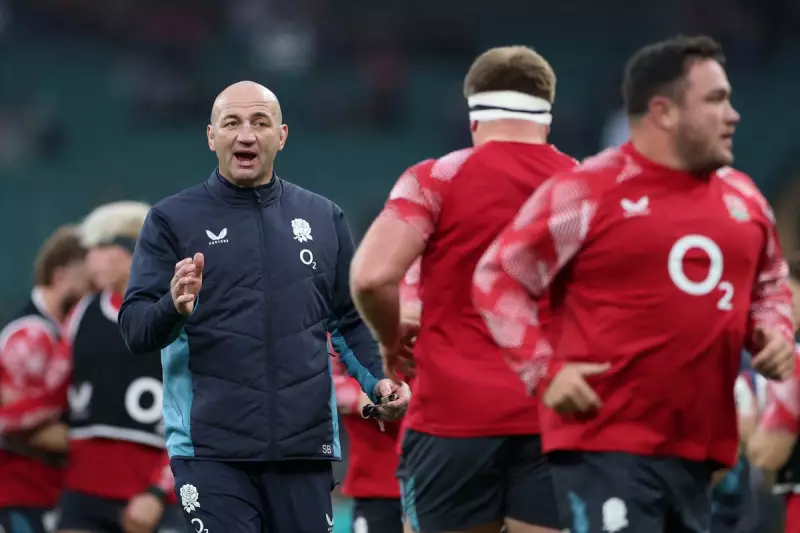
England's national rugby team are setting their sights on a first Six Nations championship triumph since 2020, as head coach Steve Borthwick prepares to announce his squad for the 2026 tournament. The team enters the competition on an impressive run of eleven consecutive victories, a streak that began during the second round of last year's championship, fostering genuine optimism that they can build upon a strong previous year and mount a serious title challenge.
A Demanding Campaign Ahead
The upcoming schedule presents a significant test, with England scheduled for just two home fixtures. They face tricky away trips to Edinburgh and Paris, alongside a meeting in Rome against an Italian side that continues to show marked improvement. The slightly condensed nature of the Six Nations calendar makes the round three clash with Ireland appear particularly pivotal. Despite the recent run of success, Borthwick must navigate a series of injury concerns and complex selection puzzles in several key positions.
Prop Problems Emerge
What appeared to be an area of developing strength following the autumn internationals has instead become a problem position due to a trio of injuries. Will Stuart's ruptured achilles and Asher Opoku-Fordjour's untimely setback leave Borthwick without two of his top three tighthead options. This situation elevates Joe Heyes to a position of critical importance for the campaign. On the loosehead side, Fin Baxter is likely to miss at least the opening fixture as he continues his recovery to full fitness.

The positive news for England is the flying form of Ellis Genge at Bristol, and the prop cupboard is not entirely bare following the retirements of veterans Joe Marler and Dan Cole. Trevor Davison, with his considerable experience and involvement in last summer's Americas tour, is likely to help fill the tighthead void. He could be joined by one of two promising young talents from the same World Cup-winning Under-20s cohort as Opoku-Fordjour: Vilikesa Sela or Afolabi Fasogbon. While Fasogbon is considered further along in his development, he has faced some second-season challenges with a struggling Gloucester side. Both players are highly regarded within the England set-up for their significant potential.
The Midfield Mix
The composition of England's midfield will have a substantial bearing on the overall shape and strategy of the side. Borthwick's squad could include as many as six genuine contenders for starting shirts: Henry Slade, Ollie Lawrence, Seb Atkinson, Fraser Dingwall, Max Ojomoh, and Tommy Freeman. Freeman's development as a centre remains a long-term project, but his recent form for Northampton suggests England might be wise to utilise him in the number 13 shirt he wore against Australia in November. His work-rate, lateral mobility, and defensive decision-making are well-suited to the outside centre channel, although Ollie Lawrence powerfully demonstrated his own strengths in the victory over New Zealand.
Questions remain about the role for veteran Henry Slade, who has been outstanding for Exeter all season. Fraser Dingwall's reliable, glue-like qualities might also be favoured by the coaching team. Max Ojomoh's assured performance against Argentina highlighted his effective blend of distribution skills and carrying power, while the ultra-athletic Seb Atkinson impressed virtually everyone during last July's tour.
Back Three Balance
The potential shift of Tommy Freeman into the centres could simplify selection on the right wing, where Tom Roebuck would be a strong candidate to continue given his prowess as a kick retriever and the heightened importance of the aerial contest in modern rugby. Immanuel Feyi-Waboso also feels like a certain starter. This could leave Henry Arundell pushing for a more peripheral role in the squad.
Elliot Daly should not be ruled out from continuing his prominent involvement, especially with two-back benches becoming fashionable. The left-footed utility back could even feature at full-back. While George Furbank might be the ideal candidate for the number 15 jersey, he has endured a wretched run of injuries. Currently, Marcus Smith appears more likely to wear the full-back shirt than the fly-half jersey. Freddie Steward, through hard work to develop his all-round skillset, remains the incumbent in possession of the position.

Lock Stocks Under Scrutiny
George Martin appears set to miss the entire Six Nations, having not featured for England since February of last year, leaving the squad short of second-row heft. Maro Itoje and Ollie Chessum are firmly established as the preferred locking partnership, and Alex Coles has begun to translate his excellent club form at Northampton into more impactful performances at international level.
Beyond that established trio, the landscape becomes less certain. Chandler Cunningham-South is viewed as a lock option, though he has had limited game time in the position, while Charlie Ewels returned as a steadying presence at the end of November. It is telling that even with Borthwick often employing a bench strategy involving bringing on five forwards together, England's nominal lock replacement has typically been used sparingly. For instance, Ted Hill played just twelve minutes across two appearances in last year's Six Nations, and Cunningham-South's involvement against the All Blacks amounted to a mere three minutes.
World Cup Horizon Looms Large
Borthwick has indicated that his selection focus will now be directed towards players he believes can contribute to the 2027 Rugby World Cup campaign, with time growing tight to integrate experience into the core of that future squad. This philosophy may necessitate some difficult decisions. Elliot Daly received strong backing to make the squad in November, and Henry Slade appears set to extend his contract with Exeter with the specific aim of targeting the global tournament.
Hooker Jamie George has gone a step further, announcing his retirement nearly two years in advance. He remains a top-class set-piece operator and a key leader within the group. The Rugby Football Union's work to repair the talent pathways means promising players seem to be emerging consistently. While it may be too soon for talents like Noah Caluori or Kepu Tuipulotu to supplant more experienced options, the landscape can shift rapidly. This time last year, Henry Pollock was looking ahead to an Under-20s Six Nations, illustrating how quickly fortunes can change in international rugby.