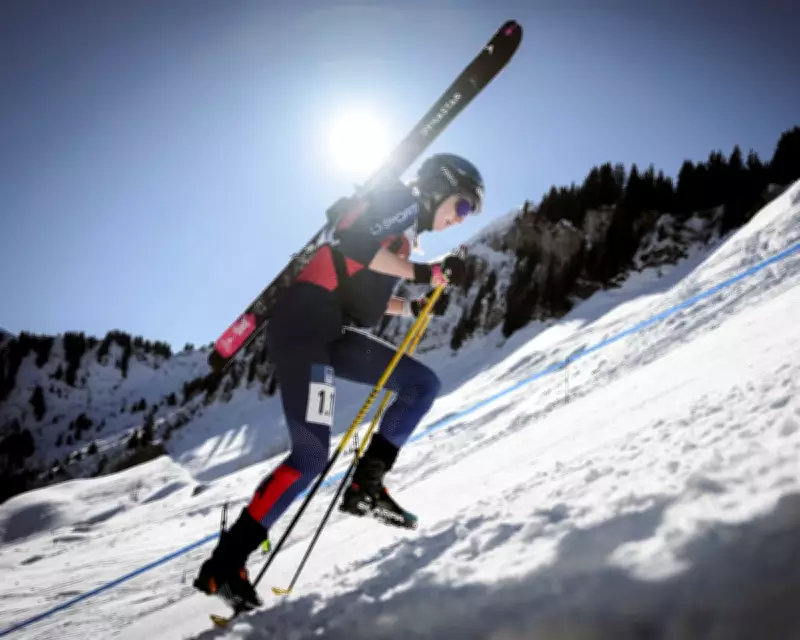
France's Emily Harrop stands as one of the leading figures in ski mountaineering, commonly referred to as skimo, as this exhilarating discipline prepares for its inaugural appearance at the Milano Cortina Winter Olympics in 2026. This sport represents a significant addition to the Olympic roster, blending intense physical endurance with technical precision in a way that captivates both athletes and spectators alike.
Introducing Skimo: The Newest Winter Olympic Sport
The Winter Olympics have never been short of thrilling challenges, from high-speed skeleton races to gravity-defying slopestyle tricks. Yet, the introduction of ski mountaineering introduces a fresh layer of complexity and adventure. This sport uniquely combines the arduous task of ascending a mountain on skis with periods of hiking, followed by a swift and technical descent. It's a test of versatility that pushes competitors to their limits across varied terrains and conditions.
The Evolution from Practicality to Olympic Spectacle
Historically, ski mountaineering originated from practical necessity in the 1800s, before the advent of chairlifts, when skiers had to navigate both uphill and downhill movements across rugged mountain landscapes. While traditional forms like ski touring and backcountry skiing persist, the International Ski Mountaineering Federation (ISMF) has refined the sport into a format suitable for Olympic competition. This modern version emphasises accessibility and viewer engagement, transforming a once niche activity into a globally televised event.

From 19 February, the picturesque northern Italian town of Bormio will host two key skimo events: the sprint and mixed relay races. These on-piste competitions are designed to offer a fast-paced and entertaining showcase of athletic prowess, providing audiences with an intensified glimpse into the sport's core elements. According to ISMF director Ramone Cooper, who has been instrumental in guiding skimo to its Olympic debut, the sport distinguishes itself through specialised equipment and the critical transitions between ascent, boot-packing, and descent phases.
Technical Mastery and Equipment Innovation
Unlike downhill skiing, which relies on sturdy, heavy gear for stability, ski mountaineering demands lightweight equipment to facilitate efficient movement through mountainous environments. A standout feature is the use of "skins"—thin strips of synthetic material attached to ski undersides to provide essential traction during ascents. Athletes ascend with their heels free from bindings, achieving remarkable speeds before transitioning to boot-packing, where they quickly switch to hiking mode by adjusting their boots and stowing skis on their backs.
These transitions are not merely procedural; they are tactically vital. In sprint events, where margins for error are minimal, mastering the shift from skinning to boot-packing and then to descent can make or break a race. The process involves rapid adjustments, such as peeling off skins and locking heels into bindings, all performed under the pressure of competition. This technical complexity adds a strategic depth that sets skimo apart from other winter sports.
Current Standings and Olympic Prospects
As the World Cup season progresses, nations like France, Spain, Italy, and Switzerland have emerged as dominant forces in skimo. French athletes Emily Harrop and Thibault Anselmet have already made their mark by securing victories in recent sprint and mixed relay events, signalling strong potential for Olympic success. With the home crowd in Bormio expected to bolster local competitors, the inaugural Olympic skimo competitions promise to be fiercely contested and emotionally charged.
Adapting to Climate Challenges
Looking beyond Milano Cortina, ski mountaineering faces the pressing issue of climate change, which is reshaping the sport's landscape. Reduced snowfall has prompted the ISMF to innovate, such as hosting events in artificial snow areas and designing courses that start off-snow, with athletes ascending until they reach the snowline. This adaptability highlights skimo's low infrastructure requirements, offering flexibility in an era of environmental uncertainty.

Many skimo athletes, having spent lifetimes traversing glaciers and mountains, are acutely aware of these environmental shifts. As the sport eyes future expansions, possibly at the French Alps 2030 Olympics, it must balance growth ambitions with the realities of a warming planet. The journey of ski mountaineering from a practical mountain activity to an Olympic discipline reflects not only athletic evolution but also a broader narrative of adaptation and resilience in the face of global challenges.