On the sun-baked sand of a Portuguese arena, eight men stand shoulder to shoulder. They are waiting for a bull that can weigh over a tonne, an animal with the power to kill them in an instant. There are no swords, no red capes, no protective armour. Their only defences are raw muscle, sheer nerve, and absolute trust in one another.
The Final, Deadly Act
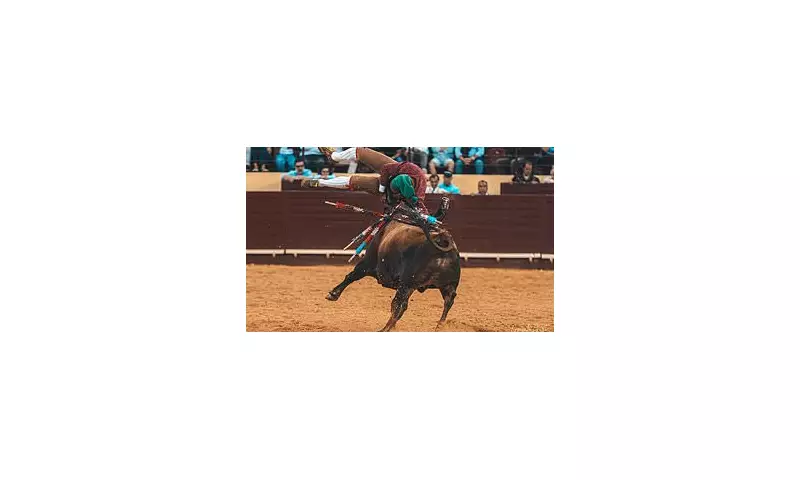
By the time these men, known as forcados, enter the ring, the bull has already been weakened. Barbed spikes have been driven into its shoulders in a ritual designed to drain its strength and heighten its rage. The forcados represent the final act of Portugal's unique version of the bullfight. Their singular, terrifying job is to face the charging bull barehanded and bring it down alive, ending the spectacle without delivering a fatal blow.
When the bull charges, one man, the cabeça or head, steps forward to grab its horns. In a split-second cascade of bodies, the rest of the team leaps in behind him, using their collective weight to wrestle the enraged animal to the ground. For 30-year-old António Cortes Pena Monteiro from Santarém, that moment lasts mere seconds but can irrevocably change a life.

António is one of Portugal's forcados – amateur bullfighters whose fearlessness has led outsiders to label them the country's own 'Suicide Squad'. 'I've seen broken legs and ruptured livers,' he states bluntly. 'A friend nearly died this year. We all know the risks, but we do it out of passion and respect for the bull.'
A Tradition Forged in Tragedy and Camaraderie
The danger they face is chillingly real. In a stark reminder of the stakes, a 22-year-old forcado named Manuel Maria Trindade was killed in August during his debut performance at Lisbon's historic Campo Pequeno arena. Shocking footage from the event shows the young man provoking the bull before attempting to seize its horns. In a horrific instant, the animal hoisted him into the air and threw him against the arena wall.
Such tragedies ripple quickly through Portugal, a sobering testament that this is not mere theatre but a raw confrontation with immense physical force. Each incident becomes woven into the collective memory of the bullfighting community, reinforcing the grave consequence of every entry into the sand.
Despite this, the forcados return. They are not professional showmen but amateurs – builders, students, office workers – who receive only a small fee per show, often barely covering travel costs. They are bound by deep camaraderie and regional pride. 'We're not suicidal,' António insists. 'What we do is art. We're 21st-century gladiators.' Unlike Spanish matadors, they do not kill the bull; their goal is immobilisation so the animal can be led away, though its ultimate fate may still be the slaughterhouse.
For many, the calling is a family legacy. António grew up watching his grandfather and uncle perform and joined their same group at 17. 'It's a legacy,' he explains. 'Many of us are here because of family, or because friends challenged us and we discovered we loved it. Outside the arena, we're just friends who share something unique.' The tradition passes quietly through generations, learned not in formal schools but from the stands and behind the scenes.
Training for a Moment No Rehearsal Can Match
Their preparation is methodical and far from glamorous. During winter, they train with younger cows and in the gym, meticulously analysing video footage to spot flaws in their technique. Training emphasises precision, timing, and seamless teamwork, as even a minor lapse in coordination can lead to catastrophe. Yet, as every forcado knows, no rehearsal can fully simulate the live charge of a full-grown, enraged bull.
'If you're afraid, you don't do it,' says António. 'What we feel is respect—and anxiety, because we want everything to go well. We don't want to make our group look bad.' The risk is inextricably part of the appeal, a test of resolve played out within strict rituals.

This centuries-old practice is not without fierce controversy. Animal-rights activists condemn it as cruelty. António counters, 'How can it be torture when the one who might die is the man? We face the bull eye to eye, and we risk everything for that moment.' Supporters frame it as a test of courage and heritage, while critics debate its place in modern society, ensuring a national debate shadows every season.
For António and hundreds of forcados across Portugal, this brutal, contested tradition remains vibrantly alive. It is an unmistakably Portuguese ritual that, even in the 21st century, continues to demand flesh, courage, and an unwavering bond between eight men standing in the sand.