Winter Olympics Curling Scandal Widens as Britain Faces Double-Touch Allegations
The Winter Olympics curling competition has been engulfed by a major cheating controversy that escalated significantly on Sunday when Britain's men's team was accused of the same infraction that has plagued Canadian curlers over the previous two days. The allegations of double-touching stones after release have created a firestorm of debate about sportsmanship, officiating, and the integrity of one of the Olympics' most traditional winter sports.
Britain Drawn into Growing Controversy
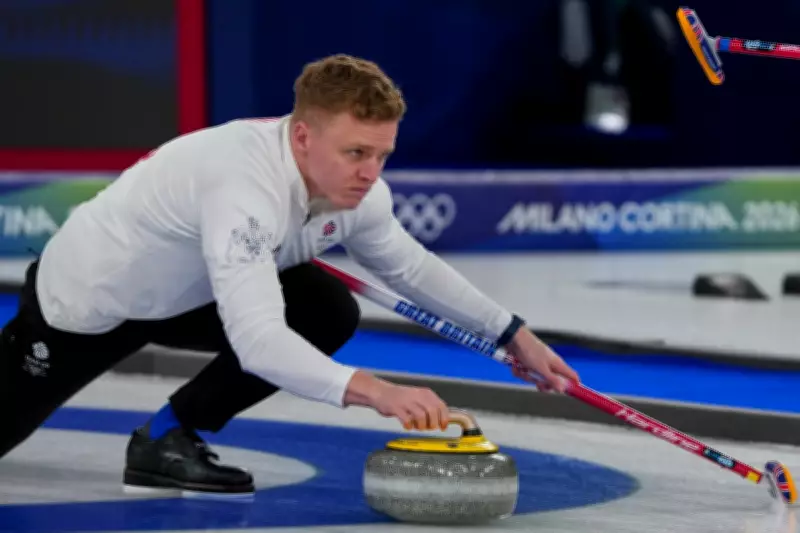
During Britain's round-robin match against Germany on Sunday, officials determined that Scottish curler Bobby Lammie had touched a stone after releasing it down the ice—a violation known as "double-touching" that is strictly prohibited under World Curling rules. The stone was subsequently removed from play, though Britain ultimately won the match 9-4. This marked the first time a non-Canadian team had been formally accused of the infraction during these Games, broadening what had previously been a controversy centered exclusively on Canadian athletes.
Origins of the Scandal
The controversy began on Friday when Swedish curler Oskar Eriksson accused Canadian player Marc Kennedy of breaking the rules by touching a rock again after its initial release. Kennedy responded with an expletive-laden outburst, maintaining his innocence even after video footage from Swedish broadcaster SVT appeared to show a clear double-touch violation. Canada won that match 8-6.

The situation intensified on Saturday when an umpire stopped play during Canada's match against Switzerland to accuse acclaimed skip Rachel Homan of the same infraction. Video evidence again circulated on social media appearing to show the violation, and Canada lost the match 8-7. These incidents have placed Canada—a historic curling powerhouse with one of the sport's most passionate fan bases—in an uncomfortable position, with their mixed doubles team already failing to medal and their women's team facing elimination pressure.
Official Response and Rule Clarification
In response to the growing controversy, World Curling issued a formal statement clarifying the rules: "During forward motion, touching the granite of the stone is not allowed. This will result in the stone being removed from play." The governing body announced it would deploy two officials to monitor the four curling matches during each round but acknowledged it was "not possible" to station umpires at every hog line—the point where stones must be released by hand.
World Curling also confirmed it does not use video replays for reviewing gameplay, a policy that has become central to the debate surrounding these incidents. The organization's response has done little to quell the controversy, with many athletes and observers questioning whether increased surveillance is creating additional pressure on competitors.
Canadian Reactions and Defenses
Canadian curlers have responded defensively to the allegations. When questioned about the footage showing his potential violation, Marc Kennedy stated: "If somebody said to you, 'Hey, do you double-touch all the time?' I honestly, in that split second of a moment, I couldn't even tell you if I do or not." He went further to suggest the scrutiny might represent "premeditated planning to try to catch us" and that opponents had "come up with a plan to catch teams in the act."
Rachel Homan expressed similar frustration, postulating that she was being unfairly targeted because of the controversy on the men's side. "I don't understand the call. I'll never understand it. We've never done that," she insisted. "It has nothing to do with us."
Debate Over Video Replay Implementation
The controversy has sparked significant debate among Olympic curlers about whether the sport should implement video replay technology similar to other major sports. Swedish alternate Johanna Heldin expressed concerns about potential disruptions to gameplay speed, stating: "If they bring that in, I think it probably disrupts the speed of play. We've always been a game that tries to play by the rules and have that high sportsmanship level, so hopefully we can figure that back out."

In contrast, American curlers Tara and Tabitha Peterson voiced support for video replay implementation. Tara Peterson said she'd "absolutely" support the technology, noting "there's instances where an instant replay would be huge," while her sister Tabitha added: "I feel like there's a lot of other sports that do it."
Broader Implications for Curling Culture
The scandal represents a significant departure from curling's traditional culture of quiet camaraderie and sportsmanship. While the sport has faced previous controversies—most notably the sweeping-related "Broomgate" scandal that World Curling addressed last June—allegations of deliberate cheating at the Olympic level strike at the heart of the sport's identity.
The situation is particularly sensitive for Canada, which represents curling's largest market and most successful national program. Canadian athletes are taking the allegations personally, feeling their integrity is being questioned on the global stage of the Olympics—an event that explicitly promotes values of respect and friendship. The developing animosity between Canadian and Swedish teams, who previously maintained respectful rivalries off the ice, represents what many consider a sad development for the curling community.
What Comes Next
Canadian curlers now find themselves in an unfamiliar defensive position midway through the Winter Olympics. Beyond questioning their technique—Kennedy acknowledged "We'll make some adjustments, release-wise, if we have to"—they must scramble to remain in medal contention. Tournament statistics revealed Kennedy had the worst shot success rate among Canada's four players during their loss to Switzerland, a team they were expected to defeat.
All eyes remain on both Canadian and British teams as the competition progresses. Should both Canadian and Swedish men's teams advance to the semifinals, their potential rematch would represent must-see television for both dedicated curling fans and casual Olympic viewers alike. The controversy has undoubtedly raised the stakes for what remains of the curling competition at the 2026 Winter Olympics.