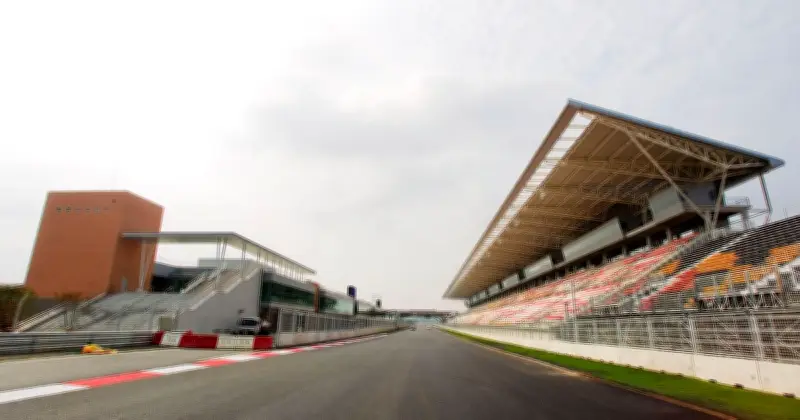
The Korea International Circuit, built at a cost of £300 million, has not hosted a Formula 1 Grand Prix since 2013 and remains off the calendar for a future return. The South Korean venue staged only four F1 races between 2010 and 2013 before being removed from the schedule.
Construction delays and location struggles
The circuit's 2010 debut was a race against time. Heavy rainfall delayed construction, and the track received final approval from the FIA only 10 days before the inaugural race. Location proved an even bigger hurdle, with the venue sitting roughly 200 miles south of the capital, Seoul, in a country without an established F1 fanbase. The 120,000-capacity facility struggled to draw crowds throughout its four-year stint.
The financial and logistical difficulties were so severe that South Jeolla Province official Park Bong-soon later branded the project a "spectacular flop".
Race winners and current use
On the track, Ferrari's Fernando Alonso claimed victory at the wet and chaotic first race in 2010, before Red Bull's Sebastian Vettel dominated the venue, winning three consecutive Grands Prix from 2011 to 2013.
Although the facility is abandoned as far as F1 is concerned, the tarmac has not been left entirely unused. The venue now survives through a mix of domestic motorsport, grassroots events, and public track days. According to the circuit's official schedule, the 2026 KIC Challenge Race brings touring cars, prototypes, and time-trial competitors to the venue, with select rounds still utilising the original Grand Prix layout.
Beyond professional racing
Two-wheeled motorsport also plays a major role. The circuit hosts the Korean World Bike Festival, featuring the All Korea Road Race Championship and the GP7 Asia Challenge for young riders, as well as stunt displays and family events.
Beyond professional racing, the facility has opened its gates to the general public and aspiring racers. Motorcyclists and car owners can book track-day sessions to drive their own vehicles around the shorter permanent layout, while the wider complex regularly hosts karting, educational programmes and private corporate hires. The site also operates as a dedicated driving and riding school, offering structured instruction in braking and car control for up-and-coming racers, as well as specialist training for race officials.