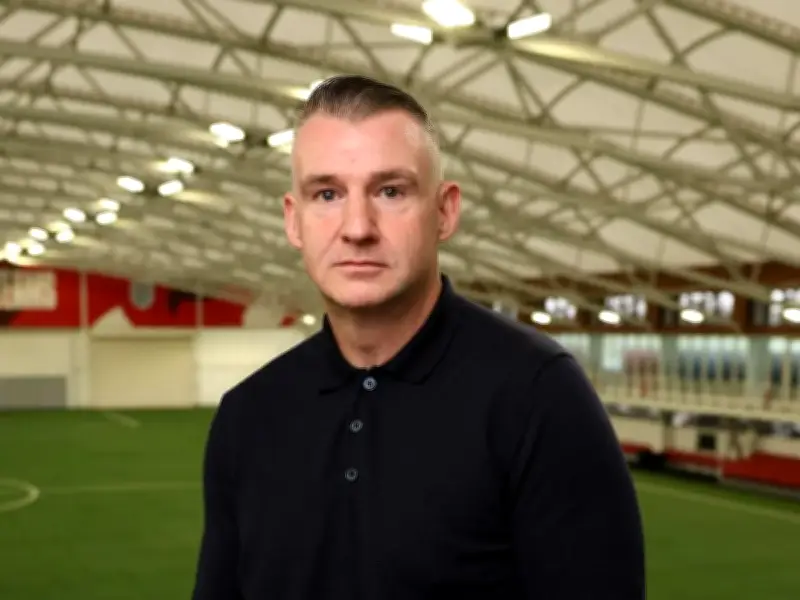
The Welsh Rugby Union has unveiled a new talent and insight department designed to transform how Wales identifies, develops and retains its next generation of rugby players, with technical director Rhys Long saying the country must fundamentally rethink its approach to talent development.
Long's plan comes as Welsh rugby struggles at international level, faces financial and structural challenges in its professional game, and loses promising youngsters to English schools and clubs. His starting point is an admission that the WRU does not have a joined-up understanding of its own players.
Coordinating scattered information
“At the moment, we have lots of conversations about players right across the whole pathway, from an 11-year-old all the way through to a senior international,” Long told WalesOnline. “We have lots of information on all of those players that literally is everywhere. So it's in some people's heads, it's on documents, it's on drives, it's on videos, and none of it is coordinated.”
The WRU is recruiting for the lead role in the new department, a ‘Head of Talent & Insight’ who will identify, retain, discover and develop present and potential professional players for the men’s and women’s game in Wales. The role will be supported by technology to develop living depth charts for players aged 14 and upwards and build an exhaustive record of each individual. The union is also recruiting a dedicated Rugby AI Lead alongside specialists in talent and data analysis, with Argentics (AI) expected to form part of the wider approach.
“Through modern player trajectory modelling, utilising the latest online capabilities, and evidence-led decision-making, the role will continually improve Welsh rugby’s ability to identify, retain, develop and accelerate future professional and international players in unison with our professional clubs,” Long said. “It will provide coaches and executive leaders with the intelligence to make better player and talent decisions.”
Supporting coach judgement
The system is intended to support the assessments of coaches and scouts, not replace them, and help ensure promising players are not overlooked. Long draws on his experience of designing a similar talent and insight programme during his time with the Football Association.
“Our new data scientist and rugby AI lead will combine to build player models, identify emerging talent and changing trajectories, using automated intelligence and develop tools that will strengthen human judgement and decision-making,” he said. “The department will continually monitor technological advances and translate these into practical applications in a way that is uniquely Welsh.”
For a smaller union with limited financial resources, Long believes a more connected approach is essential. “We can't employ 50 scouts to scour the world for all of our talent and who might be Welsh qualified,” he said. “We have to have people who can use tools to help them discover that talent, but also people who've got relationships that connect the whole system together.”
Potential markers over performance
Long wants coaches to look beyond current performances and physical advantages when assessing young players, pointing to the unpredictable development paths of Sam Warburton, Justin Tipuric and Tomas Francis. “What you're looking for is potential markers, not performance markers at 13, 14, 15,” he said. “It's actually their resilience to setbacks. It's some of their ways that they learn and their adaptability to learn and how they take charge of their own career and how diligent they are at their extras.”
The strategy also aims to reduce the loss of knowledge when players move between schools, clubs, academies and representative teams, or when coaches leave their roles. “It doesn't matter if the coach that they've been working with for the last three years leaves the system, we should have information on those players,” Long said. “We need to have really good information when we go into meetings with our pro clubs around their academy players and around their first-team players.”
The plan extends to Welsh-qualified players overseas, including youngsters in England and further afield. Long said Wales should not ignore talent developing outside the country, but insisted identifying exiles cannot replace investment in homegrown players. “I don't think we should be leaving any talent on the table,” he said. “But I am a really passionate believer of talent development in Wales, because ultimately that is the only thing that we can have a say on.”
Countering English interest
Long said he regularly hears from parents whose children have been invited to attend open days across the border, and there is a determination within the WRU not to miss out on the likes of Immanuel Feyi-Waboso and Kepu Tuipulotu in the future. Former England U20s backrower Kane James' decision to play for Wales was a step in the right direction.
“Why are the English private schools coming after all of our talent?” said Long. “Why am I getting daily phone calls from mums and dads saying that their 13-year-olds, their 14-year-olds, their 15-year-olds are being asked to attend English private schools' open days, because we produce really, really good, talented boys and girls? They wouldn't be coming if we didn't. What we're not seeing at the moment is the conversion rate of that talent into our domestic game and our professional game.”
The WRU's longer-term ambition is to agree on what a Welsh player pathway should look like over the next decade, including the characteristics it wants to identify and develop. “What does the game need to look for, for the player that might mature in 2035?” Long said. “We've got to make sure we convert as many of that top talent as we can, to become British Lions, good professional players and good Celtic Challenge players, to allow us to thrive on the international stage.”
Long accepts that the full impact of the strategy will take years to become apparent, although he expects earlier improvements in communication, talent identification and access to specialist coaching. “We are a small nation with a huge amount of talented rugby players,” he said. “If I didn't think we could get back to developing players better than everyone else, I wouldn't be here.”