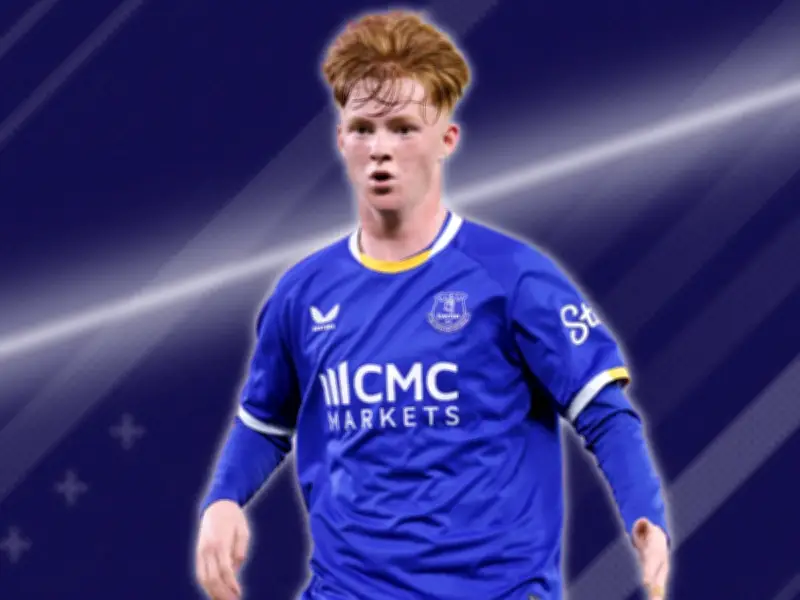
David Hughes, Everton's new head of academy player development, wants to put in place a system that secures a route into the first team for more of the club's youngsters. Hughes, who took on the role in the summer, is still settling into his new job at Finch Farm, where the youth setup has been overhauled in recent months.
While he continues to learn about his players, his ambition is clear. He told the ECHO: "Ultimately, our role is to get players closer to the first team and to get them close to having a career along the development journey."
Examples of academy success
At Everton, Hughes already has examples he can point to, with the club having produced Anthony Gordon, whose summer included a goal in a World Cup semi-final and a move to Barcelona, and teenager Harrison Armstrong, who impressed in the heart of the first team's midfield in the Premier League opener against Crystal Palace on Saturday. They represent the high-point of the academy's achievements in recent years, and the hope is to create a pipeline of talent that pushes for the first team under academy director Dean Rastrick, who was appointed in April.

Hughes, whose most recent job was to manage League Two side Newport County but whose academy career has included stints at clubs including Manchester United, has oversight of the Under-21s and led them out at Goodison Park for the Merseyside derby on Friday.
Derby drama
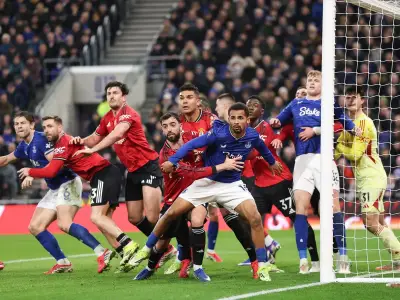
A feisty game finished level but was not without controversy. Amid a flurry of late Everton chances, Liverpool goalkeeper Harvey Davies was sent off, Blues starlet Braiden Graham was shown red for his reaction to a foul by Joe Upton, and Rocco Lambert had a winner disallowed when the referee opted to pull back play for a home free-kick as he connected with a strike that whistled in from the edge of the area.
On the game itself, Hughes was largely pleased. He told the ECHO: "We're proud of the players' efforts, and the identity the team showed during the game was, I think, reflective of what it should be from the club, in how we went about the game without the ball. At times, some of the football we played was high level. And it does, in the dressing room, it does feel like a defeat based around the referee's quick decision to give a free-kick on the edge of the box.
"Ultimately, as we've said to the players, if you keep working at the level that they have been - and the way the intensity of the game and the way the lads have applied themselves, they've trained like that consistently for two, three weeks so it comes as no surprise when the level of the game is at the level it was that the players can thrive in that. So, I'm really, really proud of them."
Match details and player development
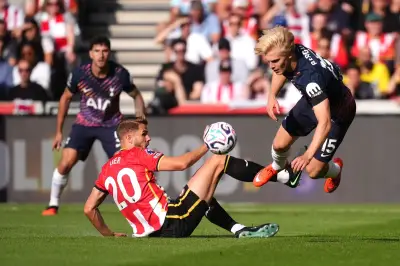
Everton started and finished well. Twice, in the early stages, Ceiran Loney had great opportunities to open the scoring but was denied by Harvey Davies. Will Wright then scored against the run of play only for Jack Patterson to get across his man and finish from a good George Finney cross. After the equaliser the game lost its spark, and the following hour saw the sides cancel each other out, with Melvin Matos' whirlwind performance a highlight for the Blues, though it was Liverpool who created the best chances and came closest to a winner when Jayden Danns was denied by George Pickford in the second half.
Then came the late blitz by Everton as Lambert had his goal chalked off and the arrival of Justin Clarke sparked a flurry of chances and the sending off of Davies, before Graham saw red for his reaction when taken out in the air by Upton. Graham played most of the match on the right, the opposite flank from which he decimated defences last season. When he earned minutes with David Moyes' side this summer he also did it from the left. Hughes explained that call as a decision made because players "have got to be selectable, you've got to try and look at how you can increase exposure and a skill set", but it was notable how Everton became more threatening when he switched flanks.

On Graham, whose development is the most eagerly followed within the academy after two prolific seasons in the U18s then U21s and a senior Northern Ireland call-up, Hughes was tight-lipped over whether the teenager would be sent out on loan. He said: "We're still getting to know the players and getting to know them as people, and what motivates them, and the areas they need to develop. So, as with all the individuals we've got here, we're putting support around them to ensure their career continues to head in a direction that we believe it can, and so we're really pleased with everybody this evening."
Loan decisions and pathway philosophy
Hughes did not go into specifics when asked whether he expected to lose many of his U21s to loan deals before the end of the window. Pickford, Finney, Will Tamen, Eli Campbell and Patterson were among the group that experienced senior football last season, and they, along with Graham and the likes of Harvey Foster, would now probably benefit from continuing that exposure (Graham and Foster - like Finney, Campbell and Malik Olayiwola - had some minutes with Moyes' side in pre-season).
He said: "Everybody's at different stages of the journey. So everybody's path up until this point has been different. What that looks like in the next week, next two weeks will be judged on each individual. So, all we can say tonight is everybody's giving themselves a flag in the sand around what the U21s should look like in terms of being super-competitive, really difficult to play against and then playing with some creativity and some style when we got the ball. So that's how we see it and that's what we're trying to work with the players to try and do."
What Hughes did detail was the principle underpinning the strategy he is implementing at Finch Farm: providing a pathway to first team football. Even for the trouble that has undermined Everton across the years leading up to the takeover by the Friedkin Group, the Blues were still able to draw Gordon and Armstrong from the academy. The hope is that greater stability will allow for more to follow.
Hughes said: "Each individual is at a different stage, so for some of them, it [development] might be about mentality, for some of them it might be about game understanding. For some of them it might be about physical development and for some it generally will be about three or four areas. If we develop the individuals, the team will progress. Ultimately, our role is to get players closer to the first team and to get them close to having a career along the development journey. And so that's our job and within that we've got to perform at a really high level. And we have to perform in a way that we know Everton as a football club expects. And I think that's essential in everything we do."