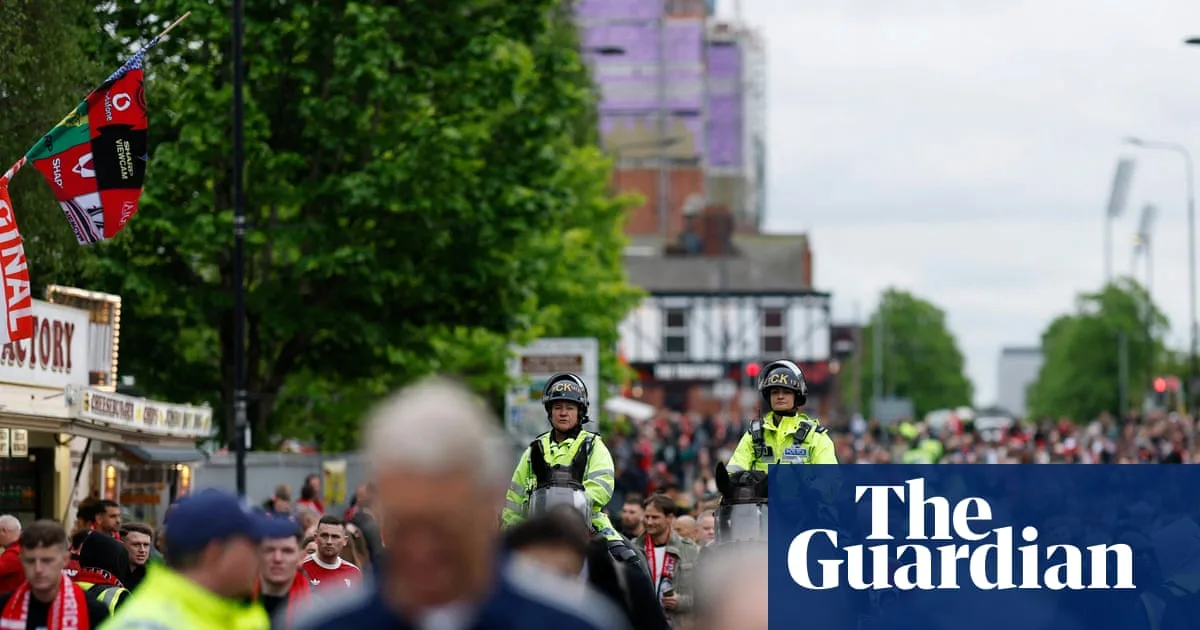
Incidents reported to police at football matches in England and Wales reached record levels last season, according to an annual Home Office report. There was a 4% rise in the number of games featuring football-related anti-social behaviour, violence or disorder, with reports made at 1,644 matches compared with 1,580 in the previous campaign.
Total arrests fell to 1,695, down from 1,744 in 2024-25 and a peak of 2,198 in 2021-22. The figures equate to four arrests or other actions for every 100,000 people attending a men’s match, with the FA Cup the most likely competition to yield an arrest. Across the women’s game, the total number of arrests and actions was four.
The slight overall increase in incidents was largely driven by new data categories. The offence of unauthorised entry was added to the Football Spectators Act 1989, leading to 45 arrests, while reports of sexism and misogyny were logged at 22 matches and violence against women and girls at 37 matches. Hate crime was the most commonly reported incident type, at 491 matches, followed by missile throwing at 359 games and pyrotechnic use at 316.
The number of football banning orders in force rose to 2,460, the highest since 2012, up by 568 on the previous season. Mark Roberts, the lead for football policing in England and Wales, said the report highlighted the need to revisit funding, noting that 46% of arrests and actions took place outside stadiums. “Multibillion-pound football clubs do not have to pay a penny towards the policing outside their grounds,” he said, adding that taxpayers are left with a £70m bill each season.
A Premier League spokesperson said the league and its clubs work closely with police forces to ensure safe environments, investing more than £90m a season in stewarding, security, crime prevention and technology-led pilots in partnership with police and the UK Football Policing Unit. They said this approach helps reduce policing demand, with arrests continuing to fall significantly over the past decade.