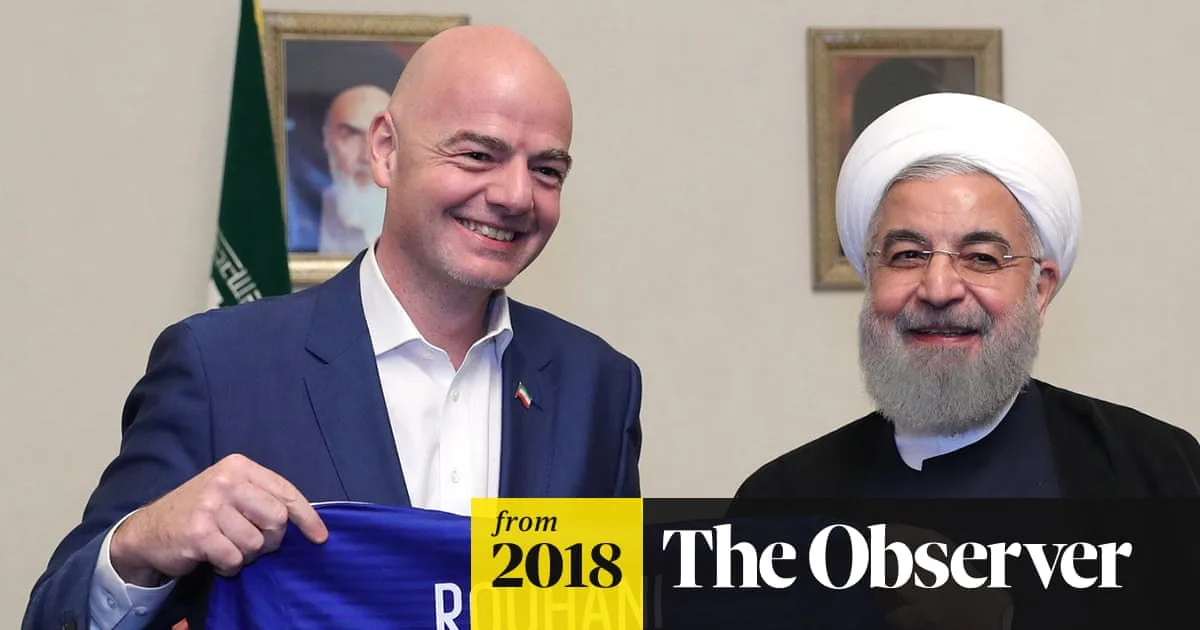
Gianni Infantino, the Fifa president, declared that 'Fifa can always bring a smile' during a week in which 35 women were arrested at the men-only Tehran derby he attended as guest of honour. In Tehran, Infantino expressed happiness with Iran's progress on sexist attitudes, noting there are now 23,000 women football players in Iran. He stated, 'We have some representatives of them here with us today – and they look fantastic.'
Just 24 hours after the arrests, Infantino addressed Fifa’s Conference for Equality and Inclusion in Zurich, where he urged managing expectations. 'We cannot solve all the problems of the world in Fifa. But we can always bring a smile,' he told delegates, raising questions about the organisation's commitment to human rights.
Elsewhere in football, Uefa launched a film to capture the hearts of the next generation of female players, a year after its executive Zbigniew Boniek tweeted that a woman's input is useless. The FA committed to narrowing its 23.2% gender pay gap, blaming the disparity on the fact that 'most high-profile coaching jobs being filled by men,' despite appointing Phil Neville as England women's manager without him applying.
In other news, Hassan al-Thawadi, head of Qatar 2022, told a UN Human Rights Council event that there is 'no legacy more noble than human rights.' Pep Guardiola campaigned for imprisoned Catalan politicians, eight years after he backed Qatar's World Cup bid. Argentina FA executive Hugo Moyano denied money laundering charges, saying 'I have the balls to defend myself.'
Steve Evans left Mansfield for Peterborough, having earlier dismissed speculation. He told his new squad, 'If we don’t get up this season then some Steve Evans-type players will be coming here in the summer.' In Brazil, Campinense president William Simões sacked coach Celso 'Crazy' Teixeira despite good results, claiming 'Not even Jesus Christ could put up with him.'
Cris Martínez of Santos Laguna apologised after breaking four fingers punching a door following a red card. Peruvian referee Gian Pierre Barbagelatta sent off Víctor Rossel for an 'obscene air-humping' celebration, then mimicked the dance to explain his decision.