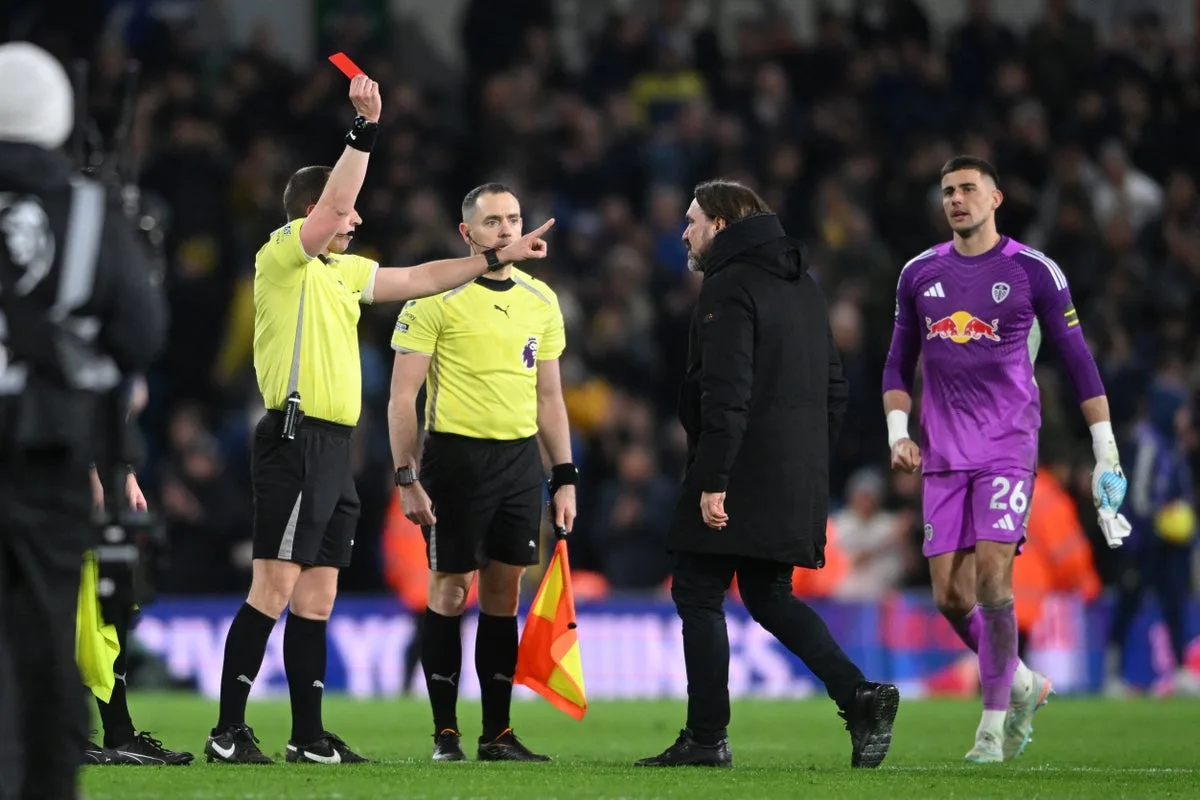
Leeds United manager Daniel Farke has been handed a one-match touchline ban and an £8,000 fine by the Football Association for confronting referee Peter Bankes following his team's recent defeat to Manchester City. The incident occurred after the Premier League match on Saturday, February 28, which ended in a 1-0 loss for Leeds.
Incident Details and FA Sanction
Farke was shown a red card after jogging onto the pitch at full-time to remonstrate with match official Peter Bankes. The Football Association charged him with misconduct for entering the field of play to confront the referee, which contravenes Law 12 of the Laws of the Game. In a statement, the FA confirmed that Farke admitted the charge and accepted the standard penalty, avoiding a potential two-game ban by not contesting it.
Farke's Response and Explanation
The German manager insisted that he did not swear or act aggressively towards Bankes during the confrontation. He attributed the red card to his manner of entering the field, humorously remarking, "I'm not like a butterfly or unbelievably cute when I jog. I have learned my lesson - I will never jog again." Despite his light-hearted comment, Farke decided to accept the suspension to prevent a harsher punishment.
Impact on Upcoming Matches
As a result of the ban, Farke will miss Leeds United's FA Cup fifth-round tie against Norwich this Sunday. He is scheduled to return to the dugout for the Premier League clash with Crystal Palace on March 15. This suspension comes at a critical point in the season, potentially affecting team morale and strategy during a key cup fixture.
Broader Context and Precedents
Touchline bans for managers are not uncommon in football, often resulting from disputes with officials. This incident highlights the ongoing tensions between coaching staff and referees in high-stakes matches. The FA's decision underscores its commitment to enforcing discipline and respect for match officials, aiming to maintain the integrity of the game.
Farke's acceptance of the sanction may set a precedent for other managers facing similar charges, encouraging compliance rather than prolonged appeals. The £8,000 fine adds a financial dimension to the penalty, reflecting the seriousness with which such infractions are viewed by governing bodies.