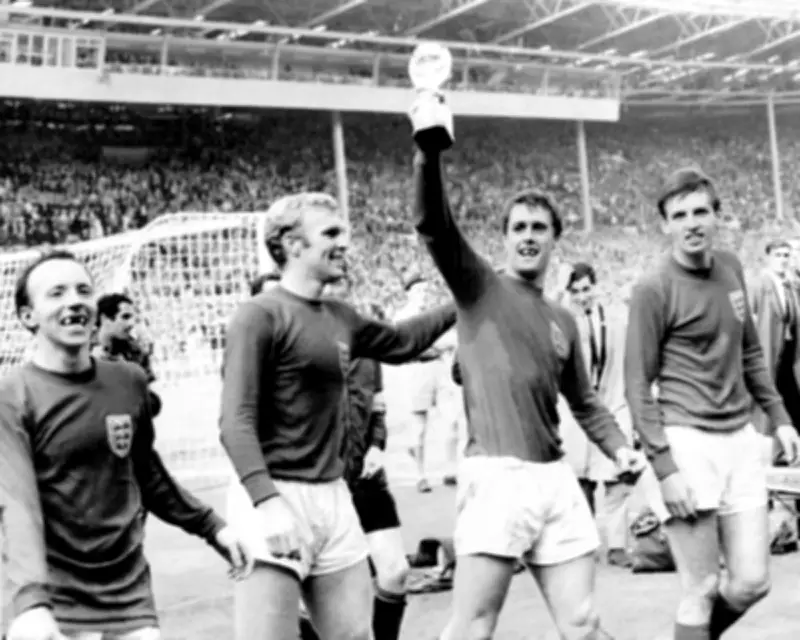
With each passing World Cup, Garry Richardson is reminded of the times he spent with England's 1966 World Cup heroes. He describes them as unaffected by money and fame, unlike today's stars.
A Simpler Era
On 30 July 1966, Richardson watched the final on a tiny black-and-white television at his grandparents' house. The picture kept rolling, and his grandfather talked about fixing the horizontal hold. Thirty years later, Geoff Hurst knocked on his door to rehearse an after-dinner speech, using the settee as a makeshift top table.
Hurst told a story about meeting a fan at Paddington station who said he was in Pentonville prison on the day of the final and felt so happy he smashed up his cell. Richardson had written some of Hurst's script, and he quickly became a natural performer.
Alf Ramsey's Management
Hurst also recalled a moment after a later England match when he told manager Alf Ramsey, "See you next time, Alf." Ramsey replied, "Perhaps, Geoff, perhaps," a comment that reminded Hurst his place wasn't guaranteed. Ramsey's starting salary as England manager was £4,500 a year, rising to £5,000, and he asked the Football Association to help him buy a house.
The After-Dinner Circuit
In the 1980s and beyond, many of the 1966 team supplemented their income by performing at working men's clubs in northern England. Richardson worked with them, interviewing and cueing their anecdotes. One night, he asked Jack Charlton how his brother Bobby was. Jack replied, "Not great. He's now been banned from his local pub. The landlord said he didn't want him there during the happy hour."
Nobby Stiles was a great raconteur. His favourite story involved the quarter-final against Argentina when Ramsey told him to mark Antonio Rattín. After a pause, Stiles said, "Alf, do you want me to mark him for the match or for his entire life?"
Different Times
Richardson recalls that after the final, some players went shopping on Hendon high street because time dragged before the match. The FA arranged a banquet, but wives were not invited, so several players and their wives headed to Danny La Rue's cabaret club. In 1982, Richardson met Ramsey at Liverpool Street station for a BBC interview, describing him as serious and reminiscent of Captain Mainwaring from Dad's Army.
Richardson concludes that those England players were involved in the greatest day in English sport but remained humble and fun to be with, a stark contrast to later football personalities he encountered.