The current international break has intensified the long-standing tension between clubs and national teams, with a wave of high-profile withdrawals and injuries reigniting the debate over player workload.
Club managers have always dreaded the possibility of injuries striking their elite players during international duty, but the increasingly demanding fixture schedule and intensity of modern football have heightened these concerns.
Five England withdrawals spark alarm
Before any football had even been played in this break, a very obvious sign that things had reached a breaking point emerged. Tino Livramento, Kobbie Mainoo, Cole Palmer, Marcus Rashford and Declan Rice all pulled out of the England squad, turning heads and sparking a now-familiar debate.
"When England see five players who need to withdraw when the single most proud moment a player has is to be called up for the national team, you just ask yourself, what's wrong about the industry?" Maheta Molango, the Professional Footballers' Association chief executive, said at the Fifpro performance summit.
"You see people like Cole Palmer, someone who would have played four consecutive summers in a row had he gone to the World Cup, and you wonder why is he missing? He's missing because he's a victim of the calendar and that's something that needs to absolutely trigger the alarm bells."
Injuries galore
One of the main stories of this international break has been Jurgen Klopp starting out as Germany manager. One of the first things he did reflected the strain on players: selecting two 22-man squads. "It's mainly because we have to play four games in two weeks, which is very unusual for the national team," Klopp explained.
While partly done so he could cast an eye over more players, Klopp also recognised the difficulty in asking his players to play four times in quick succession. His first game, a 1-1 draw with the Netherlands, demonstrated it succinctly, with Kai Havertz hobbling off with a hamstring injury.
As if to emphasise the point further, Havertz's Arsenal team-mate Christos Tzolis then also suffered a hamstring strain in Greece's 2-2 draw with the Netherlands last week, while Ezri Konsa also returned to the Gunners early from England duty with a knock.
FIFA decided to swap the normal two-week international break for a three-week one due to the late ending of the World Cup, but also to reduce the amount of travel for players. The issue of burnout is nothing new - former Manchester City star Rodri threatened players would strike over two years ago - but the past few weeks have rammed home the problem.
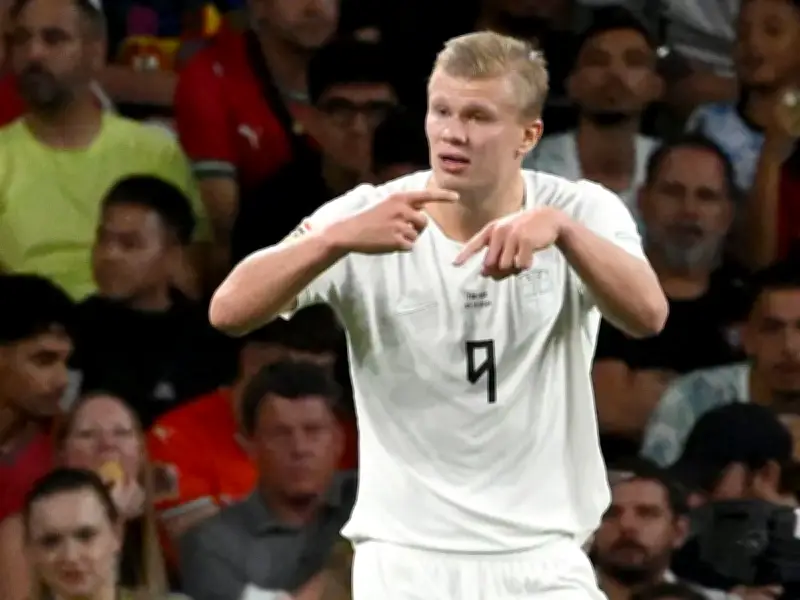
Liverpool duo Alexander Isak and Cody Gakpo returned early from international duty due to injuries, while Jeremy Jacquet was left out of the France squad on Monday night with a hamstring issue. They are all doubts for Liverpool's upcoming game against City on Sunday, along with Erling Haaland, who was substituted for Norway on Sunday, and Nico O'Reilly, who withdrew from the England squad. Manchester United captain Bruno Fernandes, meanwhile, has been playing through pain, according to Portugal boss Jorge Jesus.
'Worrying trend'
Even before the Premier League managers have their say in their pre-match press conferences, the backlash has begun. "Over time, we have seen a worrying trend where the burden on top players has become far too high," Norwegian players' union (NISO) chief Kristoffer Vatshaug said after Haaland's injury.
"We want clearer guidelines for workload and recovery. It is about the time between matches, consecutive rest periods, travel strain and how much time players get to recover after a long season."
Alex Scott perhaps represents the best example of the push and pull elite players are put under. The 23-year-old enjoyed a dream international break, making his England debut before impressing on his first start in the 7-0 thrashing of Croatia. But it turned sour quickly afterwards.
A thigh injury saw the Bournemouth midfield withdraw before Tuesday's final Nations League game against Czech Republic. Worse still, his club made their unhappiness known, given the injury was picked up prior to the Croatia match, which he played anyway.
Thomas Tuchel defended England's approach. "When we were aware there was slight discomfort during the match and asked if he wanted to come off he said no. After the match, he said he could have played 90 minutes and didn't feel an injury," the England manager said. "Even before the scan he didn't feel injured so it's a strange one. There was zero risk taken from our side."
Three-week break to blame?
Tuchel is well aware of the risks to his players, noting on Monday that "new training styles and training times, different positions to play maybe increase the chance of injury." But the England boss is also doubtful that the new three-week break is to blame.
"Is it really more or is it the same amount [of games] as in two shorter little windows? I don't have the answer to that," he said. "The two-week window is not guilty for everything. If it is a thing, we will adapt and make the most of it as always.
"I didn't like the start of it after a long tournament to have a long window. There are also positives to it like we saw against Croatia after having three matches together. The team is together for longer, more training sessions, more meetings, more of the same language. You see improvements and automatisms clicking in. We made it a very good camp."
The Premier League returns this weekend, but it won't be back for long, with a two-week international break looming on November 9. Expect more withdrawals and more injuries.