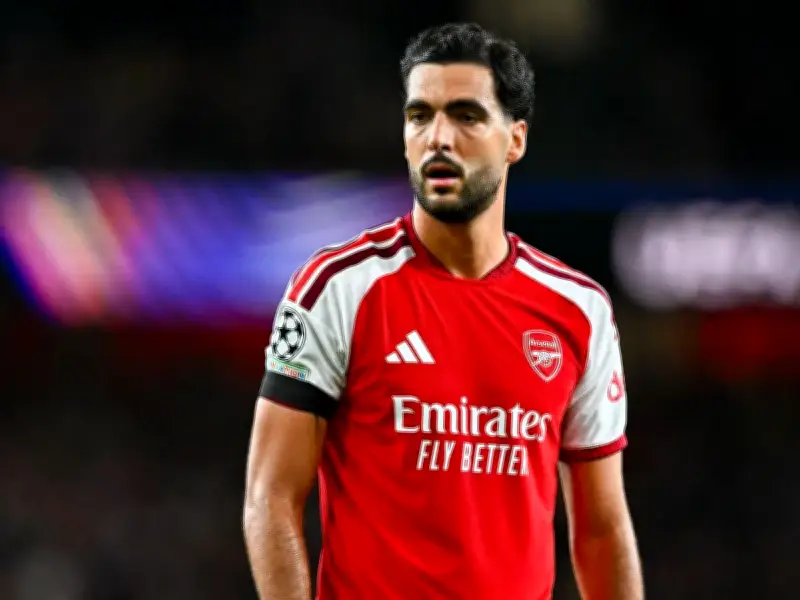
Arsenal midfielder Mikel Merino has said he is "fortunate to be alive" after escaping a near-death experience during his time at Borussia Dortmund. Merino was at Dortmund in April 2017 when their team bus was hit with explosives before a Champions League quarter-final tie against Monaco.
Bus attack recalled
Dortmund were on their way to the Signal Iduna Park when three pipe bombs went off and smashed the windows of their bus. Although there were no fatalities, defender Marc Bartra was one of two injured in the attack. He was taken to hospital where he was diagnosed with a fractured and badly cut wrist.
Merino has now revealed he could have died in the bombing as he was due to sit next to Bartra on the coach. Speaking to The Players' Tribune, Merino said: "I think I have an angel on my shoulder. I'm actually fortunate to be alive at all.
"I was 20 and playing for Dortmund when three pipe bombs went off right next to our bus on the way to a Champions League match. A lot of young people probably would not even believe that it happened, or how bad it was, but it marked us all.
"There was a deafening noise, and then I remember the bus nearly tipping over. I looked behind me and saw blood on the floor. Smoke, screams. I remember being at the hospital later that night, waiting for Marc Bartra, who had his wrist badly cut up."
Seat change saved his life
Merino said the next day he was told that a huge piece of shrapnel was lodged in the headrest of the seat next to Marc. "My usual seat. That day, the seat was empty.
"My legs were feeling a bit tight, and the seats in the front reclined. So I sat up there instead, and it may have saved my life. So yeah, I just have this belief that things happen for a reason."
Injury struggle
Merino added that the incident nine years ago helped him cope with his injury absence for Arsenal last season. The 30-year-old fractured his foot last January and he ended up having two screws inserted into his left foot.
He said: "The specialist who did the scan had never seen a stress fracture in that part of the foot. He'd been doing this for 30 years. He had called five of the best specialists in the world, and none of them had seen it either.
"Nobody knew how my foot would recover, or if it would recover at all. Part of me feared that I would never play football again. I put all the meat on the barbecue, as we say in Spain. They told me they could drill two screws into my foot to give it support. I was like, vamos, put 'em in."