

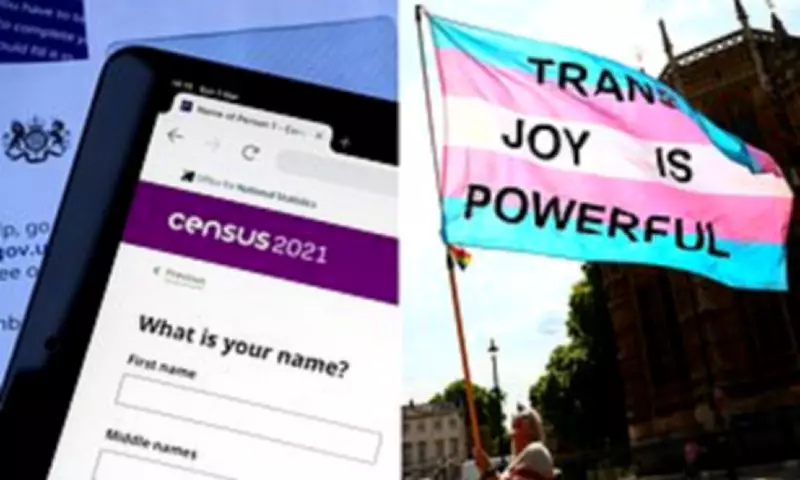
Civil Service Retreats on Census Gender Identity Questioning
Civil servants have reversed course on proposals to include questions about transgender status in the upcoming census. This decision follows significant criticism and data reliability issues stemming from the 2021 census, where ambiguous wording on gender identity led to statistics that were deemed 'unreliable' and substantially inflated the estimated number of transgender individuals residing in England and Wales.
Flawed 2021 Census Question Yields Inaccurate Data
The Office for National Statistics has officially confirmed that it will exclude a gender identity query from next year's census test, which serves as a preliminary trial ahead of the official national census scheduled for 2031. This test will involve approximately 220,000 households across six local authority areas, and the omission marks a notable shift in approach.
Women's rights advocates have welcomed this development, describing it as 'a win for common sense.' Fiona McAnena, representing the sex-based rights charity Sex Matters, expressed relief, stating, 'It still beggars belief that the Office for National Statistics ignored repeated warnings, listened to nobody but trans activists and ploughed on with a gender identity question in the 2021 census. Many people who haven't been steeped in the twisted logic and language of the trans movement were unable to decode the gender identity question.'

Regulatory Findings Highlight Question Misinterpretation
The Office for Statistics Regulations, an independent watchdog, conducted an investigation that revealed non-fluent English speakers frequently misinterpreted the 2021 census question: 'Is the gender you identify with the same as your sex registered at birth?' This confusion resulted in respondents being four times more likely to identify as transgender, skewing the data significantly.
Consequently, the regulator ruled that the statistics indicating 262,000 transgender people in England and Wales must be discarded due to their unreliability. Shadow Cabinet Office minister Mike Wood highlighted the absurdity of the situation, particularly in Newham, London, a constituency with one of the lowest white British populations. He remarked, 'The gender identity question in the previous census was clearly flawed, leading to the ridiculous situation of Newham being the trans capital of the country.'
ONS Cites Timing Issues for Test Exclusion
An ONS spokesman clarified the decision, noting that the new question on gender identity 'is not due to be finalised in time to be incorporated into the test questionnaire.' This explanation underscores the logistical and procedural challenges involved in revising census inquiries, especially after the controversies and inaccuracies observed in the 2021 data collection.
The backtracking by civil servants reflects a broader reassessment of how sensitive demographic information is gathered, with an emphasis on clarity and accuracy to prevent future statistical errors. As preparations for the 2031 census continue, this move signals a more cautious and evidence-based approach to census design, prioritizing reliable data over potentially contentious or confusing questions.






