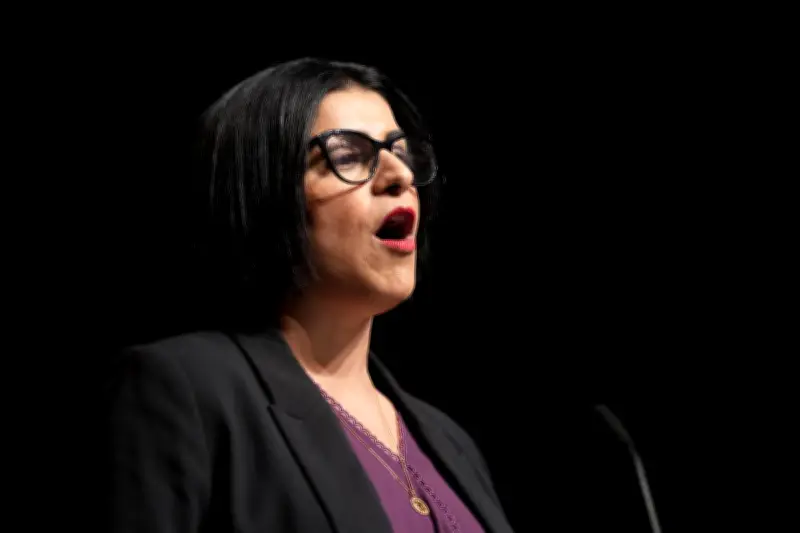
Home Secretary Shabana Mahmood has said that security arrangements for high-profile public figures including politicians and royals will be reviewed urgently.
It comes in the aftermath of the killing of Ann Widdecombe and an alleged terror plot against Reform UK leader Nigel Farage.
Expanded police support
Police support will be expanded to include leaders of political parties who are not MPs, as well as peers, former MPs, former members of the devolved parliaments and political party spokespeople, Ms Mahmood said.
The independent review will be carried out by former national security adviser Sir Stephen Lovegrove, and will look at how existing security is provided and whether funding and measures are being used effectively.
It will build on the work of Sir Robert Buckland, who is conducting a separate review into the murder of Sir David Amess, Ms Mahmood told the Commons.
Widdecombe killing
Reform UK spokeswoman Miss Widdecombe, 78, died on July 8 after being hit over the head with a hammer 21 times at her home in Haytor on Dartmoor, Devon.
Ms Mahmood said: “Those who enter public life do so to serve. Robust debate and criticism are part of the job. Threats, abuse and violence are not.
“An attack on any individual in public life is an attack on every one of us, and it is an attack on democracy itself.
“We owe it to those public servants we have tragically lost, and to everyone who believes in a fair and open country, to ensure those who serve receive the protection they deserve.”
The man accused of murdering Miss Widdecombe, Joshua Kerry, 28, has also been charged with a plot against Mr Farage, trying to gain entry to his south London home on April 19 last year.
Alleged list
Over a period of nearly two years before Miss Widdecombe’s killing, it is alleged Mr Kerry carried out research on several prominent people and institutions.
Others named on a list uncovered during the investigation are said to include Conservative leader Kemi Badenoch, and Reform MPs Richard Tice, Lee Anderson and Robert Jenrick.
Addressing the Commons, Ms Mahmood said that, regardless of the outcome of the investigation into an attempted break-in at Mr Farage’s home, it is “clear there is insufficient protection for those who serve”.
“I can therefore announce today that I will expand, with immediate effect, police support to political figures who are not currently members of Parliament,” she said.
“This will include former members of Parliament, peers, and party spokespeople, giving them access to a named police officer, as well as help with wider security measures.
“Today I also announce an independent root-and-branch review of the protective security provided by the state to those in public life.”
Speaker Sir Lindsay Hoyle said he had not been informed which MPs have been named in the alleged list.
He told the Commons: “I have not been told which members are on the list. I’ve had no information. The only time I know is when members personally contact me, which I find very difficult to help and support.
“It’s much harder when you read it in a newspaper of which MPs have been targeted, and named, and me having no knowledge.
“I think it puts us all at a disadvantage, especially as we give the support of health and wellbeing and for security as well. So I think there is a gap that has not been closed.”