

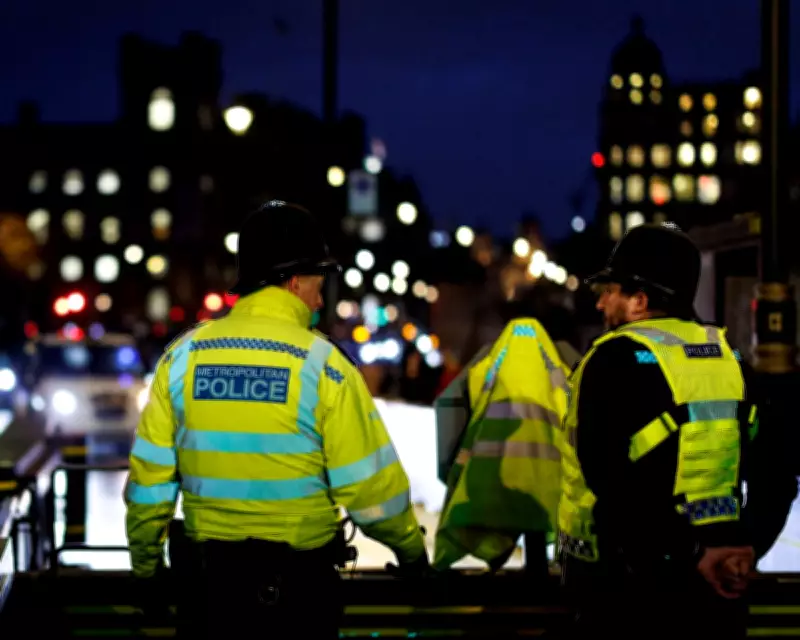
London's Crime Disinformation Battle: City Fights False Narratives
Recent official figures have revealed that London's murder rate has reached a record low, positioning the capital far below other major global cities such as New York. This data starkly contradicts a growing wave of disinformation that portrays London as a crime-ridden metropolis, a narrative that has escalated from social media platforms into boardrooms and diplomatic circles.
Elite Concerns and Misinformation Spread
In September, tech billionaire Elon Musk, during a virtual appearance at a far-right rally in London, asserted, "Just visit London and you'll see that it's filled with crime." His comments, later condemned by the UK government, echo similar statements from figures like Donald Trump, who infamously referenced "no-go zones," and Nigel Farage, who warned against wearing jewellery after 9pm in the West End. This panic over antisocial behaviour and petty crime has now permeated City of London boardrooms and international diplomatic meetings, alarming officials and financial sector leaders who fear potential damage to trade, recruitment, and business investment.
Dame Susan Langley, the City of London's mayor, emphasised the urgency of the situation. "Nobody's saying 'it means that I won't invest in the City'," she stated. "But anything that undermines the City has the potential to undermine business. Which is why I went out and said we need to start countering this." Langley plans to use her one-year term to actively correct and counter anti-London rumours, initiating a campaign through meetings with financial bodies like UK Finance, TheCityUK, and the Investment Association.

Campaign Strategy and Statistical Reality
The campaign will focus on disseminating "pragmatic, simple, key lines" highlighting London's strengths, including its talent pool, capital availability, and quality of life. Langley described the approach as creating a ripple effect: "I'm not expecting everyone to stick to the same lines, but if we can get the message out that this is what we should be doing, then it's like kind of rippling a pond." She urged business leaders to overcome "a natural British reticence" and become vocal advocates for the capital, stressing that "perception is reality."
Concerns have been raised by overseas executives, such as Gulf state bankers questioning safety due to stories about phone snatching and watch muggings. Langley recounted, "I went, 'Hold on a minute, I'm not saying that the city is perfect, but no city is perfect. There's always crime.' I said: 'But we're one of the safest cities in the world. What are you talking about?'" Statistics support her claims: London's murder rate is at a historic low, and with about 9 million residents, Londoners are less likely to be victims of violent crime than people in the rest of England and Wales.
Specific data shows progress:
- Reports of phone theft in the City of London fell by 28% to 213 in the first four months of 2025 compared to the same period the previous year.
- Luxury watch, handbag, and jewellery thefts have all decreased across London, according to Metropolitan Police figures.
Diplomatic and Economic Implications
One London executive noted that concerns have reached diplomatic levels, with UK representatives reassuring businesses about safety. "What we tend to hear is about chronic levels of antisocial behaviour," they said, adding that the disinformation often comes from those less familiar with the capital. "London is one of safest cities in the world, and safer than most comparable US and European cities. Some of this feels planned and deliberate: an attempt to damage London and, from an economic perspective, weaken the UK."

Speculation has arisen about potential foreign involvement, with some City bosses mentioning rumours linking the disinformation to Russia, though no concrete evidence has emerged. Langley acknowledged, "It feels like an active disinformation campaign. Naturally, it would benefit any other financial centre. Because if they're trying to undermine the City that's obviously a sweet spot." This debate intensifies amid post-Brexit competition with rivals like Paris and Frankfurt, and a trend of UK companies listing on New York stock markets.
Government Response and Future Outlook
Langley warned that recruitment and overseas talent could be the first casualties of this misinformation. "It might just make people think twice about whether they want to come and work in London or expand," she said. A government spokesperson confirmed that ministers are monitoring the issue, stating, "We are working with international partners and industry leaders to counter malign activity online. Such tactics often aim to destabilise countries, impacting trade and investment. We take these threats seriously. The facts tell a different story – business investment is at a 20-year high and the UK is one of the safest countries in Europe."
For now, Langley is focused on reclaiming the narrative. "We had the Team GB spirit around the Olympics. So where's the Team UK spirit around politely, and in a very British way, standing up for our industries, our city and all of the good things that we can actually do? We're never going to be the US, but at least we can do it in our own British way." This concerted effort aims to safeguard London's reputation and economic vitality against false claims.





