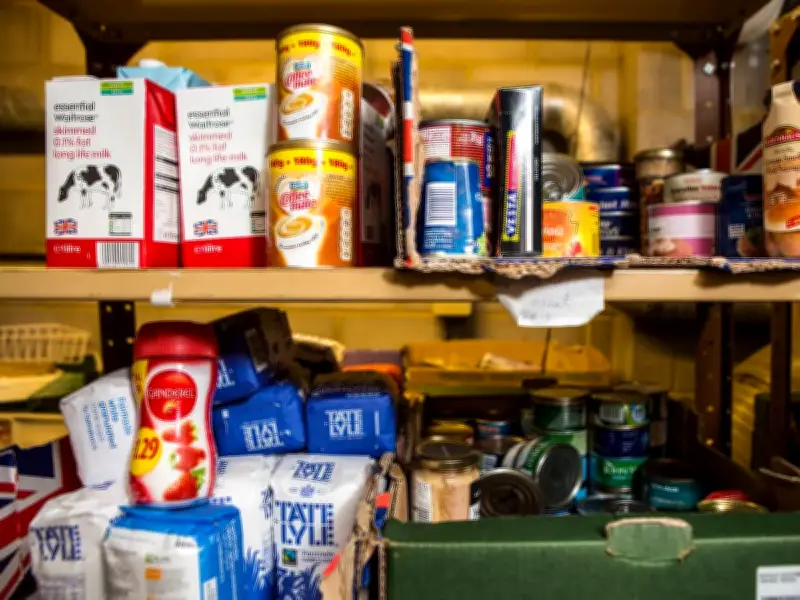
Cabinet Office officials are working with food banks to ensure the Government's public messaging on emergency stockpiling does not affect crisis supplies. The move comes as nearly half of Trussell's food banks report critically low stock levels ahead of winter.
Sumi Rabindrakumar, Trussell's director of external relations, said millions of people are already “facing their emergency right now” amid surging food bank demand. The Government's Be Ready campaign, launched last month, urges Brits to keep three days' worth of food and water in case of a crisis such as a cyber attack, power cut or extreme weather.
Trussell reports critically low supplies
Stats released by Trussell last week revealed nearly half of its food banks are reporting critically low supplies, with falling donations, rising operating costs and persistently high levels of need. Ms Rabindrakumar said it was right for the public to prepare for emergencies, but also important to remind them of the urgent need for food bank supplies now.
She told The Mirror: “We are working with the government to get that messaging right, because we know how important it is that crisis support is available when people really need it, but these things aren't mutually exclusive. Two things can be true at the same time. It's absolutely right to remind people to prepare for an emergency, but what we also think is it's important to remember that millions of people are facing their emergency right now, so that means it's really helpful if people and supermarkets can remember that those supplies are also needed right now.”
Food bank users unable to prepare
Ms Rabindrakumar added that if those who can prepare for a crisis do so, it will ease pressure on food banks if an emergency arises. “People do need to prepare because, in a crisis, we need to make sure that emergency food and emergency support is there for people who need it,” she said.
Sarah Adams, food bank manager at Chichester & District food bank, said she “absolutely supports” the Be Ready campaign, but admitted users of her services are unable to prepare for a possible future crisis. She told The Mirror: “For our clients, that's just not possible. Any extras that we would give them would be eaten now rather than saved for some sort of crisis that may or may not happen next week, next month, next year. So it's quite difficult from that perspective for our clients. Many come to us with literally nothing in their cupboards.”
Community approach urged
Amid already spiralling pressures, Ms Adams said strain on services would be “incredibly difficult” if demand suddenly surged during a crisis. She said any emergency situation would ultimately require a community-based approach, as seen during the Covid-19 pandemic, when neighbours checked in on one another or helped each other with food shopping.
“Whatever these crises are, we're only really going to get through it as a community,” she said. “I think that's kind of what we need to get back to, people helping one another because actually by helping your neighbours, your friend, or giving food to us to help others, you're supporting a community.”
Cabinet Office engagement and free steps
The Cabinet Office began its engagement with hundreds of organisations and charities, including Trussell, ahead of the Be Ready campaign launch to ensure the tone was right and that it met accessibility requirements. Officials acknowledge not everybody will be able to meet every part of the campaign, but point to free steps people can take, including signing up for alerts about hazards and emergencies, looking into weather risks in their local area, and being aware of contact numbers such as dialling 105 to report a power cut. The campaign also encourages people to “connect with your community” by talking to neighbours and swapping contact details in case of a crisis.
A Government spokesperson said: “We've been working with over 600 partner organisations, including charities and food banks, to make sure our guidance is as accessible and low cost as possible. Many steps that families can take are completely free, such as signing up to the Priority Services Register, which means eligible households will be prioritised by utility companies during an outage. By households taking simple steps where they can, emergency services will be able to prioritise those most in-need if an emergency were to happen.”