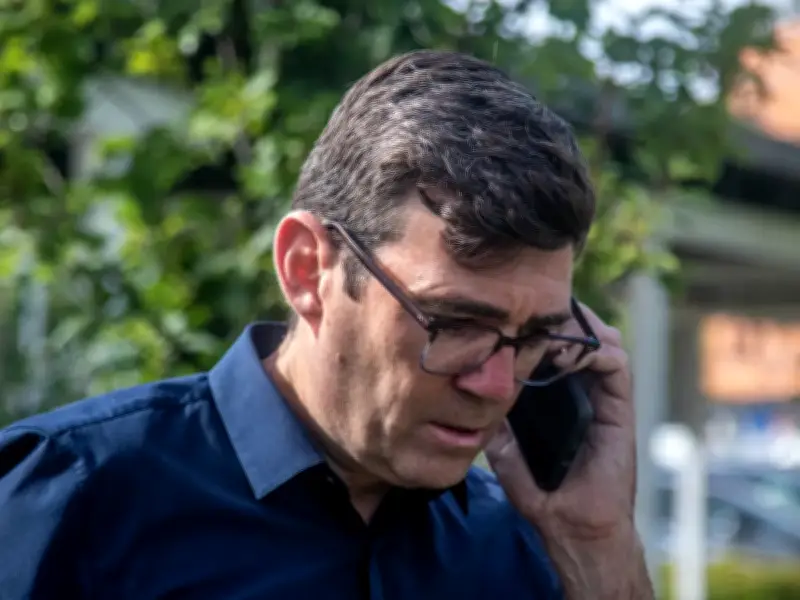
Prime Minister Andy Burnham has said he is not embarrassed about exchanging messages with someone pretending to be one of Donald Trump's closest advisers, Susie Wiles, the White House's chief of staff. He said there was “nothing of consequence” discussed and that he “handled it in the right way” by reporting it.
What happened
Mr Burnham, who will be trying to get on the front foot with the US President, is understood to have engaged with messages sent by someone impersonating Ms Wiles before becoming suspicious. Asked if he was embarrassed by the contact, Mr Burnham told broadcasters on Tuesday: “No, I’m not, because there was a minimal exchange.”
He added: “Nothing of consequence, and actually, quickly I realised that this needed to be reported, and I did so. So I handled it in the right way. All politicians are receiving these pressures and these challenges, but I did everything right. There was a minimal exchange of information of zero consequence, and it was quickly reported.”

Details of the incident
Speaking during a visit to Wolverhampton bus station, the PM said: “The correct action has been taken here and in the US.” One person informed of the incident told Politico a “few messages” were exchanged after the PM entered Downing Street but insisted they were “of no significance”. It is unclear what the pair talked about.
On Monday, Downing Street refused to comment on the specifics. “We do not comment on national security matters,” a No10 spokeswoman said. The British embassy in Washington DC reportedly raised the incident with the White House over concerns. UK officials feared Ms Wiles had been hacked. A White House official said: “This incident had nothing to do with the Chief of Staff’s devices being hacked.”
Broader context
The FBI and White House started probing reports of someone pretending to be Ms Wiles last year, according to reports by US media. Last May, the Wall Street Journal reported that senators, governors, top American business bosses and other well-known figures had received calls and text from someone saying they were her. “The White House takes the cybersecurity of all staff very seriously, and this matter continues to be investigated,” a White House spokeswoman said at the time.
Mr Burnham is not the first high-profile politician to fall victim to a hoax call. Boris Johnson was targeted by a Russian prank caller when he was foreign secretary, with the caller posing as the new PM of Armenia. Footage of a hoax call in which then-foreign secretary Lord David Cameron believed he was speaking to former Ukrainian president Petro Poroshenko was released by the UK Government in 2024. In 2022, then-home secretary Priti Patel and then-defence secretary Ben Wallace were also targeted by hoaxers suspected of working for the Kremlin.
Shortly before entering Downing Street last month, Mr Trump described Mr Burnham as the "mayor of a town" and an "extremely liberal" politician. But the ex-Greater Manchester Mayor has attempted to build ties with the President. In a phone call with Mr Trump on the day he became Prime Minister, Mr Burnham told the President he hoped to show him "what Manchester had to offer during a visit in the future", No10 said. Manchester is set to host the G20 world leaders summit in 2027.