

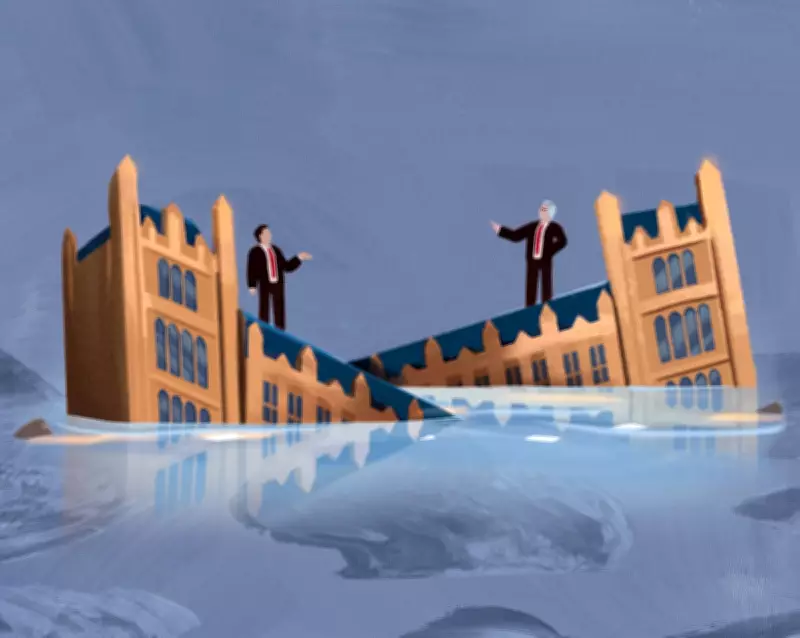
Westminster is a cocoon, insulated from the harsh realities faced by ordinary Britons. As Labour descends into internal conflict, voters are desperate for a turnaround in living standards. Catherine West, the Labour backbencher who threatened Keir Starmer's leadership, understands this disconnect. She fired the first shots in a civil war that now engulfs the government, before Wes Streeting or Andy Burnham entered the fray.
West has been pelted with insults since her challenge, but she is one of the few Labour politicians grasping what is at stake: who leads the UK into the 2030s. Last week's elections underlined that Starmer is on course to lose badly to Nigel Farage and his politics of ethnic division. Downing Street's flag-waving and anti-immigrant rhetoric have failed. The outcome that most horrifies Labour MPs—not just losing power, but handing it to Reform—looms ever larger.
Yet there was no plan to change course, only the same old names playing chess: waiting for scandals to fade, waiting for the king's speech, waiting for recess. 'We could all fall asleep,' says West, 'then wake up in three years to see the electoral map turn light blue.' So she slammed her fist down and sent the chess pieces flying.

The Cocoon of Westminster
Westminster is a cocoon, protecting politicians from the harsh world outside. Only a cocoon could explain Labour MPs lining up behind Streeting or Burnham with no explanation of how either would run a country heading into its third economic crisis in six years. After Covid and the inflationary shock of Russia's invasion of Ukraine, the US and Israeli war on Iran is again pushing up prices on everything from diesel to fruit and veg. By autumn, analysts forecast the average food bill will be 50% higher than when the last cost of living crisis began. How any would-be prime minister plans to deal with that ought to be the number one consideration.
Only a cocoon could explain the surprise of Labour MPs at hearing voters' visceral dislike while doorknocking—reporters have been hearing it for months. Only a cocoon could shield SW1 from the collapse of the two-party system, one of the central political facts of our time. Last week, only one in three voters voted for the two main parties. Two out of three Britons made what would once have been called a protest vote. And there is a lot to protest about: a baby born today can expect to live less of its life in good health than a decade ago. Living standards have barely budged since the banking crash. Young people find it almost impossible to get on the housing ladder.
The Rise of Reform and Greens
The failure of Labour and the Tories to tackle these issues is why Reform and the Greens are doing so well. Farage's electoral strength is the flipside of the mainstream's weakness. If he wins in 2029, it will be because the mainstream are losers. But Farage is beatable. He has just been beaten: in Wales, Reform lost to Plaid Cymru, a party not sponsored by crypto-billionaires. In England, Reform scored almost the same vote share as Labour did in 1983 under Michael Foot—who lost.
If today's Labour MPs are serious about beating Farage, they need answers to existential questions facing voters. Instead, the party has tipped into an internal war, christened the 'Burn-sheviks' versus the 'Wes-sheviks'. Once broken out, that war is unlikely to stop. Not when the home secretary, foreign secretary, and energy secretary are all calling on their boss to bring in the removal vans. Not when almost one in four Labour MPs have demanded their prime minister quit.
What the Contenders Must Address
For the rest of us, our hope is that contenders turn and face the country and tell us what they would do better. As the Labour Growth Group pointed out, 72% of the electorate say the cost of living crisis is structural, not temporary. 'This is a country well ahead of its political class,' says its report. The usual solution of more market and more delivery won't cut it—because it hasn't for the past two years.

Anyone who wants to replace Starmer must accept he has done good things—just not enough and not at scale. The king's speech includes a social housing bill that stops the sale of newly built council houses, making council housebuilding viable again after 35 years. But there is no money to build more council homes. There is the nationalisation of British Steel in Scunthorpe—good, but why did he let Port Talbot collapse?
The UK is in the grip of deep pessimism: that tomorrow will be worse than today, that our children will not enjoy the same living standards. That is what any Labour leadership contest must address. Only politicians in a cocoon could think otherwise.





