

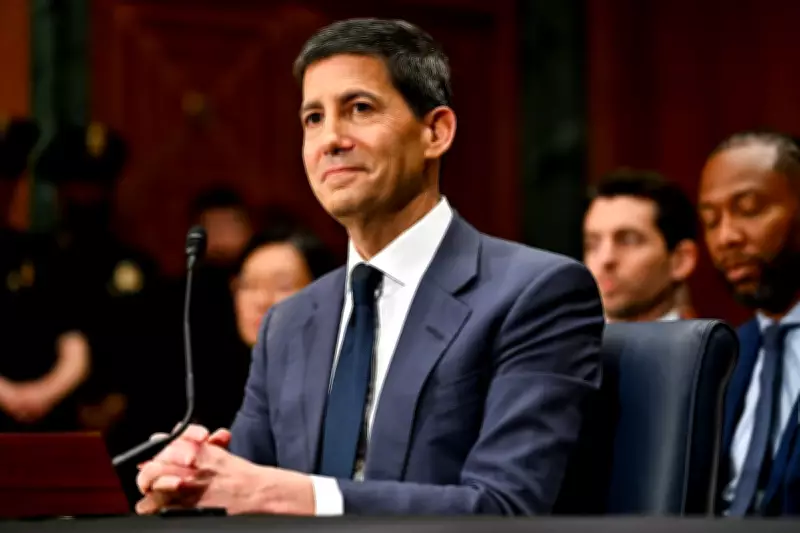
The United States Senate has confirmed Kevin Warsh as the new chair of the Federal Reserve, one of the most influential positions in the federal government with vast authority over the nation's economy. The vote, which took place on Wednesday, resulted in 54 senators in favor and 45 against, largely following party lines. The sole Democratic senator to break ranks was John Fetterman of Pennsylvania, who sided with the Republican majority. This confirmation marked the most contentious vote for the Fed chair position in history.
Warsh will serve a four-year term as chair and a 14-year appointment on the Federal Reserve's rate-setting board. He is set to officially assume the role on May 14, when the term of outgoing Chair Jerome Powell concludes. Warsh steps into leadership at a time when the central bank faces significant pressure from the Trump administration to reduce interest rates, even as inflation continues to rise and geopolitical tensions in the Middle East persist.
Kush Desai, a White House spokesperson, described the Senate's confirmation as a welcome step toward restoring accountability, competence, and confidence in the Fed's decision-making processes.

The Federal Reserve is responsible for setting interest rates, which influence the cost of borrowing money. Higher interest rates typically cool spending and curb price increases, but they also risk higher unemployment. Conversely, lower rates can stimulate economic growth but may lead to rising prices.
Warsh's Stance and Challenges Ahead
Warsh has echoed President Donald Trump's calls for lower interest rates. However, he must convince the other members of the Fed's 12-member voting board to align with this approach. With inflation currently at 3.8 percent, making the case for rate cuts may prove difficult.
Before Warsh, the most divisive confirmation for a Fed chair occurred in 2010, when Ben Bernanke was confirmed by a 70-30 vote.
Speaking on the Senate floor, Majority Leader John Thune criticized Democrats for opposing Warsh's nomination, attributing their resistance to what he termed Trump derangement syndrome.
Senator Elizabeth Warren, the top Democrat on the Senate Banking Committee, argued that Trump nominated Warsh to serve as his puppet, aiming to control interest rates. She stated on social media that Warsh's confirmation represents another step in Trump's effort to take over the Fed, which she believes benefits Wall Street rather than working families.
In contrast, Senator Fetterman expressed confidence that Warsh would be transparent and responsive to both Congress and the public. Fetterman emphasized Warsh's promise to maintain the Fed's independence in setting interest rates and encouraged Powell to remain on the Fed's board for as long as he wishes.
Background and Controversies
Kevin Warsh, an Ivy League economist and former Wall Street banker, previously served as a Fed governor from 2006 to 2011. During that time, he was known as an inflation hawk, advocating for higher interest rates to combat rising inflation. He left the board in 2011 partly due to disagreements over the Fed's post-financial crisis stimulus measures.
Warsh reportedly interviewed for the top Fed position in 2018, but Trump ultimately appointed Powell—a decision the president now considers a significant mistake.
During a Senate Banking Committee hearing last month, Warsh pledged to maintain the Fed's independence and remove politics from monetary policy. However, he declined to answer whether Trump lost the 2020 election, raising concerns among Democrats who view him as a potential puppet of the president.
Although outgoing Fed leaders typically step down after their terms as chair end, Powell announced last month that he would remain on the Fed board as a voting governor until the White House concludes its review of cost overruns at the central bank's headquarters. Powell characterized this scrutiny as a pretext for pressuring the Fed to lower rates.






