

The United Kingdom is projected to lose 163,000 jobs this year as the economic repercussions of the Iran war continue to unfold, with lower-income regions bearing the brunt of the impact, according to a new report.
Regional Disparities Highlighted
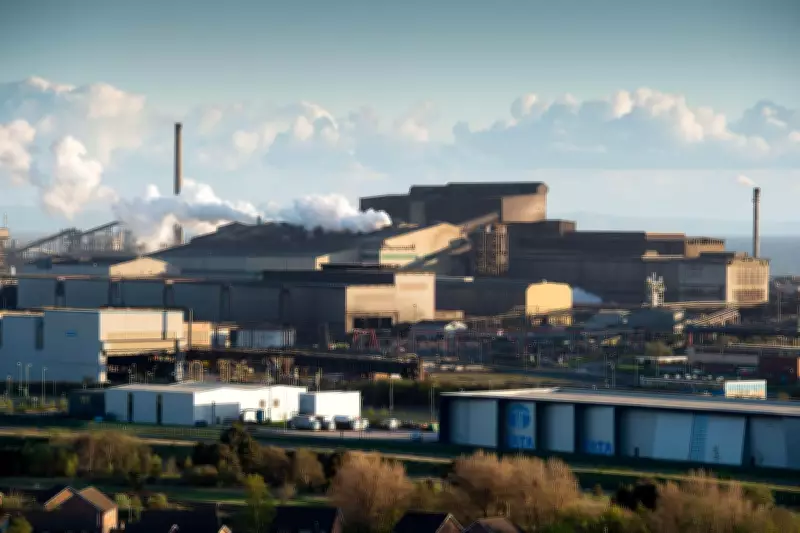
The Item Club's latest regional outlook warns that South Wales and the Humber, two of the UK's lowest-income areas, will experience the most severe job market difficulties over the next year due to sharp increases in energy prices. These regions are heavily dependent on manufacturing and construction industries, which the Item Club cautions will cut jobs in response to higher costs and supply chain disruptions stemming from the Middle East conflict.
The report predicts that employment will drop by 5,700 in South Wales and by 2,800 in the Humber during 2026.

Economic Adviser's Perspective
Tim Lyne, economic adviser to the Item Club, stated: "Some of the lowest income regions will feel the biggest effects of the manufacturing and construction sectors reducing headcount in the face of rising energy prices and supply chain disruption. Consumers in these areas typically have less rainy-day savings, which will reduce spending in the retail and hospitality sectors."
Overall, the forecast indicates that UK employment will decline by 0.4% this year, equivalent to a net loss of 163,000 jobs. This downturn is driven by a pullback in consumer spending, soaring costs of fuel, energy, materials, and ingredients, as well as disruptions to shipping.
Broader Economic Context
The Bank of England warned late last month that the UK unemployment rate could reach 5.6% this year, up from the current 5.2%, under its more pessimistic scenario for the war's impact. The Item Club noted that as households rein in discretionary spending amid a surge in the cost of living, the retail and hospitality sectors will suffer the biggest slowdown across Britain's major cities.
The independent forecasting group predicts employment in London will drop by 25,000 this year, with reductions of 12,500 in Birmingham, 9,800 in Leeds, and 6,200 in Glasgow. However, there may be some bright spots: Cambridge is expected to see employment growth in 2026, while Belfast and Edinburgh are anticipated to experience relatively limited job losses.
Potential Resilience
Mr Lyne added: "Across the UK, the jobs market is going to soften, but it’s looking especially fragile in South Wales and the Humber as they’re particularly exposed to manufacturing businesses that are seeing big increases in their costs of materials. Resilience will come in places like Cambridge where the tech sector is based."
The report also highlighted that while publicly-funded sectors such as education, public administration, and human health and social work are expected to hire more jobs over the year, this will not be sufficient to offset wider losses.
Living Standards at Risk
The Item Club warns of a widening gap in living standards across the UK caused by the Iran war. Low-income areas will see households suffer the steepest hikes in the cost of living, as a larger proportion of their spending goes on essentials like food, fuel, and energy bills, which are set to see substantial price increases.
According to the report, households in cities such as Newcastle, Belfast, and Birmingham spend as much as 13% of their disposable income on energy and food, compared to less than 9% for an average household in London. This could leave these cities particularly exposed if the Iran war is not resolved soon.
Government Response
A Government spokesperson commented: "Recent figures show that there was an improvement in the labour market at the beginning of the year with unemployment falling below 5%, and 332,000 more people in work than a year ago. But we cannot escape the effects of the war in the Middle East which are likely to feed through to prices and employment in the coming months. We will do everything we can to support the country through this period, including by slashing energy bills by up to 25% for 10,000 manufacturers. Our mission for clean power by 2030 will get us off the rollercoaster of fossil fuel prices, to cut bills for businesses and households for good."






