

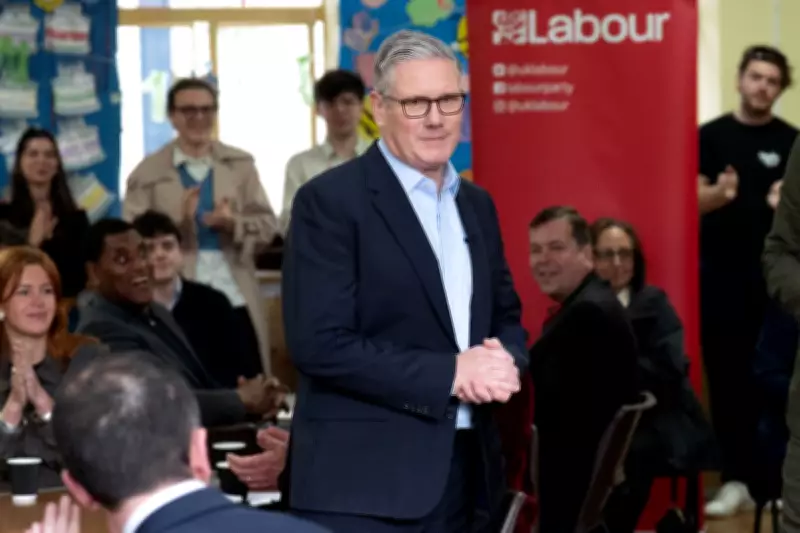
Sir Keir Starmer is resisting growing calls to step down as Labour leader after the party suffered a catastrophic defeat in local and devolved elections. The Prime Minister acknowledged the results were “tough” but insisted the response should not be a shift to the left or right, but rather a reaffirmation of Labour’s values and a focus on unity.
Labour lost control of 32 councils in England and suffered a net loss of 1,051 seats. In Wales, the party was reduced from government to just nine seats in the Senedd, with First Minister Baroness Eluned Morgan losing her seat. The SNP remained the largest party in Scotland but failed to secure a majority, while Labour recorded its worst ever Holyrood result, tying with Reform UK for second place on 17 seats each.
Internal Pressure Mounts
Dozens of Labour backbenchers have publicly suggested that Sir Keir should either resign or set a timetable for his departure. Clive Betts, the party’s joint longest-serving MP, called on the Cabinet to tell the Prime Minister he must go “in the not too distant future.” He argued that a leadership transition should be managed constructively over the coming months.

Deputy Leader Lucy Powell defended Sir Keir, saying that setting a departure timetable would only trigger a distracting leadership contest. However, she warned that unless Labour wins back voters lost to Reform UK and the Greens, Nigel Farage could become Prime Minister at the next general election.
Reset Efforts
The Prime Minister plans to use a major speech on Monday and the King’s Speech on Wednesday to reset his premiership. In a Guardian article, he wrote: “While we must respond to the message that voters have sent us, that doesn’t mean tacking right or left. It means bringing together a broad political movement, being assertive about our values, bold in our vision and addressing people’s demands.”
Health Secretary Wes Streeting said he would support the Prime Minister’s reset but declined to say whether Sir Keir should lead the party into the next election. Former deputy leader Angela Rayner and Greater Manchester Mayor Andy Burnham have not commented on the results, though Burnham is widely seen as a potential leadership contender.
Electoral Landscape
Reform UK made spectacular gains, winning control of 13 councils and adding 1,276 seats. The Green Party gained control of four councils and added 306 seats. The Liberal Democrats won three councils and gained 142 seats. The Conservatives lost eight councils and 427 councillors.
In Wales, Plaid Cymru became the largest party with 43 seats, followed by Reform on 34, Labour on nine, the Conservatives on seven, the Greens on two, and the Liberal Democrats on one. In Scotland, the SNP holds 58 seats, Labour and Reform 17 each, the Scottish Greens 15, the Conservatives 12, and the Liberal Democrats 10.
Powell stressed the need to reunite Labour’s traditional voter coalition, warning: “If we don’t, over the coming months and years, then Nigel Farage is going to be walking into Downing Street, and that is on us.”






