

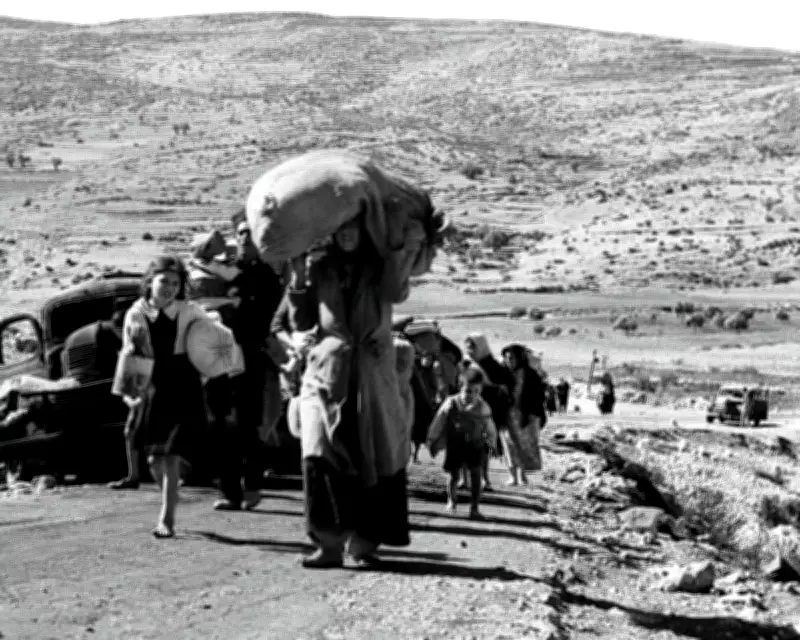
A secret 10-month operation by the United Nations Relief and Works Agency for Palestine Refugees (Unrwa) has successfully rescued millions of documents chronicling generations of Palestinian trauma from Gaza and East Jerusalem, safeguarding a vital archive of recent Palestinian history.
High-Stakes Rescue Mission
The operation, which concluded in early 2024, involved dozens of Unrwa staff across at least four countries. It included risky trips to retrieve documents under bombardment, officials carrying unmarked envelopes into Egypt, and precious boxes airlifted to safety in military planes. The effort was highly sensitive and sometimes dangerous, as Unrwa sought to protect archives that detail Palestinian experiences during the wars surrounding Israel's foundation in 1948.
Roger Hearn, a senior Unrwa official who oversaw the operation, emphasised the significance of the archives. "Their destruction would have been catastrophic ... If there is ever a just and durable solution to this conflict, then this is the only evidence people can use to show there were once Palestinians living in a particular place," he said.

Archives Under Threat
Unrwa was founded in 1949 to provide healthcare, food, and education to about 750,000 Palestinian refugees. Its archives were spread across the Middle East, with original registration cards and birth, marriage, and death certificates stored in dusty boxes in Gaza City. Despite previous scanning efforts, hundreds of thousands of records remained only in paper form, vulnerable to fire, flood, or deliberate destruction.
After the Hamas attack on Israel in October 2023, which killed 1,200 people mostly civilians, Israel intensified its hostility toward Unrwa, accusing the agency of keeping alive Palestinian hopes of return and of using anti-Israel textbooks. Israel also alleged that Unrwa staff participated in the attack, leading to the firing of nine employees after an investigation.
First Stage: Gaza City to Rafah
Days after Israel invaded Gaza, it ordered the evacuation of Unrwa's offices in Gaza City. International staff left without the archives. A small team of Unrwa officials drove rented pickup trucks back to the compound under airstrikes and shelling, making three trips to bring documents south to a food warehouse in Rafah, on the border with Egypt.
Cairo would not allow the archives out of Gaza without Israeli consultation. Unrwa officials feared Israel would seize the documents, as it had done with PLO archives in Beirut in 1982. Instead, Unrwa officials with international passports carried the documents out unobserved, saying they were carrying paperwork. Over six months, the documents were collated in Egypt and transported by a Jordanian charity using military planes returning from delivering aid to Gaza. The final cargo left just two weeks before Israeli tanks seized Rafah in May 2024.
Second Stage: East Jerusalem
Meanwhile, equally significant documents in Unrwa's East Jerusalem compound faced urgent threats. Israel intensified accusations that Unrwa collaborated with Hamas, launching a campaign of obstruction and harassment. By early 2024, the compound was targeted by protests and arson attacks. Staff secretly transferred the archives over several months to Unrwa offices in Jordan. In January 2025, new Israeli laws barred the agency from Israel and occupied Palestinian territories.
Digitisation and Future Impact
In Amman, a new effort funded primarily by Luxembourg saw more than 50 Unrwa staff scanning postcard-sized registration documents and millions of other items. With almost 30 million documents now digitised, Unrwa aims to provide every Palestinian refugee with their family tree and supporting documents, and to build maps showing displacement patterns in 1948. Officials estimate the task could take another two years.
Dr Anne Irfan, a historian at University College London, said the documents provide a vital record of Palestinian national history. "The Palestinians are a stateless people and without a fully unified national archive ... so the Unrwa archive has a particular significance for them," she said. The digitised archives open up multiple avenues of inquiry into the experience of Palestinian refugees, the role of the UN, and core elements of Middle Eastern politics over the last 80 years.






