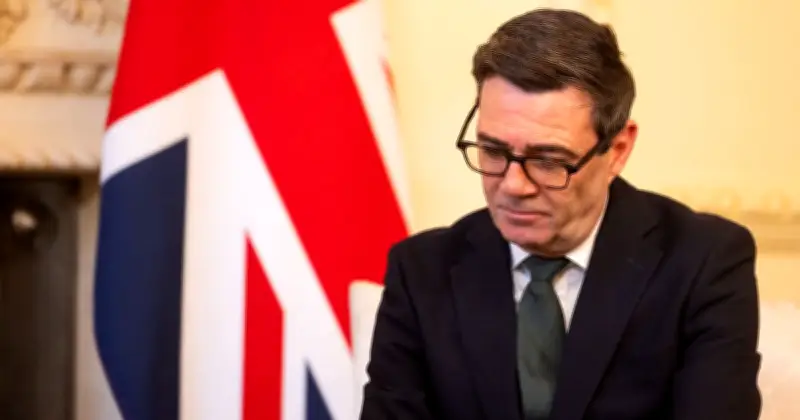
A new cross-party campaign called No2EU has been launched to defend Brexit and oppose Prime Minister Andy Burnham's new EU trade deal, which is due to be debated in Parliament on December 7. The group brings together Labour and Conservative politicians aiming to prevent the UK from being dragged back into the EU.
MPs accuse Burnham of breaking promise
Greater Manchester Labour MP Graham Stringer, who chairs the campaign, accused Mr Burnham of breaking a promise made during the Makerfield by-election earlier this year. He said: "The PM said in Makerfield that it would be wrong to reopen the debate on Europe, because it would be divisive, and then he does exactly that in Brussels."
Mr Stringer added: "That leads to cynicism and a loss of trust in parliamentary democracy. Where there is a loss of trust in parliamentary democracy, we get extremists."
Campaign details and support
No2EU is the third anti-Brexit campaign launched in recent days. Veterans of the Vote Leave campaign have rebranded as Stay Out, while Leave.EU is back under the name Keep Britain Out. No2EU supporters say they will provide a platform for Brexit supporters to work together across parties in both the House of Commons and House of Lords, set up branches across the country, and develop a presence on social media.
The campaign is inspired by Nei til EU, a Norwegian campaign that successfully opposed EU membership in that country's 1994 referendum. Organisers intend No2EU to continue making the case against re-joining for years or decades to come.
The campaign is chaired by Mr Stringer and Conservative MP Sir Bernard Jenkin, a former Shadow Cabinet Minister. Other supporters include Conservative MPs Joy Morrissey and Saqib Bhatti, DUP MP Sammy Wilson, and Jim Allister from Northern Ireland's TUV party. Members in the House of Lords include Labour peer Lord Glasman and independent Baroness Fox.
Economic concerns and financial costs
No2EU will draw on research from The Growth Commission, which shows that the re-imposition of EU regulation on the UK economy will damage growth, and that the UK is already growing faster outside the EU. The group claims the UK-EU Sanitary and Phytosanitary (SPS) Agreement, which covers food and drink, will burden the average family with a bill for £2,440 by 2036, because it imposes EU agricultural red tape on all of Britain's farmers and food and drink producers.
Mr Burnham's deal also includes a youth mobility scheme allowing 100,000 EU people aged 31 or under to come to the UK every year for travel, work or study, which critics say will undermine the chances of the country's one million 16-24-year-old Neets of finding a job.
Meanwhile, the Prime Minister is under pressure to reveal how much the UK will need to pay to the EU as the price of the latest agreement, after the full text showed he promised to help fund Brussels institutions. Fees include an "operational contribution" as well as a 4% "participation fee" surcharge. According to small print in the agreement, British cash will help pay for the costs of the European Food Safety Authority, which currently receives £131 million from the EU each year, and the European Chemicals Agency, which receives £76 million.
The trade deal contains some details about how the British contribution will be calculated, but does not provide a figure. However the cost could be around £30 million each year, according to think tank the Prosperity Institute. Director of Strategy Fred de Fossard said: "My rough calculations of the financial 'contribution' attached to the SPS agreement are around £30 million per year in fees from the UK to pay for EU regulators and agencies, who will now be overseeing food standards in the UK."
Government response and next steps
Downing Street says the deal will slash red tape for the UK's food and drink industry, the nation's largest manufacturing sector, and lower barriers to selling into Europe, adding up to £5.1 billion per year to Britain's GDP. It has also said the deal will cut checkout prices, but the Government's own impact assessment last week cast doubt on whether shoppers will notice any savings. It said the SPS deal "could help reduce the pressure on food price inflation" but added: "This depends on whether and how business savings are passed through from producer prices to retail prices. Producer prices are only one aspect of final food prices. Many other factors such as energy prices, labour costs, exchange rates, and the extent to which producers have previously absorbed cost increases to date all play a part, and there is a lot of uncertainty around the speed and level of pass-through for different commodities."
Mr Burnham has hailed the package as "good for people in Britain and good for people in Europe", saying it will provide a £17 billion boost to the British economy in total. Speaking in Brussels earlier this month, he said: "It directly addresses the biggest challenges of our times and the biggest worries that people have: the cost of food, the cost of energy, the lack of growth in the economy and the cost of doing business, the levels of illegal immigration and the challenges facing our young people. On each of those, for people who are worried about the cost of the weekly shop, this deal will help."
The Prime Minister will set out "options" next month for a new "long-term relationship" with the EU. These are expected to include rejoining, which Mr Burnham has said he personally supports, and measures short of that such as re-joining the single market only. Meanwhile, Reform UK leader Nigel Farage, writing exclusively for the Sunday Express, vowed to "tear up" Andy Burnham's trade deal "on day one" if Reform UK won a general election.