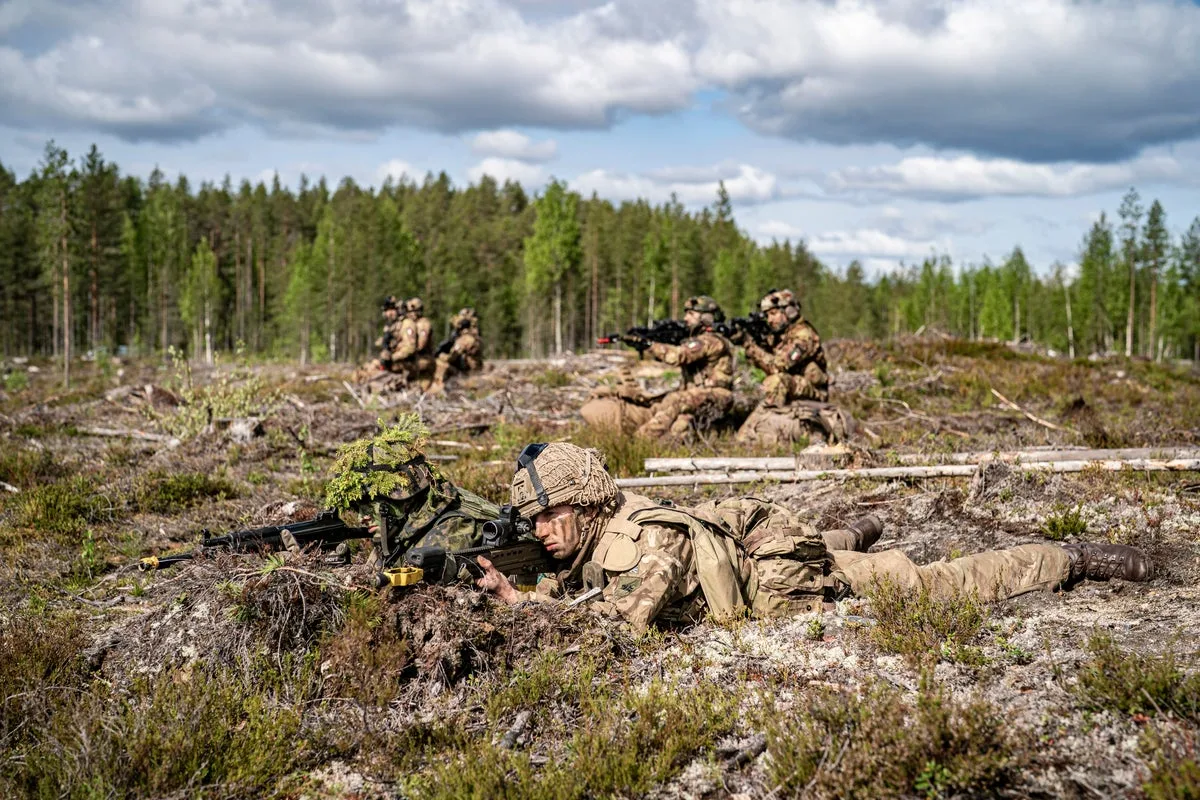
Nato is set to significantly bolster its eastern flank, tasking the German-Netherlands Corps with the command of allied troops in Estonia and Latvia should a conflict with Russia arise. The move, announced jointly by Germany and the Netherlands on Thursday, marks a critical step in strengthening the alliance’s defensive posture.
Currently, Nato forces across the three Baltic nations and northern Poland operate under a single multinational headquarters. Establishing a second command zone is expected to enable the alliance to deploy more troops to the Baltics, a region deemed most vulnerable to a potential Russian attack. Nato has previously warned that Moscow could launch a large-scale assault on allied territory as early as 2029 if its armament efforts continue, an intention the Kremlin denies.
German Defence Minister Boris Pistorius stated: “With the integration of the German-Netherlands Corps into Nato’s defence plans, both nations are assuming further responsibility for the security of Europe.” He added that the corps comprises 16 countries. The new role is expected to commence around mid-year, with the corps based in Muenster, Germany, serving as the tactical headquarters for Estonia and Latvia.
An army corps typically commands three divisions, equating to between 40,000 and 60,000 troops. In peacetime, it functions as a skeleton command structure, equipped with specialist units such as artillery, air defence, and medics, to facilitate rapid troop deployment when necessary. This development coincides with observations from Western military officials, who note Russia’s increased military infrastructure near the Baltic border.