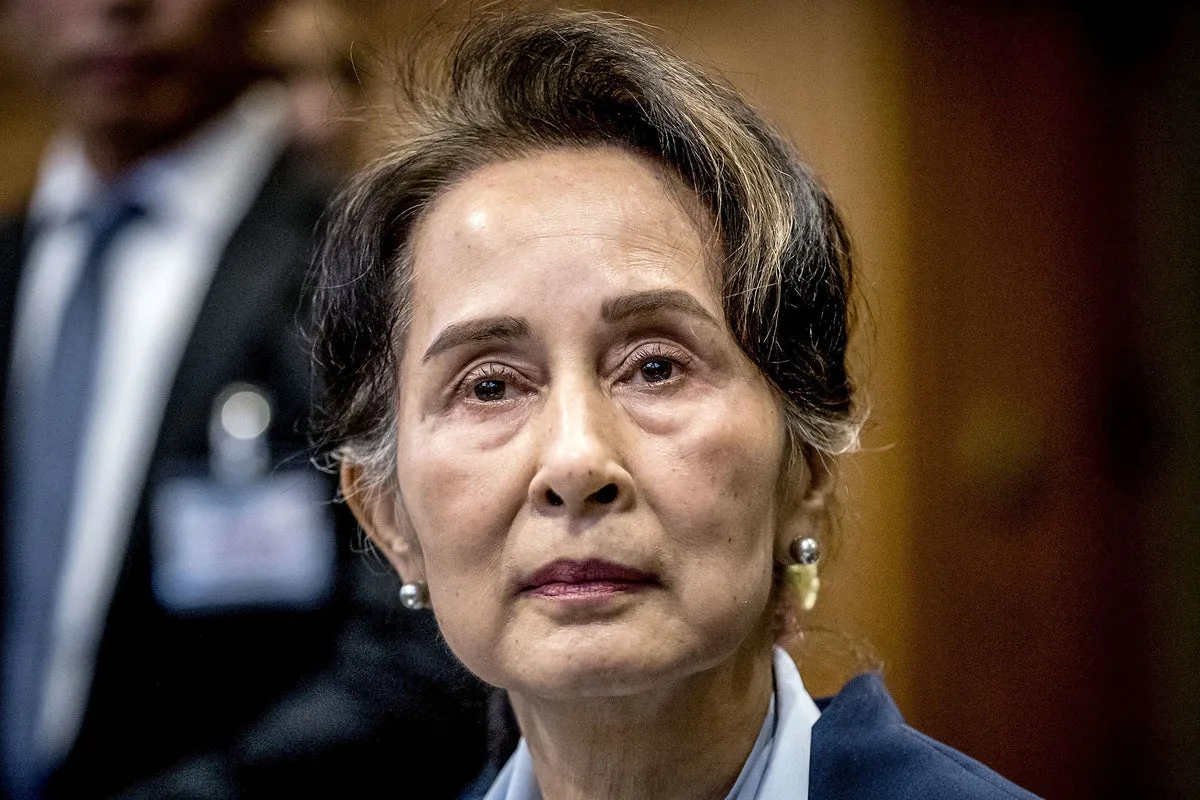
Myanmar's former leader Aung San Suu Kyi has been moved from prison to house arrest after more than five years in solitary confinement. The 80-year-old Nobel Peace laureate was removed from power in a 2021 military coup and convicted of a series of charges widely criticised as politically motivated.
Ms Suu Kyi was moved to house arrest after President Min Aung Hlaing commuted her prison term by a sixth as part of an amnesty deal to mark a Buddhist religious holiday. It was the second such reduction in two weeks, following a similar commutation on 17 April when another 4,500 prisoners were granted full amnesties for the traditional New Year. She will now serve her remaining term 'at the designated residence'.
Her legal team confirmed the move on Thursday night. 'Daw Aung San Suu Kyi is currently still in Naypyidaw,' a member of the team told Reuters, adding that they would meet her over the weekend to discuss her situation and provide supplies. 'The situation has shifted,' the legal representative said. 'I think it will no longer be just a standard prison visit, but rather a meeting where the legal team will go and discuss matters with her.'
Analysts see the relief for Ms Suu Kyi and amnesty for thousands of prisoners as a bid by the regime to seek broader international acceptance. However, Burma Campaign UK said the slow, staged release of political prisoners was designed to gain maximum positive publicity while making no fundamental reforms. 'If the Burmese military regime were genuine about reform, they could release all 14,000 political prisoners today,' said Minn Tent Bo, the group's advocacy and communications officer. 'These people should not have been arrested in the first place.'
Ms Suu Kyi has spent a total of 20 years in confinement. The past five years have been especially brutal, with even her family unsure of where she was being held. Her removal from prison will likely improve her living conditions, but falls far short of the unconditional release long demanded by Western governments and rights groups. Her son Kim Aris told the BBC: 'I hope this is true. I still haven't seen any real evidence to show that she has been moved.'