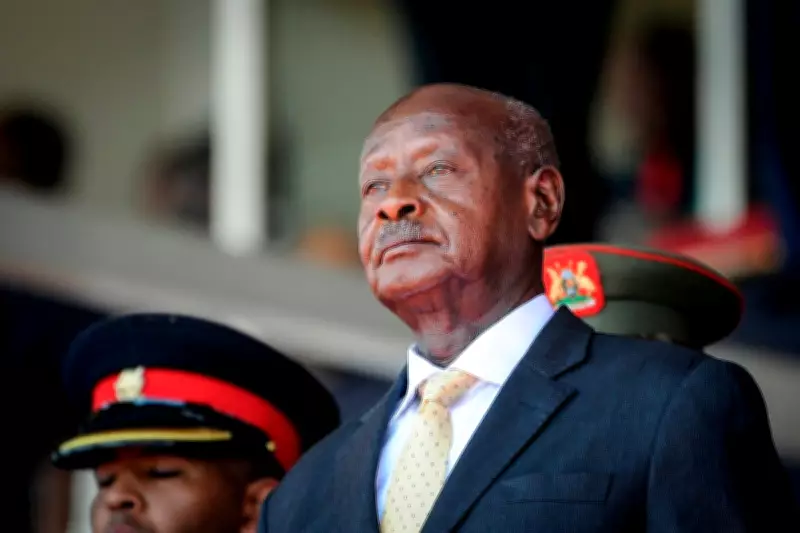
Ugandan President Yoweri Museveni has been sworn in for a seventh consecutive term, extending his 40-year rule. The 81-year-old took the oath of office on Tuesday in Kampala, with thousands of supporters cheering at the Kololo ceremonial grounds. However, the spotlight also fell on his son, General Muhoozi Kainerugaba, the army chief and presumptive heir, who oversaw military parade rehearsals featuring Russian-made Sukhoi fighter jets.
A Presidency Nearing Its End?
Many Ugandans accept that Museveni’s presidency, the only one millions have known, is drawing to a close. What remains unclear is the nature of the transition. Kainerugaba has declared his wish to succeed his father, stating the mission is unstoppable. Two possible paths are seen: an unconstitutional takeover by Kainerugaba or a constitutional amendment allowing lawmakers to select him as successor. An electoral win is considered unlikely due to strong opposition from Bobi Wine, the popular entertainer who rejected the January election results.
Support from Parliament
Parliamentary speaker Anita Among has pledged lawmakers’ support for Kainerugaba, saying, “We will do whatever it takes.” Many leaders are scrambling to show allegiance, underscoring Kainerugaba’s rise as de facto leader as his father ages. Analyst Andrew Mwenda noted that Museveni is “old and exhausted, both intellectually and physically,” with limited ability to monitor affairs.

Kainerugaba’s Rise and Style
Kainerugaba, 52, joined the army in the late 1990s and rose controversially to the top, with critics dubbing it the “Muhoozi Project.” He attended military schools in the U.S. and Britain and founded the Patriotic League of Uganda. Unlike his father’s folksy style, Kainerugaba is more confrontational, often issuing harsh online posts and ordering arrests of generals for corruption.
Museveni’s Legacy and Concerns
Museveni first took power by force in 1986, promising democracy, but has since scrapped term and age limits. While credited with relative stability, critics point to an increasingly authoritarian streak. A recent bill targeting foreign interference has raised concerns, with opposition leader Bobi Wine’s party calling it unconstitutional.