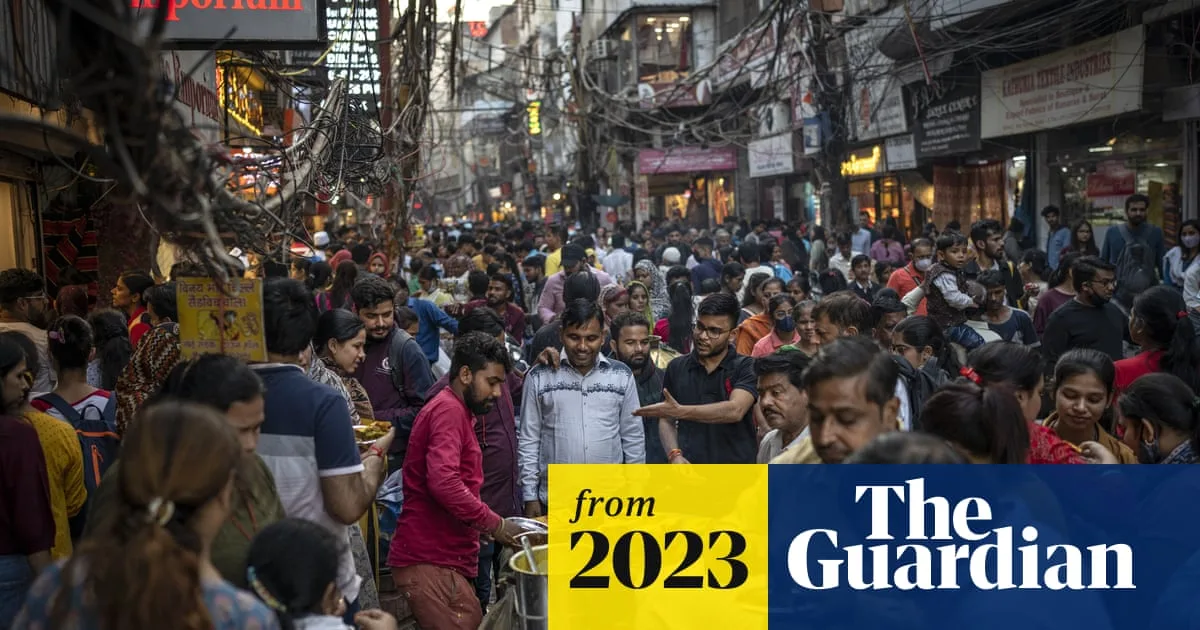
India has surpassed China to become the world’s most populous country, according to UN population estimates. This marks the first time since 1950, when the UN began keeping global population records, that China has dropped to second place.
The UN projects India's population at 1,425,775,850, exceeding China's for the first time. China's population decline follows decades of strict birth control policies, including the one-child policy introduced in the 1980s, which led to a gender imbalance with 32 million more men than women. Recent incentives to boost birth rates have had little effect, with women having only 1.2 children on average.
India's population has grown by over a billion since 1950, though growth has slowed. It is expected to peak at 1.7 billion by 2064. Poonam Muttreja of the Population Foundation of India said the overtaking occurred four years earlier than projected due to India's young population, but stressed that population growth has stabilised and there is no cause for alarm.
The exact size of India's population remains uncertain due to a delay in the census, originally scheduled for 2021 but postponed because of the Covid-19 pandemic. Critics accuse the government of Prime Minister Narendra Modi of delaying the census to avoid politically sensitive data, while the government cites technological integration as the reason.
India's demographic trends vary widely: northern states like Bihar and Uttar Pradesh, among the poorest, will account for one-third of future growth, while southern states such as Kerala and Tamil Nadu face ageing populations, with one in five people in Kerala over 60 by 2025.