
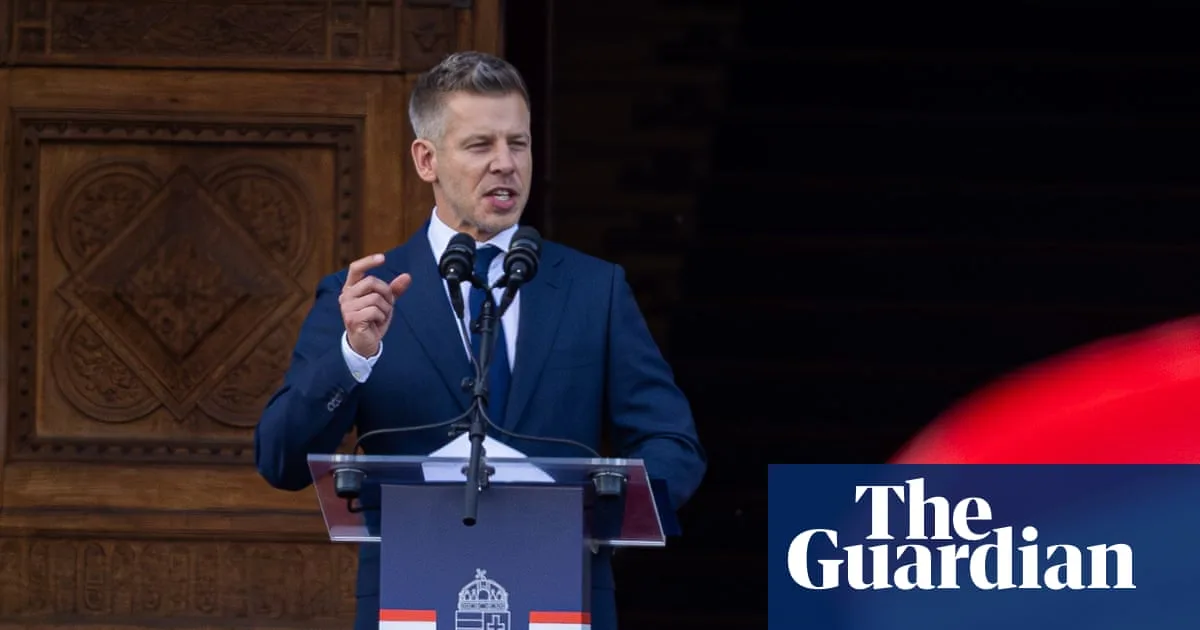
Péter Magyar, sworn in as Hungary’s prime minister on Saturday, used his inaugural address to apologise to those who had been wronged by the state under Viktor Orbán’s 16-year rule. In a stark departure from his predecessor’s combative tone, Magyar offered a direct apology to civilians, teachers, journalists, health workers and public figures who had been ‘stigmatised, harassed or treated as enemies’ for speaking out.
‘I apologise,’ he said, acknowledging the systematic targeting of civil society groups and critical media outlets under Orbán. The former leader’s government had launched investigations, smear campaigns and bureaucratic obstacles against opponents, with some facing court cases. Notably, the liberal mayor of Budapest and a Roma organiser were charged for organising Pride marches, and a prominent investigative journalist faced espionage charges—since dropped after Magyar’s landslide victory last month.
Magyar struck a unifying note, calling on Hungarians to come together and pledging a more free, humane and hopeful country. ‘What connects us will be stronger than what divides us,’ he said, promising that Hungary would be a home for all Hungarians. Veronika Kövesdi, a researcher at Budapest’s Eötvös Loránd University, described the speech as an act of reconciliation that could help heal the nation, noting both material and emotional expectations from the new government.
Orbán broke with tradition by skipping the ceremony and not shaking Magyar’s hand. In a social media post on Sunday, he warned against surrendering national sovereignty to ‘foreign elites’, echoing his familiar rhetoric. As Magyar prepares to push through his cabinet nominations, questions remain about his leadership style. He campaigned on promises to crack down on corruption and restore democratic institutions, but analysts note his vague policy details and tendency to avoid hardline questioning, drawing comparisons to a younger Orbán.




