Chancellor of the Exchequer John Healey has acknowledged he cannot remove all the pressures Scots face this coming winter as energy prices are set to rise again. In a message to Record readers, he insisted last week's Budget statement was about offering "breathing space" to households and businesses.
Around 1.9 million households across Scotland are in line to receive a £100 payment directly into their bank accounts this winter as a result of Healey's plans, but opposition parties and fiscal experts have warned it will not ease the pain caused by a "depressing" economic outlook for the country.
Chancellor visits Clyde shipyard
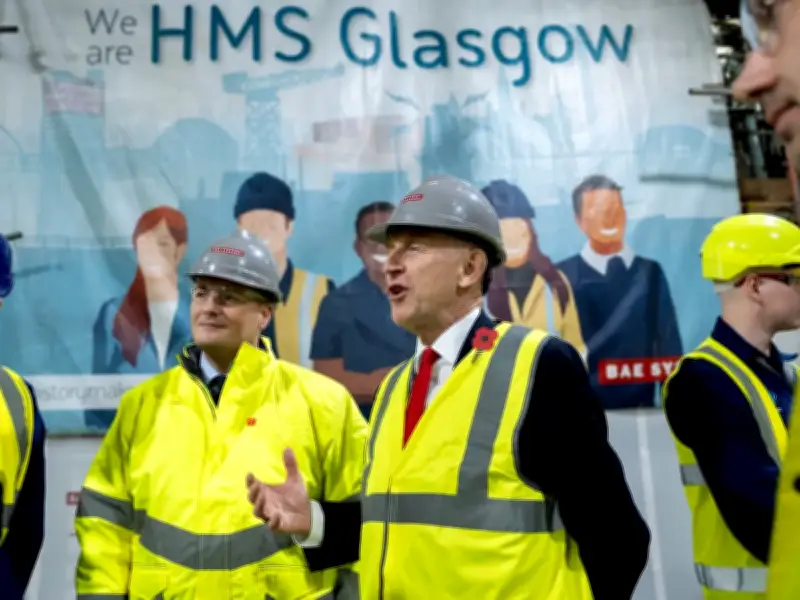
The Labour MP visited the BAE shipyard in Scotstoun today, where he was given a tour of the new HMS Glasgow, the first Type 26 frigate to be built on the Clyde. Healey talked up the defence industry's ability to provide well-paid and highly-skilled jobs across Scotland at a time many households are worried by the ongoing cost-of-living crisis.
Asked by the Record if his Budget had done enough to help, the Chancellor said: "I wanted to give households and businesses, including those here in Scotland, a bit of breathing space. As a Government, we'll do what we can."
He added: "We can't remove all the pressures that people face, but we know this winter energy bills will go up. That's why we're going to make in England a direct payment of £100 into people's bank accounts for all those in council tax bands A-D - and I hope the Scottish Government will follow suit."
Payment details and government response
Healey said the £2.6 billion scheme included money for the devolved governments to pass on to eligible households in Scotland, Northern Ireland and Wales. John Swinney has previously confirmed Scots will receive the £100 payment to help with their energy bills this winter, but warned it did not go far enough.
The First Minister said the SNP Government would "replicate" the one-off benefit, which the Chancellor announced on Wednesday for households in England that live in a property with a council tax band of A-D.
Healey also said he had "scrubbed the gas standing charge for UK families", adding: "People feel this regardless of how much gas they use - it's unfair to have to pay over £100 a year for that."
Economic forecasts and warnings
The Resolution Foundation warned that typical working-age households will see their disposable income fall by £1,050, or three per cent, by 2029 as a result of high bills and stagnant wages. The UK's official forecaster said its latest economic forecast painted a "pretty grim picture".
The Office for Budget Responsibility (OBR) blamed the difficult financial situation facing the UK on higher borrowing costs and inflation caused by the US-Iran war. The think tank's chief executive, Ruth Curtice, said: "This parliament is increasingly looking like one of two halves. The first half has been marked by rising living standards, solid economic growth and extra funding for public services."
Over the course of this parliament, incomes for non-pensioner households, after taxes, benefits, and housing costs are taken into account, will have risen by "a paltry" £600, the Resolution Foundation warned. Even after the extra support provided by the government, households will be left paying higher energy bills than during the last energy crisis in 2022.
Helen Miller, director of the Institute for Fiscal Studies (IFS), said the outlook was "depressing": "This decade looks set to be the worst decade for growth in household incomes on record. No amount of temporary cost of living packages will fix that. We need a stronger economy."
Jenny Gilruth, the Deputy First Minister, said: "The Scottish Government will ensure that households in Scotland will benefit from the one-off £100 payment for energy bill support, however, it is clear that the measures fall far short of the action which is required. Furthermore, this support does not come close to meeting the promises on which the UK Government came to office, including reducing energy bills by £300 which remain significantly higher than they were in July 2024. The UK Government has failed to meet the moment and has failed to keep its promise."