Halifax Locals Furious as Lloyds Threatens to Scrap 173-Year-Old Brand
Halifax Brand Under Threat from Lloyds, Locals Furious

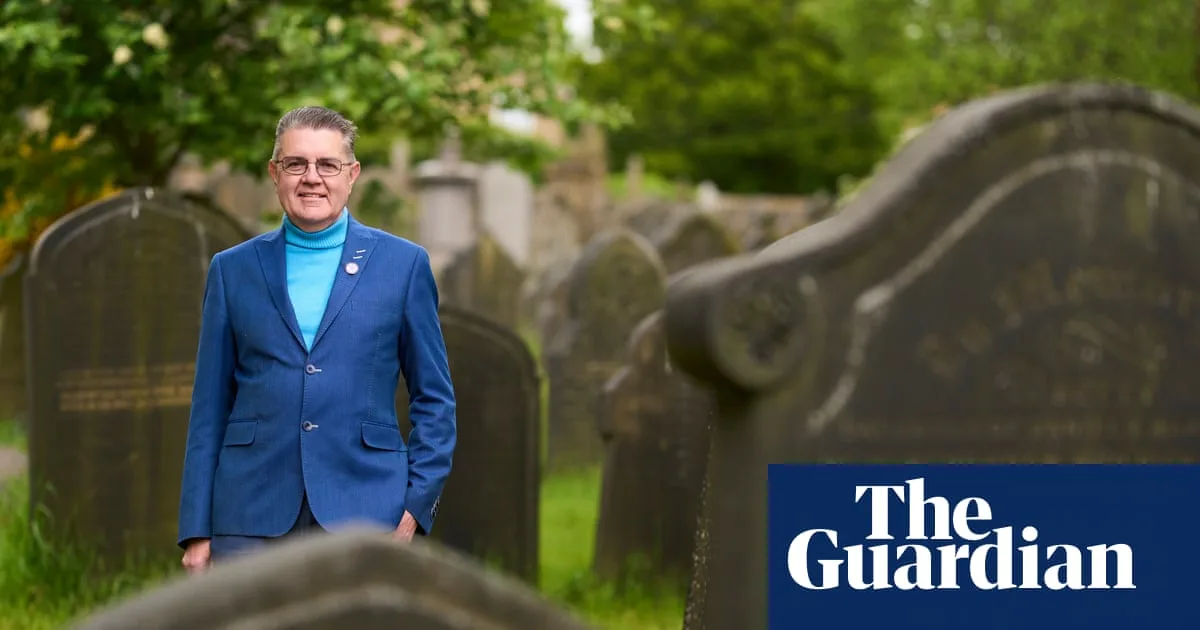
On a moody afternoon, near the sandstone terraces of Halifax’s Gibbet Street, David Glover, a local historian, opens the gates to Lister Lane Cemetery. Usually closed to the public, the burial ground is opened today as an exception. Here, among towering spires and the tombs of wealthy industrialists, lie the founders of one of West Yorkshire’s most famous exports: the Halifax Building Society.

“Halifax has a number of superlatives,” says Glover, president of the Halifax Antiquarian Society. “It had the largest carpet manufacturer in the world, Crossley Carpets of Dean Clough. And it was the starting place of what became the greatest building society in the world. I think everybody in Halifax is still quite proud of it.”

But what remains of the building society’s legacy is under threat. This week, it emerged that Lloyds Banking Group is considering axing the nearly 173-year-old Halifax brand, which would scrub the name from Britain’s high streets once and for all. While the bank insists a final decision has not been made, a phaseout could start as soon as July, with full scrapping by October.

Wide Pickt banner — collaborative shopping lists app for Telegram, phone mockup with grocery list

As for what the Victorian-era founders might think? “They would be absolutely horrified,” Glover says.

Lloyds’ Takeover and Brand Uncertainty

Lloyds took ownership of the Halifax brand nearly two decades ago in January 2009, when the financial crisis and bad business decisions brought the combined Halifax-Bank of Scotland group to its knees. By then, Halifax had long deviated from its building society roots, with members voting to demutualise in the mid-1990s after Thatcher-era reforms. Halifax became a listed bank before merging with Bank of Scotland in 2001.

Seven years later, after the £20bn taxpayer-backed Lloyds takeover, HBOS was at the centre of one of Britain’s largest banking scandals. Managers at its Reading branch pushed small business customers into failure and stripped them of assets. An independent review led by former high court judge Dame Linda Dobbs is still determining whether Lloyds tried to cover up the scandal.

Even 29 years after Halifax lost its mutual status, and despite controversy, takeovers, and a government bailout, Halifax residents remain fiercely loyal to the brand.

Local Reactions: Pride and Concern

Down the road, in a crystals store lining Halifax’s historical, imposing Piece Hall—once a hub for Georgian textile trading—Jayne Spence, a 59-year-old shopworker, laments the potential loss. “I’ve always had an account with Halifax, mortgages with the Halifax, practically all my life, so it’s a big thing.”

Spence worries that “pencil pushers” at Lloyds may underestimate its importance. “It means a lot to the people of Halifax, where it started. It’s a big thing, and Chancellor Rachel Reeves worked there, didn’t she? Think about the people who built the brand up. Think about the little people that got you into such a high status.”

Nasar Ahmed, 50, worked at Halifax as a graduate before it merged with Bank of Scotland. “Growing up, all my family banked with it. My dad came in 1962 and he’s always banked with Halifax,” he says, noting his father still calls it the Halifax Building Society. Ahmed believes Lloyds is focusing on digital banking. “They’re thinking about where their new customer base is—mainly online. So they’re getting rid of the high-street brand and processes to reduce costs.”

Eradicating the brand would have a “massive” impact on loyal customers and the wider region. “It will be a big loss to the high street, even if rebranded as Lloyds. Think about the loyalty and commitment. People have still got a link and affiliation, especially in Halifax: the birthplace of the bank. They’ve got a lot of love for it.”

But some residents are indifferent. Dare Adekoya, 35, says, “It’s just about the transition for the older generation. As a younger person, I don’t think it makes any difference. I’m not bothered.”

Pickt after-article banner — collaborative shopping lists app with family illustration

Historical Roots and Broader Implications

The building society’s history touches nearly every corner of Halifax town centre, including the Old Cock pub, a 16th-century inn where founders met in 1853 to launch the Halifax Permanent Benefit Building Society. Manager Chris Woodhead says losing the brand “would be a shame because it’s been here for hundreds of years,” but adds, “They’re all going to make their own decisions, aren’t they? To me, it’s just money.”

Lloyds also risks sending a dangerous signal of disregard for northern England, says Neil Kendall, chief executive of the Mid-Yorkshire Chamber of Commerce. “I think the only reason for wanting to quash the Halifax brand and retain the Bank of Scotland brand is because of political and nationalising noise from quashing the Bank of Scotland brand. So what that says to local people is: ‘It’s OK to trample on Halifax, but not on Scotland.’ We don’t matter in the north, and it bears witness in local council elections.”

Earlier this month, Reform UK secured a majority on West Yorkshire’s Calderdale council, while the Greens took seven seats—a blow to Labour and the Conservatives.

Labour MP for Halifax, Kate Dearden, says she is seeking answers from Lloyds bosses. “The Halifax bank brand is a source of immense pride for our community. Its recognition across the UK reflects the remarkable success of our town. These reports are concerning, and I am seeking urgent clarification. I strongly believe the Halifax brand should be retained, and I will make that case firmly at the highest levels.”

Back in Lister Lane Cemetery, near the monument marking the grave of co-founder Jonas Dearnley Taylor, Glover urges Lloyds bosses to consider the history they might bury. “Why are you doing this? It has been a separate brand for so long. Is this really necessary?” But founders like Taylor would fail to recognise the bank Halifax has become. “They would have been horrified when it became a bank in the 1990s. That was something they never wanted. We’ve gone way beyond that.”

Lloyds said in a statement: “We regularly look at the role our brands play in supporting our customers. Our banking customers can already use any Lloyds, Halifax or Bank of Scotland branch, and see any of their products and services in any of their apps—there are no changes for our customers today.”




