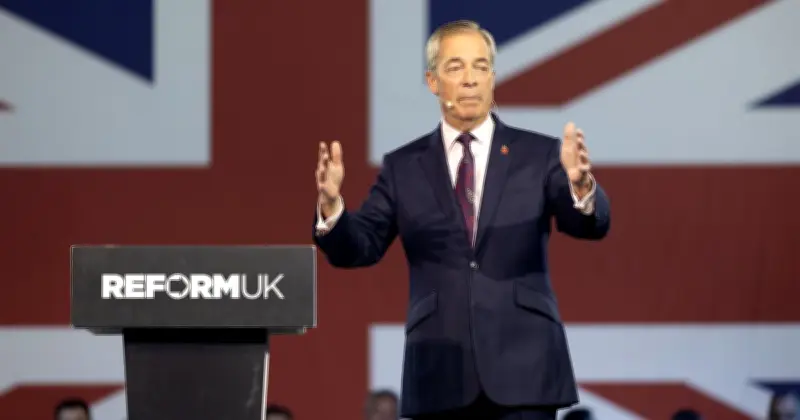
Reform UK leader Nigel Farage has issued a blunt three-word message to the UK's enemies and critics abroad: "We mean business". The statement came as he set out his party's foreign and defence plans, accusing Labour and the Conservatives of allowing the UK's global power to wither away.
Mr Farage warned that the UK faces real threats from Iran, Russia and China, but said a Reform government would give the armed forces the funding they need and start looking after its own interests instead of putting other countries first.
Hard-hitting message on sovereignty
In a hard-hitting message, he said: "The Falklands are British. The Chagos are British. Gibraltar is British. And no, we will not pay reparations to anyone, ever."
Reform UK has previously been accused of failing to have a clear defence and foreign policy, but this has changed with the appointment of Angus MacIntyre, an RAF Wing Commander with a military career spanning 40 years, as the official defence spokesman.
Defence spending and foreign aid cap
Mr Farage set out his philosophy in an exclusive comment for the Express, saying: "The threats to Britain are no longer abstract. Lone-wolf terrorists and state-sponsored actors, many of them working at the behest of the Islamic Republic in Tehran, are entering our homeland through porous borders. I have warned about this for years, only for my concerns to fall on the deaf ears of a complicit political class."
He added: "Britain's role in the world has been diminished over decades. But the power we once projected across the globe does not have to give way to the establishment doctrine of managed decline. On national and international security, Reform UK has a plan to put Britain back in the driving seat at home, in our region and around the world."
He said the plan means "spending 3 per cent of GDP on defence by 2030 and 3.5 per cent by 2035, and paying for it partly by putting a hard £1 billion cap on our foreign aid budget."
Using the UN veto and leaving the ECHR
The UK must stop being scared to defend its own interests, he said. "Abroad, we must use our UN Security Council veto in pursuit of explicitly British interests. Alliances must be founded on the mutual pursuit of freedom and strengthened by intelligence sharing and secure common supply chains."
This included leaving the European Court of Human Rights, repealing the Human Rights Act and refusing to let any international court override British law.
He said: "Vladimir Putin sees our weaknesses and exploits them. Our airports, hospitals, energy, food security and wider infrastructure are off limits. More than that, we will invest heavily in them to ensure that any and all attempts to attack us fail."
Mr Farage insisted: "To help bring peace abroad, we must build strength at home. You cannot simply declare yourself a world power; you have to create one. That comes through hard-headed, pro-British policies that show the world, and above all our enemies, that we mean business."
He concluded: "It also means committing ourselves, as a nation, to upholding our sovereignty, protecting our people at home and abroad, and securing the conditions for prosperity by actively promoting British business and inward investment."