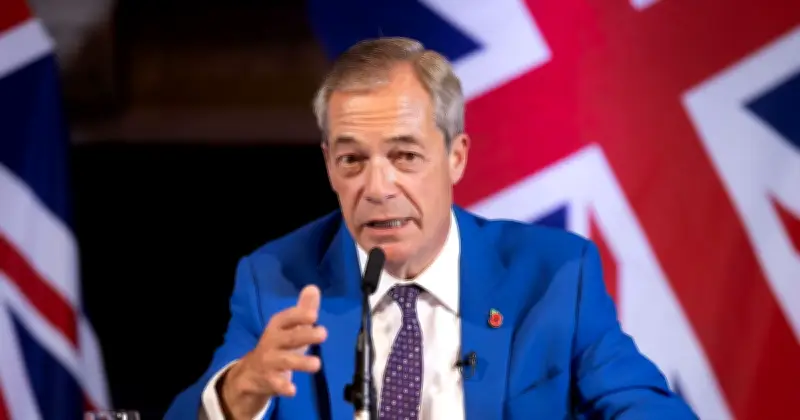
Nigel Farage has accused Prime Minister Andy Burnham of not believing in the UK as he warned that moves to unpick the Brexit settlement could cost households £2,000 each. Writing in the Express, the Reform UK leader described attempts to draw Britain back into the EU as "catastrophic".
The warning comes as Mr Burnham is set to use a major summit in Brussels to sign off an agreement aimed at changing part of the Brexit settlement. Downing Street said talks with the EU were "going down to the wire".
Farage's plea to the Prime Minister
In an impassioned appeal, Mr Farage said: "Today I implore the prime minister: Andy, don’t look back in anger. Look forward. Look to the future. Look to the promise."
"Look to the hope. Look to the fact that the peoples of these islands have endured and flourished for centuries, much to the chagrin of our sometimes noisy neighbours."
"And we didn’t need bureaucrats in Brussels to do it. We needed self belief, Andy. Self belief. You may not believe in Britain. But I still do."
Next month, Mr Burnham - who last year said he would like to see the UK back inside the bloc in his "lifetime" - will set out "options" for Britain's future relationship with the EU, including rejoining, with or without a referendum.
Cost of rejoining
Mr Farage, one of the leading forces - along with the Daily Express - in securing Britain's departure from the EU in the 2016 referendum, said rejoining would hit households hard.
"I don’t want every household to have to pay £2,000 extra a year just because Burnham wants to drag us backwards," he added.
"I want to lead a British government that realises the potential in the times ahead, and helps create wealth for the average family, rather than siphon it off in exchange for more migration and more regulation."
Tory leader Kemi Badenoch said Labour’s talks with Brussels will take the UK "backwards" on control of Britain’s money, laws and borders. She said successive governments "haven’t made nearly enough" of the opportunities presented by Brexit, adding that Mr Burnham does not have a mandate on deepening Britain’s ties to the EU.
Deal details
Today’s deal, originally negotiated by his predecessor Sir Keir Starmer, is focused on food and farming. In return for Brussels scrapping post-Brexit paperwork on British food exports, the Prime Minister will agree to permanently align with EU rules governing the sector.
The move will require the UK to adopt hundreds of Brussels laws each year over which it will have little if any input.
Mr Burnham will also sign up to a "youth experience scheme" allowing up to 100,000 EU nationals a year to live and work in the UK for up to three years at a time.
He will signal he is ready to slash university tuition fees for EU students studying in the UK, potentially costing the taxpayer up to £485 million a year.
Diplomatic sources said he would agree to pay tens of millions of pounds a year into funding infrastructure projects in poorer EU countries in return for access to the bloc's electricity market. Ministers have suggested the deal could improve energy supplies.
Mr Burnham has claimed unpublished Treasury analysis suggests the deal could boost food exports to the continent and add £12 billion to GDP in a decade's time.
Sir Keir had pressed for a new "youth experience scheme" allowing EU youngsters to live and work in Britain to be capped at 50,000 a year and limited to 12 months. Sources say Mr Burnham is ready to accept almost 100,000 a year for three years at a time in order to get the deal over the line.
EU leaders have reportedly warned the PM that Britain will have to rejoin or submit to full common market rules if he wants further concessions.
Migration pact
Mr Burnham has also opened the door to a Rwanda-style deportation deal with the EU as part of his post-Brexit reset. At the summit, he will present plans for a new migration pact with the bloc that promises to work together on "returns to third countries" and "pull factors for irregular migrants".
It comes after five EU countries announced a scheme to send failed asylum seekers to a returns hub in Rwanda, which closely resembles the now-abandoned effort by Boris Johnson to set up a similar arrangement with the African country.
Mr Burnham, who has blamed Brexit for the small boats crisis, believes forging closer ties on migration could help curb the crossings. A coalition of Germany, Greece, Denmark, Austria and the Netherlands announced their plan to send failed asylum seekers to Kigali in one of the largest ever shake-ups of EU migration policy.
Government sources said the statement was under negotiation and would not be concluded until Mr Burnham had held talks with Ursula von der Leyen, the European Commission president, and António Costa, her European Council counterpart.