De-Extinction Firm Hatches Chicks from Artificial Eggshell Technology
De-Extinction Firm Hatches Chicks from Artificial Eggshell

A biotechnology company focused on de-extinction has successfully hatched live chicks using an artificial eggshell, marking a significant technological advance that has drawn both praise and skepticism from the scientific community.

Artificial Eggshell Breakthrough

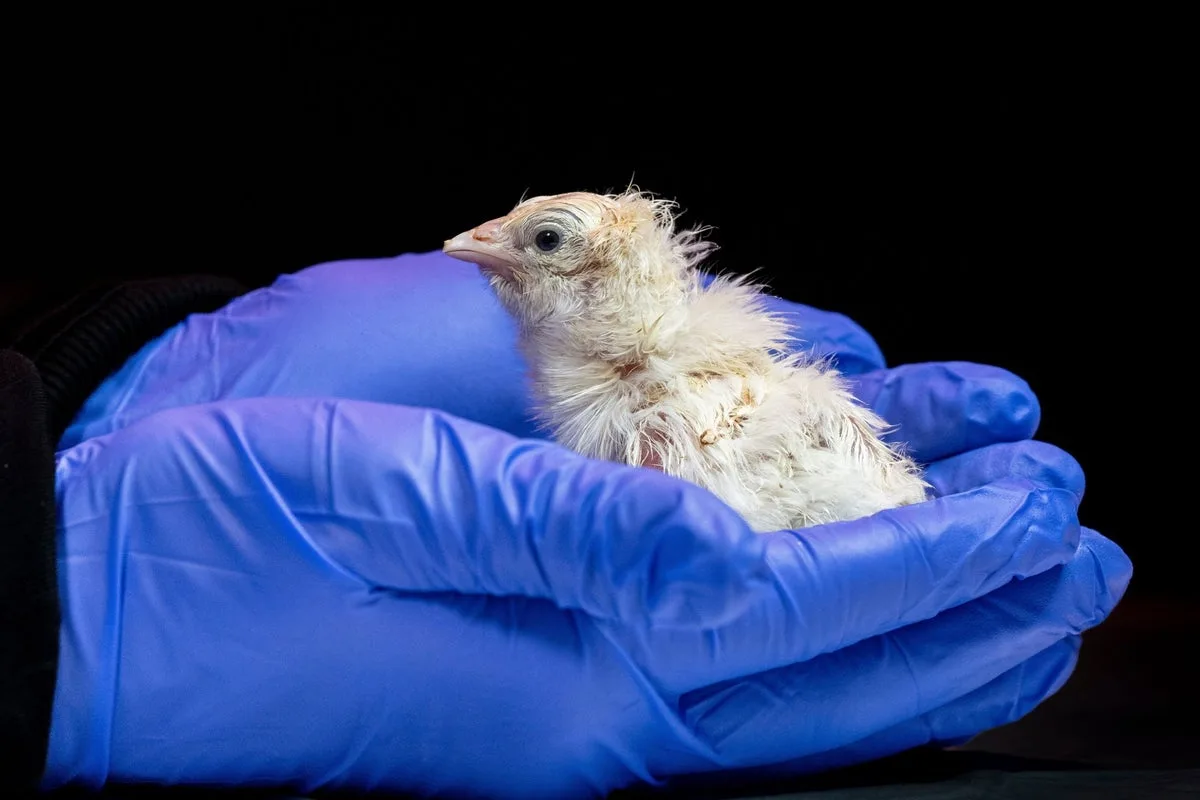
Colossal Biosciences announced on Tuesday that 26 baby chickens, ranging from a few days to several months old, were born from a 3D-printed lattice structure designed to mimic a natural eggshell. The company, known for its efforts to resurrect extinct species, previously created genetically engineered mice with woolly mammoth-like hair and wolf pups resembling dire wolves.

CEO Ben Lamm stated that the artificial egg technology could eventually be scaled to help recreate New Zealand's extinct South Island giant moa, whose eggs are 80 times larger than a chicken's and would be impossible for any modern bird to lay. "We wanted to build something that nature has done a pretty good job of developing and make it better and scalable and even more efficient," Lamm said.

Wide Pickt banner — collaborative shopping lists app for Telegram, phone mockup with grocery list

Scientific Reactions

Independent scientists acknowledge the technological achievement but caution that it falls short of a true artificial egg. Vincent Lynch, an evolutionary biologist at the University at Buffalo, noted, "They might be able to use this technology to help them make a genetically modified bird, but that's just a genetically modified bird. It's not a moa."

The artificial system includes a membrane that regulates oxygen flow, similar to a real egg, and allows real-time imaging of embryo development. However, it lacks other egg components, such as temporary organs that nourish and stabilize the growing chick and remove waste. Lynch emphasized, "That's not an artificial egg because you've poured in all the other parts that make it an egg. It's an artificial eggshell."

Nicola Hemmings, a bird reproductive biologist at the University of Sheffield not involved with Colossal, noted that producing chicks from artificial vessels is not entirely new. Earlier researchers used plastic films or sacks to create transparent eggshells for studying chicken development. Such technologies offer insights applicable to other mammals and humans.

Road to Moa Resurrection

Colossal faces significant hurdles before attempting to resurrect the moa. Scientists must first compare ancient DNA from well-preserved moa bones to genomes of living bird species, and they need to create a much larger eggshell. Lamm explained that the company began working on surrogacy and birth engineering challenges early, rather than waiting until a moa was ready to be birthed.

Even if Colossal succeeds in creating a tall bird resembling the moa, concerns remain about its survival in a modern landscape. Arthur Caplan, a bioethicist at New York University's Grossman School of Medicine, questioned, "The big challenge is, what environment is this animal going to live in?"

Hemmings suggested that de-extinction efforts might be more practical for currently endangered species, where preserving sperm and egg cells from living members could help boost populations. "My personal interests lie more in preserving what we've got than trying to bring back what is already gone," she said.

Pickt after-article banner — collaborative shopping lists app with family illustration




