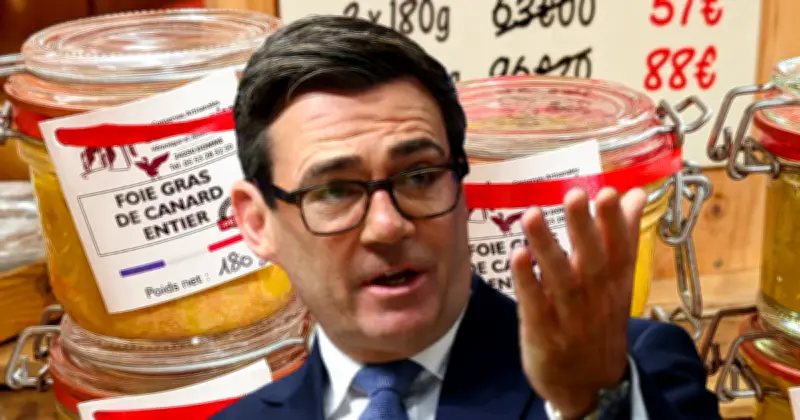
Campaigners have accused Andy Burnham of bowing to the EU after the UK-EU summit agreement failed to include a ban on foie gras imports, breaking a Labour election promise.
The agreement signed on Friday in Brussels is aimed at slashing post-Brexit red tape, but critics argue it reduced the UK to being a rule-taker. Ministers failed to use the opportunity to carve out a ban on the paté made from the livers of force-fed ducks or geese.
Campaigners' fury over broken promise
Abigail Penny, executive director of Animal Equality UK, said: "For years now, the Government has kicked the can down the road on foie gras. 'Wait for the Animal Welfare Strategy', they told us. 'Wait for the Sanitary and Phytosanitary deal', they said. Well, that moment has come, and the ducks and geese force-fed for foie gras are no better off than they were before.
"Days before taking power, this Government made an explicit promise to voters that it would end this abhorrent cruelty from entering our shores. Yet at the eleventh hour, with the clear chance to secure a carve-out, they've bowed to Brussels and abandoned these animals. It's been a political hot potato from start to finish.
"You have to wonder, was that promise made in good faith, and did they ever intend to follow through? If so, now is the Government's time to prove it."
Ms Penny added: "There may still be a window of opportunity to end foie gras imports, but right now we're left with far more questions than answers."
Labour's 2024 pledge
During the 2024 general election campaign, Labour's then shadow environment secretary Steve Reed promised to ban imports of foie gras. But the pledge was not put in the party's official manifesto.
The RSPCA warned Mr Burnham's new EU deal could "weaken" animal welfare laws in the UK. Britain has been able to use Brexit powers to make key legal changes to help animals, such as the banning of live exports and puppy import restrictions, but future progress is "now in doubt".
The animal charity warned that while existing laws brought in since Brexit, like banning live exports of farm animals and stopping the cruel trade in puppies, will remain, the UK Government has failed to put in place an explicit carve-out clause that would allow British nations to deliver higher welfare standards in the future.
RSPCA warning
David Bowles, head of public affairs at the RSPCA, said: "This deal is not good news for future farm animal welfare standards and for those farmers who wish to produce under higher animal welfare standards.
"Since leaving the EU, the Government has started to move away from EU rules by proposing the end to cages for laying hens, banning fur and foie gras imports, phasing out the use of carbon dioxide as a method of stunning pigs and committed to a future consultation on the banning of farrowing crates."
He added: "We believe the Government now needs to show leadership and courage by going ahead with its proposed ban on CO₂ slaughter for pigs, ban on cages for laying hens, introducing mandatory labelling on food products and a ban on farrowing crates for pigs."
While not commenting on the promised import ban, a Government spokeswoman said: "The UK banned the force feeding of ducks and geese for foie gras 20 years ago, and that ban stays firmly in place.
"This Government has an ambitious Animal Welfare Strategy, and we are making major changes like banning restrictive cages and transitioning to more humane pig stunning methods."