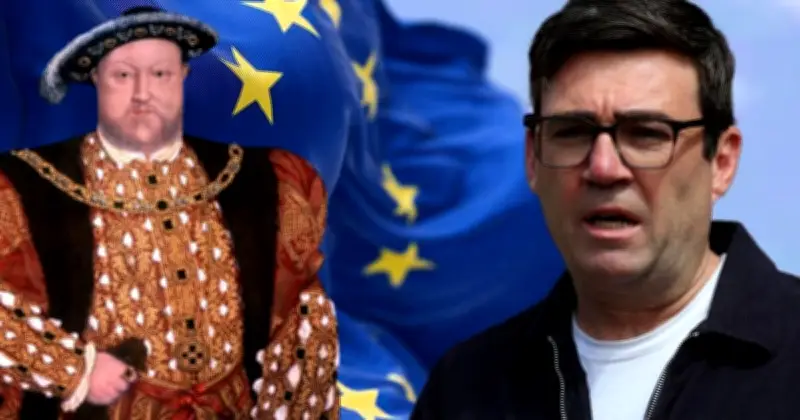
The EU deal being prepared by the Government is reported to include Henry VIII powers, which would allow ministers to align Britain with EU rules without a parliamentary vote on each measure. The powers take their name from the Statute of Proclamations of 1539, which gave the King's decrees the force of law.
What the powers would mean
The powers have been opposed by parliamentarians since they were introduced. They would let ministers change the law without a full vote, with MPs expected to approve changes with little scrutiny.
The deal comes as the Prime Minister prepares to present the new EU agreement to the Commons. Reports suggest the Henry VIII powers are included, allowing alignment with Brussels without MPs voting on each rule.
Questions over the deal
A question has been raised about why the powers are needed if, as Andy Burnham has said, the summit was "probably the limit of what we can achieve in this Parliament". The detail of the deal has not yet been published, days after the summit.
Whitehall has said the details will be made clear in due course. The deal is expected to have far-reaching consequences and is set to be rushed through Parliament.
Impact on the economy
Ministers have said the food deal alone could add billions to the economy and save consumers money. The article argues that MPs should be allowed to vote on the deal rather than have it passed with minimal oversight.
It draws a contrast with Henry VIII, who broke with Rome and declared himself head of the Church of England, taking back control nearly 500 years ago. The article suggests the Prime Minister is doing the opposite by handing over lawmaking powers to the EU.