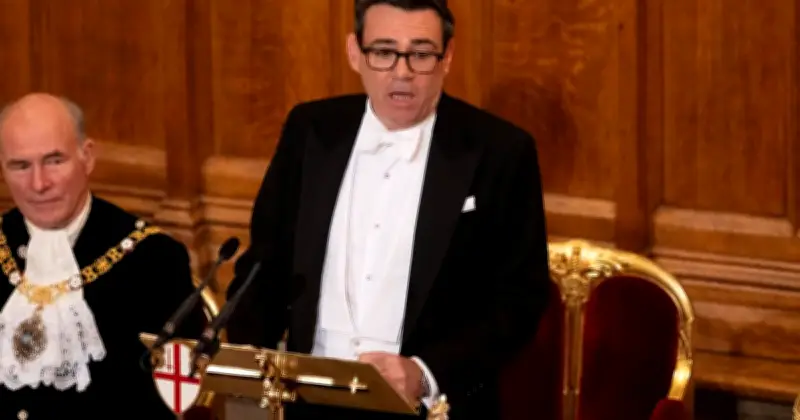
Prime Minister Andy Burnham's push for an EU reset and eventual rejoin has drawn widespread opposition from political and business figures, with warnings that such a move would cost the UK billions and undermine Brexit benefits.
Warnings from Political and Business Leaders
David Cameron, the former PM who initiated the Brexit referendum and campaigned to remain, has said joining the EU would lead to major problems for a long period and is not in Britain's interests. The Financial Services sector warned against dynamic alignment with EU regulation, saying it would destroy the Brexit benefits accrued so far.
The Food and Drink Federation highlighted that linking with the protectionist EU would damage British producers, while the CBI warned against the disruption of joining. The Independent Business Network (IBN) report reflects why family businesses, including sole traders and entrepreneurs (85% of all businesses), do not want a reset, let alone to join the EU, which is now very different from the EU of 2016.
Cost Estimates and Trade Concerns
The campaign group Stay Out estimated the cost to the UK would be £750 million per week, over £39 billion per annum, figures that tally with other groups. Brexit Britain is well placed to lead in AI, financial and related services, biotech, and extraction industries, all of which would be quashed by an over-regulated and protectionist EU.
Only 1.3% of all UK exports are food and agriculture going to the EU. Trade deals with fast-growing economies and old friends like New Zealand, whose trade with the UK has grown by around 16%, could be killed by tariffs protecting EU producers, increasing the cost of living for consumers.
Arguments for Rejoin and Democracy Concerns
Proponents argue for a seat at the top table in the EU, but the EU is in sharp relative decline and the UK would have no veto, becoming a slave of the EU machine. Some outdated financial figures suggest the economy could have been 4% or 8% larger without Brexit, but these forecasts do not pass the smell test as they would have required unbelievable super growth.
Real-world figures show the UK economy has grown faster post-Brexit than the Eurozone, Germany, and France. The most important issue is democracy, the rule of law, and the ability to determine the UK's own future. PM Burnham has said he wishes to take the country back to a fictitious golden age of the 1970s, a decade of IMF bailouts, union power, strikes, the three-day week with power cuts, and Britain in decline.
Since joining the EU now would be insanity, it is puzzling why Burnham wants to join, starting with the reset. The entire future of the country is to be decided by an unelected PM with no mandate.