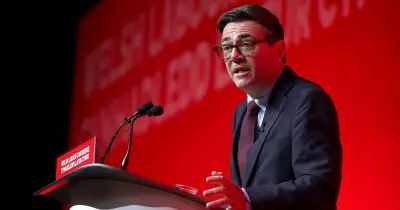
Prime Minister Andy Burnham will on Monday promote the deal he struck with the European Union, saying during a supermarket visit that it is “taking pressure off the cost of food” for shoppers at the till.
The Labour leader will also welcome an initiative by retailer Morrisons to offer thousands of work experience and apprenticeship opportunities for young people as part of efforts to tackle youth unemployment.
Brussels summit agreements
Burnham struck deals at last week’s Brussels summit covering food and agriculture exports, emissions trading, and a youth experience scheme, which he will also tout in a statement to MPs in the House of Commons later on Monday.
The food deal, officially known as a sanitary and phytosanitary (SPS) agreement, will end most post-Brexit checks and restrictions on food and agricultural products from March 1 2028. It has been praised by the chief executives of major chains including Morrisons, Tesco and Asda, although critics have cast doubt on whether any cost changes will filter through to consumers.
Morrisons visit and youth opportunities
Ahead of his visit to a Morrisons in Kent, Burnham said: “We’re cutting the cost of doing business, backing British companies to grow and taking pressure off the cost of food for families at the checkout.”
He added: “But this is also about something bigger, restoring hope and opportunity to a generation of young people who have too often felt that the odds are stacked against them.”
The Labour leader will tour the facility with Morrisons chief executive Rami Baitieh to discuss how the firm is creating youth opportunities, as the Government seeks to tackle the crisis of more than a million young people not in education, employment or training (Neet).
Morrisons Proper Opportunities includes an initiative to create 1,000 apprenticeship opportunities by 2030, as well as a scheme to offer 3,000 work experience places for 14 to 18-year-olds across its shops, logistics hubs, manufacturing sites and head offices.
Trade deal impact and reactions
Baitieh said the visit would “shine a light on some of our fantastic apprentices, as we underline our commitment to creating meaningful work pathways for young people”. He also noted the opportunity to discuss the new EU food trade deal at first-hand, saying: “Removing these trade barriers will help tackle the cost-of-living challenge and lighten the load on shoppers.”
Burnham has previously said his agreement with Brussels could raise GDP by 0.4%. However, the Government has faced questions over how much of the savings from reduced trade barriers will be passed on to shoppers.
Conservative deputy leader Alex Burghart, who vowed to repeal the deal, told Sky News on Sunday: “I don’t believe for a moment that these… very small changes in cost are actually going to filter their way through to consumers at a time when the Government has policies that are making the cost of energy and electricity much higher.”
Tory leader Kemi Badenoch will tell the CBI conference, on Monday, that Burnham “got a terrible deal, because he made it clear he wouldn’t turn it down”, and argue that Europe “is not the market of the future” and that Britain should focus on faster-growing economies such as India, Indonesia and the US.
Reform UK leader Nigel Farage will tell the same gathering: “Divergence is our strength. Going backwards into the EU’s orbit would be a disaster for the very British businesses that are trying to compete and innovate.”
The British Retail Consortium called the SPS deal a “big win” for UK retailers, but said it did not expect to see prices on supermarket shelves fall in response.
Foreign Secretary Ed Miliband and European relations minister Hamish Falconer both declined to say how much consumers should expect food prices to fall in Sunday interviews. “I’m not going to pick out items or pick out a number,” Miliband told the BBC, as he told viewers to “take the word of all the retailers” who pointed to “downward pressure on prices”.
The Foreign Secretary also insisted the Government could tackle the Neets crisis at the same time as overseeing the EU youth mobility scheme. Concerns have been raised over the scheme, which will allow 100,000 Europeans aged 18 to 31 to live in the UK for up to three years, could increase competition for jobs and undermine the efforts to curb the number of Neets.
He said: “There’ll be young people from Britain going to work in Europe and study and live, and there’ll be young people from Europe coming to our country as well. And I absolutely believe we can both address the issue of Neets, which I think Alan Milburn did excellently this week, and we can address the issue of young people having the freedom to go and work and live in Europe.”