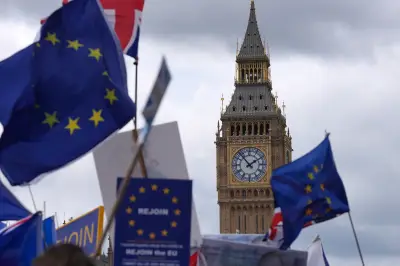
Documents suggest the agreement signed between London and Brussels includes proposals for a "Digital Partnership" that could cover "digital wallets and credentials" and "trust services", potentially reopening the path to digital ID.
Allies of the Prime Minister said in July that Andy Burnham will scrap plans for a government-issued digital ID for all British adults. However, critics fear the small-print of Friday's deal revealed the idea could be revitalised.
Critics warn of reversal
Oliver Lewis, chairman of Stay Out and former deputy chief negotiator for the UK during the Brexit negotiations, said: "One of Andy Burnham's first acts as Prime Minister was to scrap digital ID, and four months later he has come back from Brussels with a deal that puts the EU's version on the table, just as Brussels is forcing it on every one of its member states."
He added: "We already knew this deal would cost us up to £3 billion a year, and now we find it also reopens something the country has already rejected, which tells you how quickly this Prime Minister gives way when Brussels asks. He will keep giving way until we are back inside and paying £750 million a week, and who knows what else he will hand over to get there."
Deal text and political reactions
The agreement signed by the UK and the EU states: "We intend to launch an EU-UK Digital Partnership early next year to enhance cooperation on digital and technology matters, in areas that could cover secure and resilient connectivity, artificial intelligence, including AI security and safety, critical technologies, including quantum, digital wallets and credentials, trust services, online safety and multilateral cooperation to deepen practical cooperation and to bring actions under a common structure."
Former Prime Minister Sir Keir Starmer had argued that mandatory digital ID for workers would make it easier to clamp down on immigrants working illegally and modernise the state. He also said such a system would enable citizens to prove identity to access key services quickly instead of having to hunt for utility bills.
Reform's economic spokesman, Robert Jenrick, said: "The country has huge problems and instead of fixing them Burnham is wasting time refighting an expensive battle he lost on Digital ID. He has no mandate whatsoever to enforce this on the British people and that's why Reform will reverse any such change. The only people benefitting from the reset are foreign students who will have their fees subsidised by the taxpayer to the tune of £450 million while British youngsters continue to be ripped off. The government's own analysis shows the deal will not add anything whatsoever to GDP per capita. Burnham should stop now before he plunges the country into more years of division and chaos with no reward."