

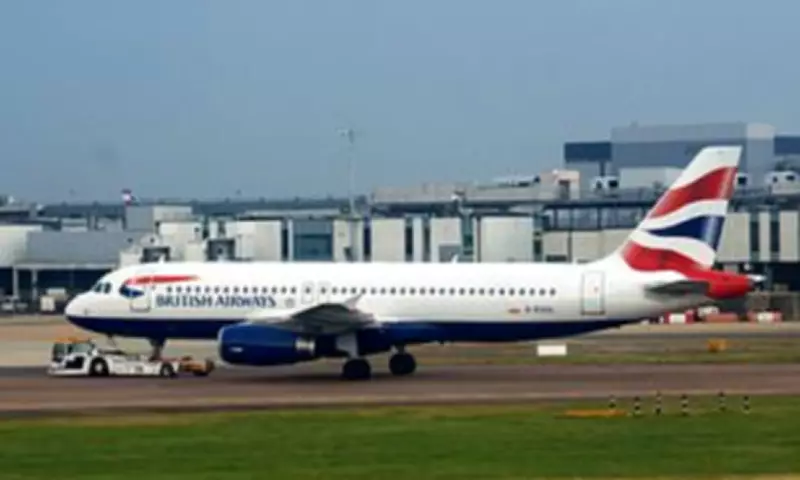
The chief executive of British Airways' parent company, International Airlines Group (IAG), has issued a stark warning that all airlines will be compelled to raise ticket prices in response to soaring jet fuel costs, driven by the ongoing conflict in the Middle East. IAG, which also owns Iberia, Aer Lingus, and Vueling, anticipates spending approximately €2 billion (£1.7 billion) more than originally budgeted on fuel this year due to the oil crisis.
Fuel Price Impact on Profits
IAG chief executive Luis Gallego stated that the group is 'managing the uncertainty' caused by the fuel price increase by 'taking the necessary action on yields, costs and capacity'. However, he acknowledged that all airlines 'need to increase fares in order to mitigate the impact' of the higher fuel prices, which constitute roughly a quarter of their operational costs.
The conflict between the US and Israel against Iran has effectively closed the Strait of Hormuz, sending aviation fuel prices skyrocketing since late February amid a global energy shock. Many carriers have already announced flight cancellations, but Gallego added: 'Whilst the impact of the higher fuel price will inevitably lead to lower profit this year than we originally anticipated, we are confident in our business model and strategy.'

Financial Consequences
Shares in IAG fell by 4 per cent in early trading after the company revealed that its fuel costs are expected to reach €9 billion (£8 billion) this year, impacting full-year profit and free cash flow. The average global jet fuel price increased to $181 (£134) per barrel last week, according to International Air Transport Association data, following a peak of $209 (£155) at the start of April.
Iran continues to exert control over tankers passing through the Strait of Hormuz, raising concerns about jet fuel shortages ahead of the peak summer season. Aviation analytics firm Cirium reported that 13,005 flights planned for May were cancelled between April 10 and April 21, equivalent to 1.5 per cent of scheduled services.
Industry-Wide Responses
European airlines are adopting various strategies to cope with the fuel crisis. Air France-KLM expects a $2.4 billion (£1.8 billion) increase in its fuel bill and has downgraded its capacity outlook. It previously announced plans to raise long-haul ticket prices by €50 (£43) per round trip. EasyJet warned of a larger half-year pre-tax loss of up to £560 million, including £25 million in extra fuel costs in March.
Lufthansa introduced a new 'Economy Basic' fare option limiting carry-on bags and said it would remove 20,000 short-haul flights through October. SAS cancelled 1,000 flights in April due to high fuel costs, while TAP Portugal said price hikes would partially offset fuel cost impacts. TUI cut its full-year profit outlook and suspended revenue guidance, citing €40 million (£35 million) in extra costs from the war.
SunExpress, a joint venture between Turkish Airlines and Lufthansa, imposed a temporary fuel surcharge of €10 (£9) per passenger on routes between Turkey and mainland Europe. Turkish Airlines decided not to distribute dividends from 2025 net profit to preserve cash. Virgin Atlantic added fuel surcharges but still struggles to return to profitability. Volotea introduced a pricing policy linking ticket prices to fuel costs, potentially adding up to €14 (£12) per passenger per flight.
Summer Outlook and Mitigation
Travel expert Paul Charles from The PC Agency warned that 10 per cent of flights could be at risk in June if supplies remain constrained, equating to about 85,000 flights. However, Gallego said IAG does not believe there will be 'any interruption for the summer'. He acknowledged reduced jet fuel from the Middle East but noted 'other places with record supply' such as the US.
IAG has been 'planning for situations like this for many years' and invested in its own jet fuel supply at its main hubs. Markets like Asia that were weaker in fuel supplies are 'building up reserves'. The group reported 'strong demand across most of our markets' but 'softer demand' in the eastern Mediterranean.

Financial Performance
IAG recorded a pre-tax profit of €422 million (£365 million) in the three months to the end of March, a 76.6 per cent increase from €239 million (£207 million) a year earlier. Gallego attributed the 'strong first quarter' to 'continued strong demand for our networks and airline brands'. He emphasised that IAG is 'uniquely positioned to navigate the current headwinds' due to its diverse markets, strong brands, high margins, and strong balance sheet.
About 3 per cent of IAG's capacity was exposed to the Gulf region at the start of the war, mostly via British Airways flights. Much of this capacity has been redeployed to destinations like Bangkok, Singapore, and the Maldives, where Middle East carriers have reduced flights. British Airways added extra flights to India and Nairobi this summer.
Equity analyst Aarin Chiekrie of Hargreaves Lansdown noted that IAG has hedges for around 70 per cent of its fuel needs this year, limiting the total fuel cost increase from €7.1 billion to €9 billion. The group expects to offset about 60 per cent of the increased fuel costs through capacity reallocation, pricing actions, and tighter cost controls.
Broader Industry Developments
Emirates reported a pre-tax profit of 24.4 billion dirhams (£4.88 billion) for the year to March, up 7 per cent, claiming to remain 'the world's most profitable airline'. Air France-KLM cut its 2026 outlook, citing higher fuel bills. The European Union Aviation Safety Agency cleared the possible use of US-produced Jet A fuel in Europe, which has a higher freezing point than the standard Jet A-1, but cautioned about operational risks.
The International Energy Agency warned on April 16 that Europe had six weeks of jet fuel left before shortages begin, pointing to May 28. However, Transport Secretary Heidi Alexander insisted summer holiday plans would not face major disruption, noting increased fuel imports from the US and higher refinery production. The government introduced a temporary rule allowing airlines to group passengers from different flights onto fewer planes to save fuel.





