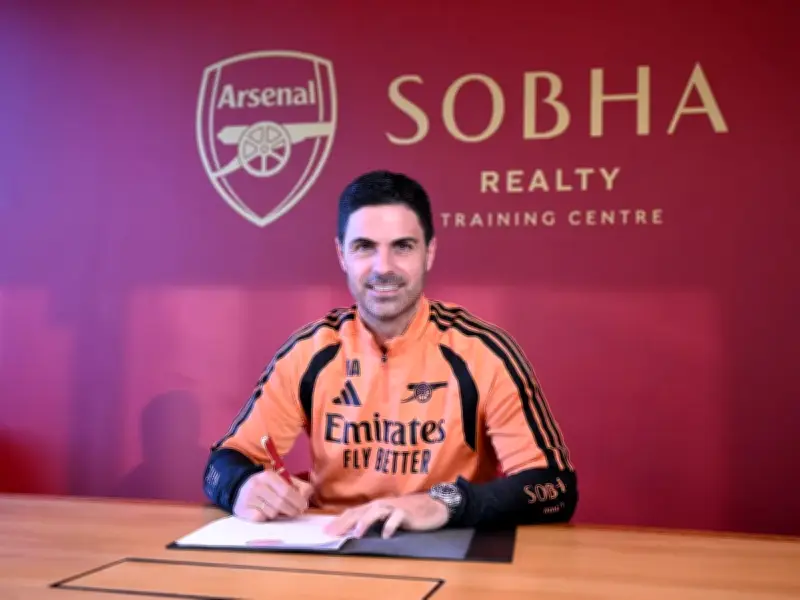
Mikel Arteta has signed a new contract with Arsenal that makes him the highest-paid manager in the Premier League, with the most conservative estimate of the deal's value coming in at around £20 million a year. The contract runs until 2030, and for as long as he stays at the club, the manager will be the highest-paid employee.
Ferguson's precedent
The arrangement echoes a rule established in 2010 by Sir Alex Ferguson, who wrote in his 2015 book, Leading: “I told them (the Manchester United owners) I did not think it fair that (Wayne) Rooney should earn twice what I made and Joel Glazer immediately said: ‘I totally agree with you but what should we do? It was simple. We just agreed that no player should be paid more than me.’”
Not many managers get into the position of strength that Ferguson enjoyed in 2010. Pep Guardiola, possibly Jose Mourinho in his pomp, and now Arteta.
Comparable pay packets
Bukayo Saka is believed to be Arsenal's highest-paid player, his recent extension taking his wages into the £18m-a-year bracket, with Declan Rice soon to join him there. No one can begrudge Arteta his lucrative deal, as he has reestablished Arsenal as a powerhouse of domestic and European football, becoming a more measured figure in the technical area, extremely bright and personable. But the figures involved are ridiculous, with some publications believing the contract to be in the £25m-a-year ballpark.
Managers' salaries count towards the Premier League's financial regulations, which now take the form of Squad Cost Ratio. Arsenal are not anticipated to have any issues on that front, but others might, with Nottingham Forest said to be paying Oliver Glasner around £12m a year.
Financial implications
The Manchester City case will not only undermine the integrity of this Premier League season but also that of a couple of decades' worth of seasons, potentially affecting the next broadcasting deal, which provides the financial lifeblood of the league.
The money for these pay packets does have to come from somewhere, eventually from the fans. When a manager is given a deal paying him not far off £500,000 a week, questions arise about whether the elite game is heading in the right direction. Arteta's most recent result, a 3-0 defeat at Brighton, has no relevance, but consistent excellence is hard to maintain. In recent years, the accounts of Premier League clubs, apart from Arsenal, City and Liverpool, are festooned with pay-offs to sacked managers and their staff, with the money coming from TV subscriptions, replica shirts, tickets, and over-priced food and drink.
For now, Arsenal supporters will not care about that. What is important is that Arteta and the club seem a perfect match, and the manager has committed himself to the 'project' for another four years, at least. It is developing into a dynasty. But there was a time, well before Ferguson's Rooney rule, when managers were modestly paid and the talent that mattered most was out on the pitch. We can safely say that time has gone.