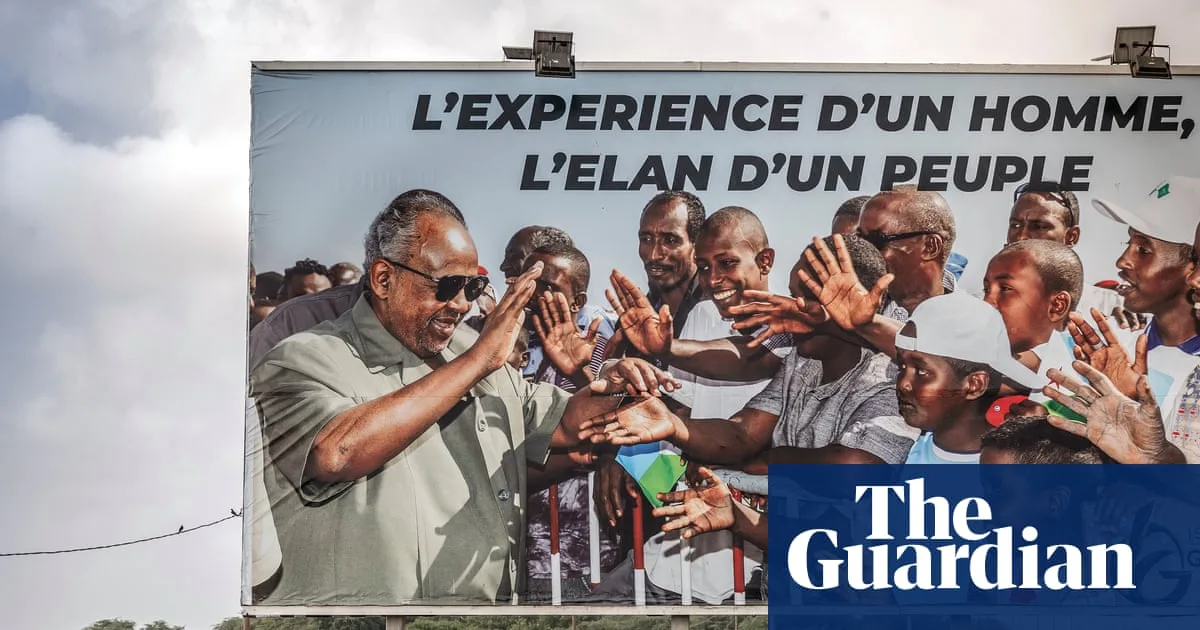
Soaring Nomination Fees Reshape African Democracy in Djibouti and Benin Elections
High Nomination Fees Reshape African Democracy in Elections

Soaring Nomination Fees Reshape African Democracy in Recent Elections

Presidential elections held in Djibouti and Benin over the weekend have brought into sharp focus a troubling trend sweeping across Africa: the dramatic escalation of nomination fees that critics argue is systematically reshaping democratic participation. These two French-speaking nations joined approximately eighteen other African countries heading to the polls in 2026, but their electoral processes share a striking and controversial characteristic—exceptionally high financial barriers for presidential hopefuls.

The Financial Barrier to Democratic Participation

In Djibouti, the nomination fee was set at approximately £20,000, while Benin established an even more staggering requirement of about £328,000. These substantial sums have sparked widespread protest and debate about the fundamental nature of electoral competition. Alexis Mohamed, a former adviser to Djibouti's long-serving President Ismail Omar Guelleh, highlights the practical implications of these financial hurdles. Having resigned last September citing democratic regression, Mohamed finds himself unable to return home to file nomination papers or campaign without credible security guarantees.

"On paper, this may appear to be a simple legal requirement. In reality, it is an additional mechanism of selection and exclusion," Mohamed asserts, describing participation in such elections as both a waste of time and financial resources. In Djibouti's specific case, the nomination fee is only refundable to candidates who secure at least ten percent of votes cast—a provision Mohamed views as particularly problematic given the incumbent president's consistent electoral performances.

Wide Pickt banner — collaborative shopping lists app for Telegram, phone mockup with grocery list

Incumbent Advantages and Constitutional Changes

President Ismail Omar Guelleh, aged seventy-eight, has maintained power since 1999, overseeing constitutional amendments widely perceived as tailored to his political advantage. These changes first enabled open presidential tenure and subsequently removed the previously established age limit of seventy-five. "In a country where the incumbent president is presented, election after election, as winning with figures close to ninety-seven percent, the real meaning of such a provision is not merely to regulate competition but to lock it down," Mohamed explains, pointing to the structural challenges facing opposition candidates.

A Continent-Wide Pattern of Exclusion

This pattern of rising electoral costs extends far beyond Djibouti and Benin, representing a continent-wide phenomenon that is fundamentally altering who can realistically compete for political office. In Zimbabwe, nomination fees experienced a dramatic nineteen hundred percent increase to £15,000 during the last elections. Opposition leader Linda Tsungirirai Masarira, president of the Labour Economists and Afrikan Democrats, found herself unable to participate in the 2023 polls due to what she describes as "exorbitant fees."

"The notion that high nomination fees produce serious leadership is fundamentally flawed," Masarira argues. "Financial capacity is not a measure of political competence, integrity, public support or visionary leadership." While not entirely dismissing the need for some financial commitment from candidates, she emphasizes that fees must remain reasonable and warns that excessive amounts disproportionately disadvantage women, young people, independent candidates, and smaller political parties.

Democracy as Commercial Transaction

Motlapele Raleru, executive director of the Botswana-based Centre for Democracy and Electoral Awareness, offers a stark assessment of the situation. She contends that rising nomination fees do "more harm than good," potentially reducing candidate numbers without necessarily improving the quality of remaining choices. Worse still, she argues, this trend "reduces [candidacy] to a commercial transaction, not a civic right." In practical terms, Raleru views high fees as implementing a "systematic wealth test" that privileges affluent political actors, diminishes voter choice, and effectively puts democracy "on sale to the highest bidder."

Pickt after-article banner — collaborative shopping lists app with family illustration

The Malawian Paradox and Unintended Consequences

Malawi presents a fascinating case study that challenges conventional assumptions about nomination fees. Despite the presidential nomination fee increasing to approximately £4,200 for the September 2025 election—up from about £800 just five years earlier—the ballot actually expanded from seven candidates to seventeen. Some of these candidates reportedly entered the race late without established political histories, raising questions about their motivations and backing.

Malawian political science professor Nandini Patel suggests the possibility that powerful political actors may have financed "proxies" to split opposition votes and confuse electoral opponents. This scenario suggests that high fees might still produce crowded ballots without necessarily enhancing electoral credibility. Patel expresses concern that escalating nomination fees "may inspire corruption" and that current "horrendous" fee levels could effectively block capable candidates from participating.

Milward Tobias, an independent presidential candidate in Malawi's 2025 elections, firmly rejects the notion that financial capacity indicates political seriousness. "Political competition is too heavy a sacrifice to be measured by nomination fee," he asserts. Tobias believes that some aspiring candidates failed to participate not due to lack of conviction but simply because they were financially excluded from the process.

The Broader Cost of African Elections

Political scientist Michael Wahman from the University of Michigan, who has extensively researched electoral costs in Malawi and Zambia, emphasizes that nomination fees represent only a fraction of the substantial financial burdens candidates face in many African elections. Similar to the United States, where presidential campaign costs reach billions of dollars, Wahman notes that the enormous sums involved in African elections create dangerous conditions that can foster corruption and undermine democratic integrity.

As African nations continue to navigate complex democratic transitions, the escalating cost of political participation presents a formidable challenge. The experiences of Djibouti, Benin, Zimbabwe, and Malawi demonstrate how financial barriers can reshape electoral landscapes, potentially excluding diverse voices and consolidating power among established political elites. This trend raises fundamental questions about the future of democratic representation across the continent and the true meaning of political participation in increasingly expensive electoral systems.




