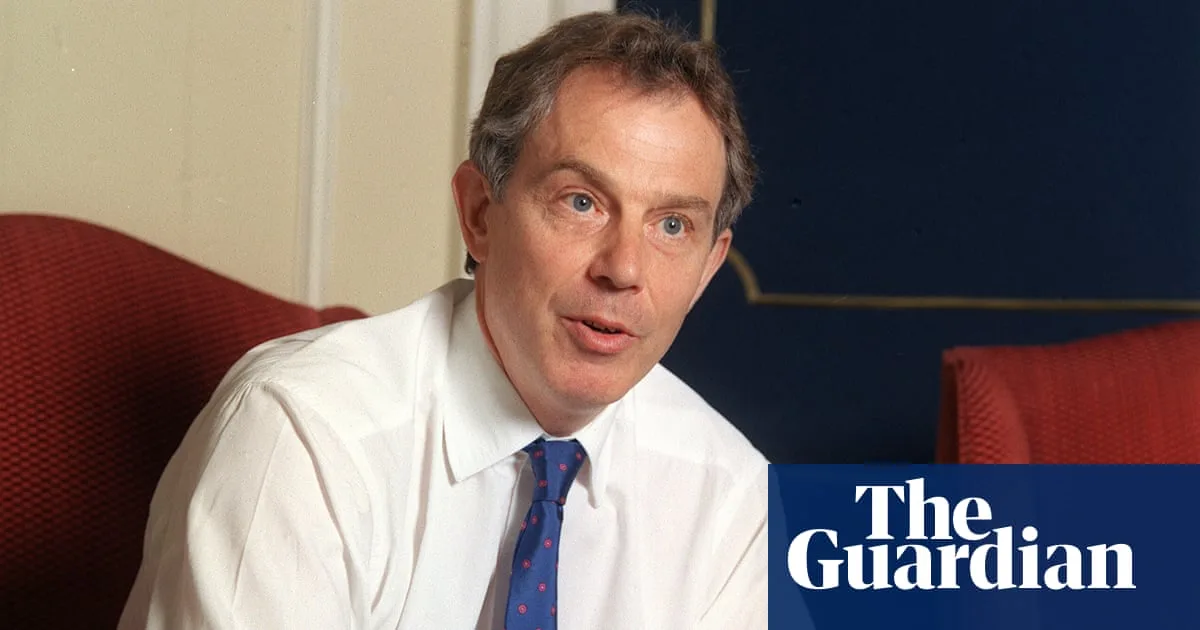
Sir Tony Blair met Jeffrey Epstein in Downing Street while he was prime minister after a recommendation by Peter Mandelson, newly released papers from the National Archives show. Epstein visited Blair on 14 May 2002, following a suggestion by Lord Mandelson to the prime minister’s then chief of staff, Jonathan Powell.
At the time of the recommendation, Mandelson was a backbench Labour MP but still served as a trusted ally to Blair. He had described Epstein to Powell as “safe” and a “friend” in an email before the meeting. The email, sent a week prior, stated: “Do you remember when Clinton saw TB [Tony Blair] he said he wanted to introduce his travelling friend, Jeffrey Epstein, to TB? ... I think TB would be interested in meeting Jeffrey, who is also a friend of mine, because Jeffrey is an active scientific catalyst/entrepreneur as well as someone who has his finger on the pulse of many worldwide markets and currencies. He is young and vibrant. He is safe (whatever that means) and Clinton is now doing a lot of travelling with him.”
A briefing memo by senior civil servant Matthew Rycroft described Epstein as a friend of Mandelson and former US president Bill Clinton, as well as being close to Prince Andrew, the Duke of York. Rycroft noted: “He is a financial adviser to the super-rich and a property developer. ... Peter says that Epstein now travels with Clinton and Clinton wants you to meet him.”
A spokesperson for Blair said: “As far as he can remember, Mr Blair met with him for less than 30 minutes in Downing Street in 2002 and discussed US and UK politics. He never met or engaged with him subsequently. This was, of course, long before his crimes were known of and his subsequent conviction.” A government spokesperson said Powell “forwarded on the request, he had no further role”.
Epstein pleaded guilty to soliciting prostitution from a minor in June 2008 and died in prison in 2019. The release of the documents had been blocked by government officials over concerns it may affect UK-US relations, but the National Archives released them following a freedom of information request.