Fahmy al-Fateh never made it home from war in Sudan. His wife, Azaher Abdallah, last heard from him over a year ago when he called to say he would stop at the market after leaving a military base in Khartoum. Now their 3-year-old son shouts at every passing motorcycle, hoping it is his father.
Thousands Missing
According to the International Committee of the Red Cross (ICRC), more than 8,000 people have gone missing during Sudan's three-year conflict. The war has torn families apart through separation during flight, disappearance during fighting, or secret detention. Many of the missing in Khartoum state are believed to be in unmarked graves, where tens of thousands of bodies have been discovered since the army retook the capital from paramilitary forces last year.
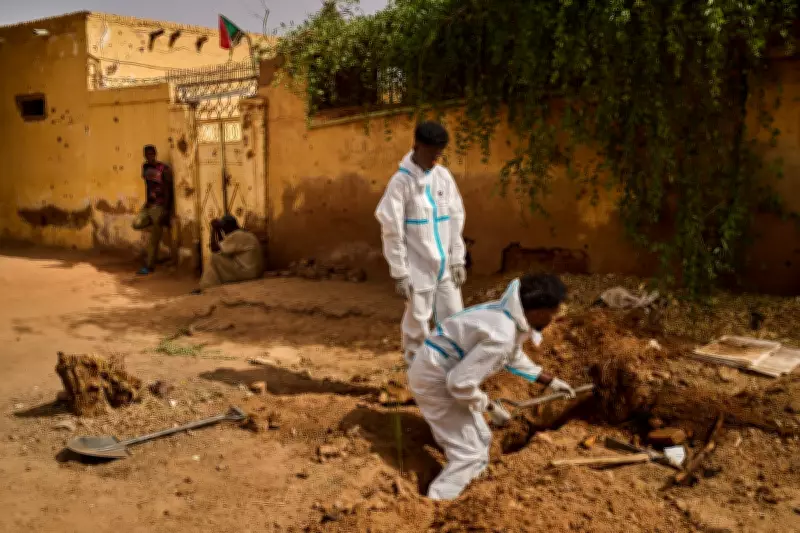
During the height of fighting, it was often too dangerous to bury bodies in cemeteries. People dug graves wherever they could—in soccer fields, near defunct gas stations, with makeshift signs bearing names and dates, or no markings at all.

Agonizing Uncertainty
Azaher Abdallah has combed the city, visited hospital morgues, and asked the army for help. Her husband's unit said they would try to find him but advised her to consider him missing. Psychologists say the uncertainty surrounding missing loved ones can cause profound distress. “Families of missing persons experience additional layers of vulnerabilities due to hostilities, displacement and ambiguous loss,” said Nathalie Nyamukeba, a psychologist with the ICRC.
Sulafa Mustafa's 18-year-old son Suleiman went missing two years ago after visiting a friend near Khartoum. She has traveled through the streets under shelling, gone door to door, visited hospitals and prisons, and rented a microphone to shout his name. “I haven’t lost faith in finding you,” she said.
Challenges in Recovery
Finding people alive or dead is difficult in Sudan, especially as the war continues. DNA testing labs have been destroyed, and few forensic specialists remain. In Khartoum state, authorities have moved nearly 30,000 of an estimated 50,000 bodies hastily buried during RSF control. About 10% of reburied bodies remain unidentified. Hisham Zienalabdien, director of forensic medicine for Khartoum state, said they are saving DNA from unidentified bodies in hopes of matching them with relatives.
For families who have found loved ones but cannot properly bury them, the pain persists. Abubakar Alswai waited over a year to move his brother Mohamed’s body from in front of his house to a public cemetery. The RSF had killed Mohamed and delayed permission for burial. In Islamic tradition, funerals should occur within 24 hours. Alswai wiped tears as grave diggers removed his brother's remains, saying, “What happened had left a mark on my heart.”