A man with the same incurable illness that drove his mother to take her own life says a handful of peers in the House of Lords have left him planning to follow in her footsteps. Josh Cook's mother, Lisa, was 57 when she chose to end her life rather than face a horrific and painful death from Huntington's disease. Her family has seen eight generations suffer and die from the devastating neurodegenerative condition.
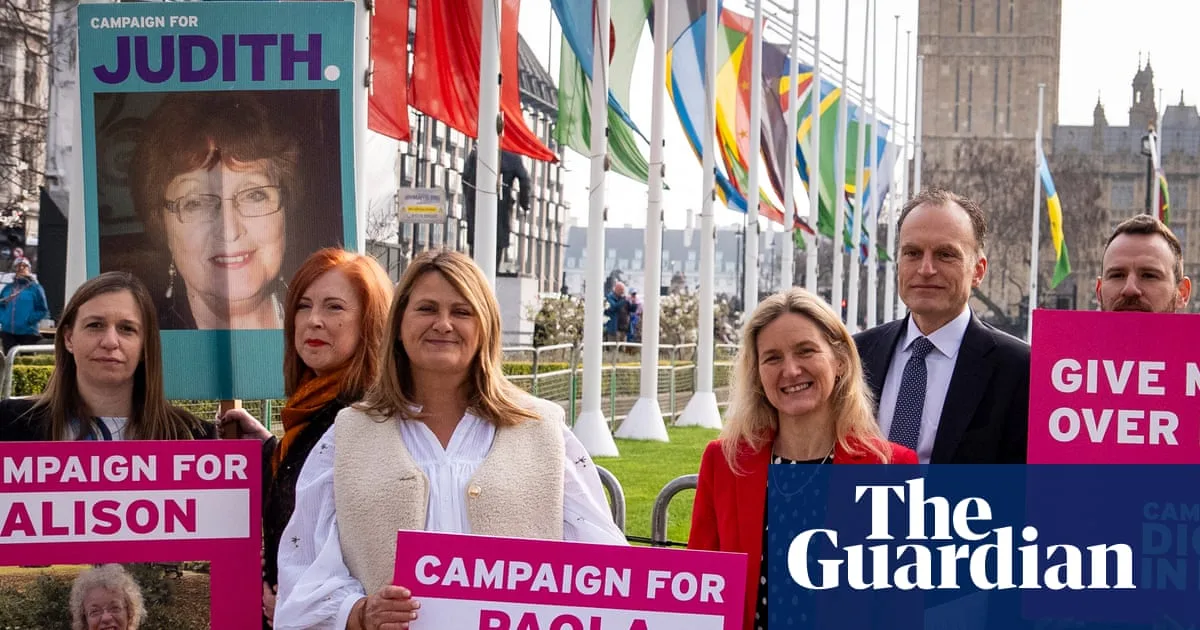
Josh, a 35-year-old former semi-professional rugby player from Huddersfield, says the Lords' blocking of the assisted dying bill has left him fearing he too will have to carry out his suicide plan when the end is near. On Friday, a protest will be held in Parliament Square as the private members bill from Labour MP Kim Leadbeater runs out of time to be passed. The Terminally Ill Adults (End of Life) Bill was approved by the Commons last June, but since then the Lords have 'sabotaged' it by raising 1,200 amendments, causing it to run out of time to become law.
A Family History of Suffering
Josh, a painter and decorator, said: “My mother, her brother, my uncle, my grandma, great grandma, my great great grandma and great great grandad, all died from Huntington's. My grandma stopped me from seeing her; she isolated herself whilst she went through the illness until she died of it. My mum watched her die. My mum took her own life, and she knew when my time comes, I'll be going down the same route if we haven't changed the law.”
Huntington's disease is an inherited genetic condition caused by an altered gene passed from parent to child. It damages areas of the brain, affecting movement, memory, and thinking, usually starting between ages 30 and 50.
His Mother's Final Acts
Describing his mother's death, Josh said: “She'd stockpiled the meds, 150 tablets, and made a decision. She sent me off to play rugby and coach rugby all weekend. She told me 'don't come back and don't disturb me until Monday.' I didn't make it to Monday; I went to see her on Sunday after I'd coached my kid's rugby league. I came bowling back to her bungalow with a massive grin on my face because my lad had just had a real good game. I'd got some good videos of him to show my mum and walked in. I didn't hear her TV on; I knew something was wrong. I walked in to find her poor dead body on her bed, and she'd been gone a good few hours. She was under the covers but twisted up; she had sick all over her. She used slow-release morphine tablets. She'd opened them all up, taken the little morphine capsules out, crushed them, put them all in a blender to make a milkshake. So I had to ring an ambulance and the police. One of the police officers' first question whilst I was still standing there was: 'Have you had anything to do with this?' That filled me with instant rage and disgust. I always knew she would, at some point, take her own life; that was a non-negotiable fact. But what I didn't know was exactly when and where.”
Josh explained that his mother had started suffering more muscle spasms and twitching and was losing her ability to speak properly. “She stopped coming out; she stopped coming to watch my matches. She knew her time had come. The fact that she died isn't the thing that hurts; it's the fact she had to do it alone. You have to lie about when and why and how and do everything in the dark.”
Josh's Own Diagnosis and Plans
Josh was born before the genetic test came out. His mother had waited to ensure her own mother didn't have symptoms first. Sadly, he discovered he too had the condition after a test at age 18. “I had the snip done, so I couldn't pass it on,” he said. As for his plans for the end, he stated: “I'll take my own life. I have a few friends who know a lot more about my actual plan. I will make sure that they know not to bother me until it's done, but they'll know where to find me and when to find me. I'll have videos done for my lad, partner, the rest of the lads that I coach, and everybody else. I've got it all planned and mapped out; I know exactly where I'll die and how.”
He blames the Lords for leaving him without the choice of a legal assisted death in the UK. The current law would not have instantly helped him, as one must have six months left to live, but he said it would have allowed him to challenge it in the High Court. Josh, who has raised his 11-year-old stepson with his partner, said: “They've taken away the hope and the choice for everybody. And for me, I have to look at putting my lad through the trauma of not being able to say goodbye to me; he'll wake up one morning and I'll be gone. That's the hardest part. The Lords should give themselves a serious look in the mirror. They should come and spend a week with me when the illness takes me.” Although Josh is hopeful that could be another 20 years, he added: “The law needs to change. I've got a much higher chance of being allowed an assisted death if it does, with this legal precedent.”
A Legacy of Campaigning
His mother was one of the original Dying in Dignity campaigners. “This bill could help all the people that I've grown up my whole life watching. I've watched the original group of these people die. I watched parents starve to death. My mother had to take her own life; others had to risk everything to go to Dignitas with their partners. They were all so full of hope that they were going to finally have a dignified end. And that's just been ripped away by a minority. I'm disgusted by them (the Peers). I'd love them to experience what it's like to go from who I am now, six foot, playing rugby, coaching league and union, to the shell that I'll be put in, to lose everything that I am. There are days where I don't want to get up, but I force myself because I'm busy living. My lad cries about the fact that he knows that one day I'll wake up and I'll be gone. That hits him, and he's only 11. The Lords are forcing kids, forcing another generation to go through trauma. You're going to force another round of people that are my mum's age to die horrifically.”