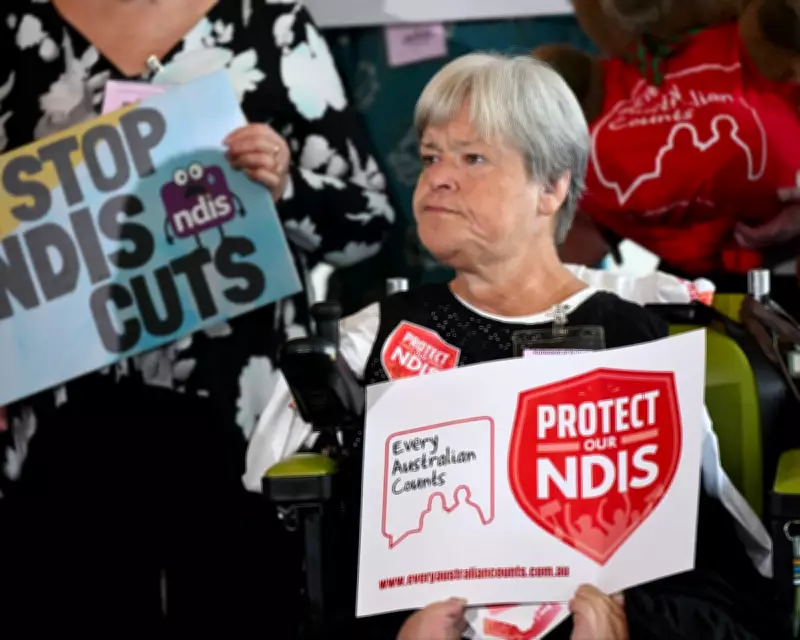
There is growing concern in Australia’s disability community about proposed cuts to the National Disability Insurance Scheme (NDIS), with a former royal commissioner warning the changes will leave participants more isolated and segregated.
Warning from Former Royal Commissioner
Alastair McEwin, former Australian disability discrimination commissioner and one of the heads of the disability royal commission, has called on the Albanese government to halt its planned overhaul of the $50 billion-per-year NDIS. He fears the changes ignore one of the major lessons from the landmark inquiry into violence, abuse, neglect and exploitation of people with a disability.
McEwin’s warning comes as the government’s own NDIS reform advisory committee issued a “brutal” assessment during the first meeting of federal, state and territory disability ministers since legislation was introduced to parliament.

Proposed Changes and Concerns
Labor is pursuing drastic measures to contain the scheme’s surging costs, aiming to save $36.2 billion over four years. These include tightening eligibility criteria, subjecting participants to standardised assessments, and cutting budgets for social, civic and community participation—funding designed to reduce isolation and build independence.
Health Minister Mark Butler has argued that the cost of supports was skyrocketing and not all provided value for money, citing examples of support workers taking participants out only to spend time scrolling on their phones. “That’s not community participation. Yes, it’s getting out of the house, but we want something more than just getting out of the house,” Butler told Guardian Australia.
McEwin expressed deep concern about slashing social participation budgets, given evidence from the royal commission about the harmful effects of social isolation and segregation. “One of the fundamental pillars of why we established the NDIS in the first place was so that people could get out and about into the community. The social and community participation factor is incredibly vital to almost everybody I know who is on the NDIS,” he said.
He warned that cutting these budgets would lead to “a huge number of people more isolated, more segregated.” Hearing-impaired participants like McEwin use social participation funding to hire Auslan interpreters, enabling them to better experience public events.
Impact on Participants
Internal government modelling first reported by Guardian Australia shows about half of all participants—393,401 people—have funding for social activities in their NDIS plans. For more than 60,000 participants, this funding is expected to be halved between October and February 2027, with the remainder cut by the end of next year. The health department estimates an average 25% reduction for participants, as not everyone spends all allocated funds.
The government will establish a $200 million fund to help mainstream and disability organisations run programs. There are no changes to funding for daily living activities such as showering, cooking and cleaning.
Legislative Overreach and Political Fallout
McEwin also criticised “overreach” in the legislation, particularly new powers allowing the federal minister to cut funding to some supports and make pricing decisions. The changes will affect state and territory jurisdictions, which co-govern the scheme and are responsible for the Thriving Kids program for children with autism and developmental delay.
Guardian Australia can reveal that disability ministers received a “brutal assessment” of the proposed overhaul from the government’s own NDIS reform committee. Co-chairs El Gibbs and Dougie Herd warned the changes would harm participants and criticised the lack of consultation on the legislation, according to sources familiar with Friday’s meeting.
A Senate inquiry into the NDIS bill will hold public hearings on 9, 10 and 11 June before tabling findings on 16 June. The Greens oppose the changes, meaning Labor will need Coalition support to pass the legislation.