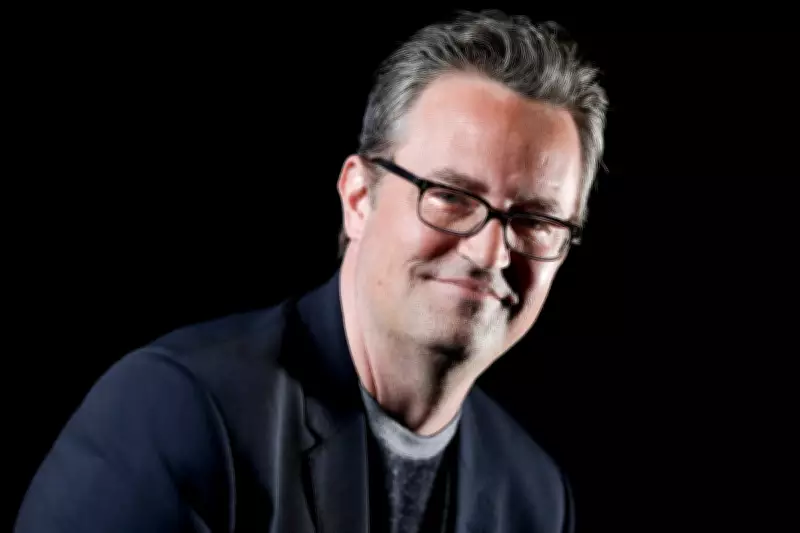
Matthew Perry's family trusted his assistant to help keep him sober, but instead, he helped him overdose. Kenneth Iwamasa, the live-in personal assistant of the Friends star, is set to become the last defendant sentenced in the investigation of Perry's drug death. Prosecutors are asking for a prison term of three years and five months.
Assistant's Role in Perry's Death
Iwamasa, 60, pleaded guilty to conspiracy to distribute ketamine resulting in death. He injected Perry with the doses of ketamine that proved fatal on October 28, 2023, and then left the actor to run errands. He returned to find Perry dead in the Jacuzzi. Court filings reveal that Perry paid Iwamasa $150,000 a year to be his live-in personal assistant, but his role expanded to drug messenger, addiction enabler, and de facto doctor.
Family's Betrayal and Blame
Family members blame the assistant above all others. Perry's younger sister, Caitlin Morrison, wrote in a letter to the judge, “I have no sympathy for Kenny Iwamasa. I wasn’t there the night my brother died. I cannot read Kenny’s thoughts. I will never know if the lethal dose of ketamine was only lethal by accident. But I know that when Kenny left the house, he was doing one of two things. He was either escaping from something he knew he had done or he was willfully abandoning a vulnerable person in a dangerous situation.”

Perry's mother, Suzanne Morrison, wrote that her son and the family had known Iwamasa for decades, and they were relieved when Perry hired him in 2022. “Mathew trusted Kenny. We trusted Kenny. Kenny’s most important job — by far — was to be my son’s companion and guardian in his fight against addiction,” she wrote. “We trusted a man without a conscience, and my son paid the price.”
Iwamasa's Defense
Iwamasa's lawyers argued that he was an employee doing the bidding of his boss. In a presentencing filing, they said Iwamasa had “a particular vulnerability to the relationship dynamic which he fell into with the victim. In short, he could not 'simply say no.' That inability had tragic consequences.” However, Suzanne Morrison stated that Iwamasa knew he could call any family member if Perry started making drug demands, and his job would be safe.
Family Disgusted by Post-Death Behavior
Perry's mother wrote, “When he had killed my son, he kept a sharp eye on me. He sent me songs, he drew a little map to help me find my way around the cemetery. If he saw a rainbow — one of Matthew’s favorite things — he would call me. He insisted on speaking at Matthew’s funeral. He clung to me and the family as if he was somehow the good guy who tried to save Matthew.” She said Iwamasa expected a financial payout, and when it was clear he wouldn't get one, he threatened legal action. Iwamasa did speak at the funeral, which later left the family disgusted. Another sister, Madeline Morrison, wrote, “The person responsible for my brother’s death stood up and addressed the people who loved him most. That is like a cruel joke I still struggle with. He didn’t just take my brother’s life — he tainted our final memories of saying goodbye.”
Truth About Ketamine Slow to Emerge
The LA County Medical Examiner found that ketamine was the primary cause of Perry's death, with drowning as a secondary cause. On the day of Perry's death, Iwamasa gave police a list of all medications Perry was taking but left off ketamine and said nothing about the injections. After investigators served a search warrant in January 2024, he slowly admitted his role. Iwamasa said he had been giving Perry six to eight injections of ketamine per day in the last days of his life, and Perry had told him, “Shoot me up with a big one” on the day he died. He worked with middleman Erik Fleming, who was sentenced to two years in prison, to get drugs from dealer Jasveen Sangha. Madeline Morrison wrote, “It felt like my brother died all over again. Everything I believed about the day he died—everything Kenny told us—was a lie.”

Iwamasa pleaded guilty in August 2024 before the case became public. Wednesday will be his first court appearance since. Perry, who died at 54, became one of the biggest stars of his generation as Chandler Bing on Friends, NBC’s culture-changing sitcom that ran from 1994 to 2004. His mother wrote, “He was my Matso, my Manew. He was, in spite of all we went through, my heart and my soul.”