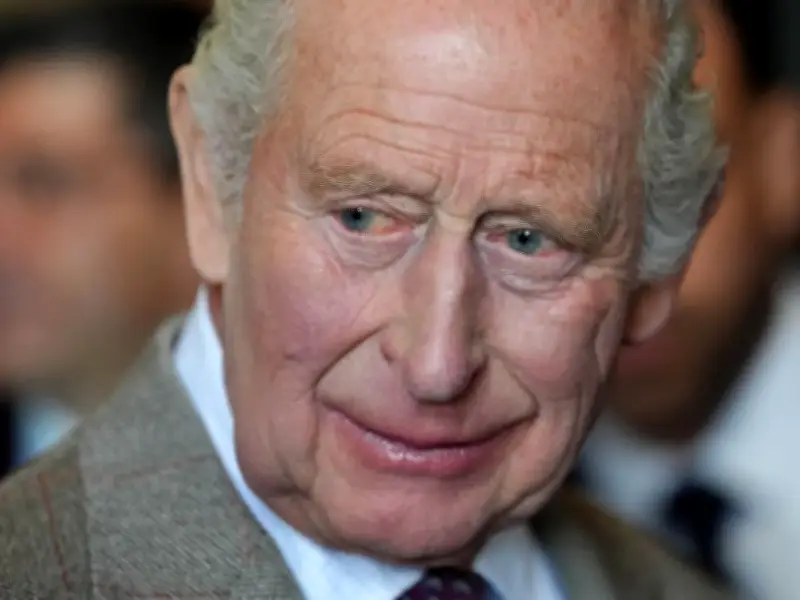
King Charles has been warned “don’t come empty handed” when he travels to The Bahamas as part of his autumn tour. Activists on the Caribbean island say the monarch’s visit next month must confront the enduring legacy of slavery and British colonial rule.
The Bahamas National Reparations Committee (BNRC) also plans to send an invitation to the King to meet with them, to outline plans for The Bahamas to remove the monarch as head of state and become a republic.
Campaigners demand apology for slavery legacy
Dr. Niambi Hall Campbell-Dean, chair of the BNRC, said the King “should come prepared to apologise for the horrific legacy”. The psychology professor also said having a British monarch sent the wrong message to young Bahamians, who she believes want to see change.
Speaking to The Mirror, Dr Campbell-Dean said: “The link between the British Crown and slavery is undeniable. For King Charles to come to our island and not be prepared to apologise for the wrongs of the past is unacceptable.
“Our message is loud and clear, don’t come here empty handed. The Bahamas stands at a crucial time in our history, 53 years after independence, but the underdevelopment of the country alongside a public health crisis and climate change affecting our everyday way of life, the time for change is now and reparations are a huge part of redirecting our future.”
Monarchy's historic role in slave trade
The committee states that the British monarchy was the greatest beneficiary of slavery and must pay compensation for its enduring economic and social legacy. The monarchy’s historic involvement in slavery spans several centuries, through financial investment and backing of the slave trade, dating back to the 15th Century.
In 1562, John Hawkins was the first known English person to include enslaved Africans in his cargo, a journey that was approved by Elizabeth I. In 1660, the Royal African Company was established by the Duke of York, who later became James II, with involvement from his brother, Charles II.
The Royal African Company was prolific within the slave trade; according to the Slave Voyages website, between 1672 and 1731 the Royal African Company transported more than 187,000 slaves from Africa to English colonies in North, Central and South America.
Reparations debate overshadows visit
In recent years, Buckingham Palace has acknowledged the “abhorrent” history and King Charles has voiced support for research into the Crown's links to slavery, including opening the Royal Archives to academics. There's also an active Commonwealth debate over reparations and a formal royal apology, which the monarchy has not issued — this remains a live and contested political question, with different Commonwealth governments and campaigners pushing for varying degrees of acknowledgment or compensation.
The Palace said Charles remains “personally and wholeheartedly committed” to finding ways to address “historic wrongs” around slavery, though he's stopped short of endorsing financial reparations or issuing a formal apology.
The King’s visit to The Bahamas - his first trip to the island since ascending the throne in September 2022, and his second overall - comes ahead of the 2025 Commonwealth Heads of Government Meeting (Chogm) summit in Antigua and Barbuda, where he will also visit, alongside the Queen. At last year’s meeting in Samoa, the King acknowledged the past "continues to resonate" but exhorted leaders to find “the right language” rather than committing to compensation.
Dr Campbell-Dean said: “We want young Bahamians to grow up in a world where they can be proud to have made a difference and seen change come in their lifetime.
“This is not an assault or an attack on his visit, but we are still being made to pick up the bill for him to come. If King Charles is serious about contributing to his own legacy, as a man of peace, a campaigner for young people and the environment, then this is a cause he should be involved in.
“We are not alone in this and we are seeing movement from our neighbours as well. An apology would be the first step towards justice and reparations must follow.”
King faces renewed calls for slavery apology
The committee also hopes Charles will use his time in The Bahamas to visit Clifton Heritage Park, which acts as a memorial site of a late 18th-century slave plantation.
Charles, 77, in November 2021 attended a ceremony in Barbados which officially removed Queen Elizabeth II as its head of state to become a republic. There he said that "the appalling atrocity of slavery forever stains our history".
During the Prince and Princess of Wales' controversial tour of the Caribbean in 2022, where protests took place on the streets of Jamaica, the then Duke of Cambridge echoed his father's statement, condemning slavery as “abhorrent” and said “it should never have happened” - yet also stopped short of an apology.
Earlier this month, the King also referred a landmark slavery reparations petition from Jamaica to the privy council for legal advice. Jamaica - which has in the past few years voiced its desire to ditch its association with the Crown - activated a rarely used mechanism in the Judicial Committee Act 1833, which allows the king to refer questions of “legal or constitutional nature” to the privy council when they cannot be resolved through ordinary courts, according to the country’s legal counsels.
The petition seeks guidance on three questions: whether the forced transport of Africans to Jamaica was lawful; whether it constituted a crime against humanity; and whether Britain is under an obligation to provide restitution for slavery and its enduring consequences. A privy council opinion would not compel the UK government to pay reparations, but Jamaican officials believe it could shape negotiations and legal options and set a precedent for other Commonwealth nations seeking reparations.
Buckingham Palace was approached for comment.