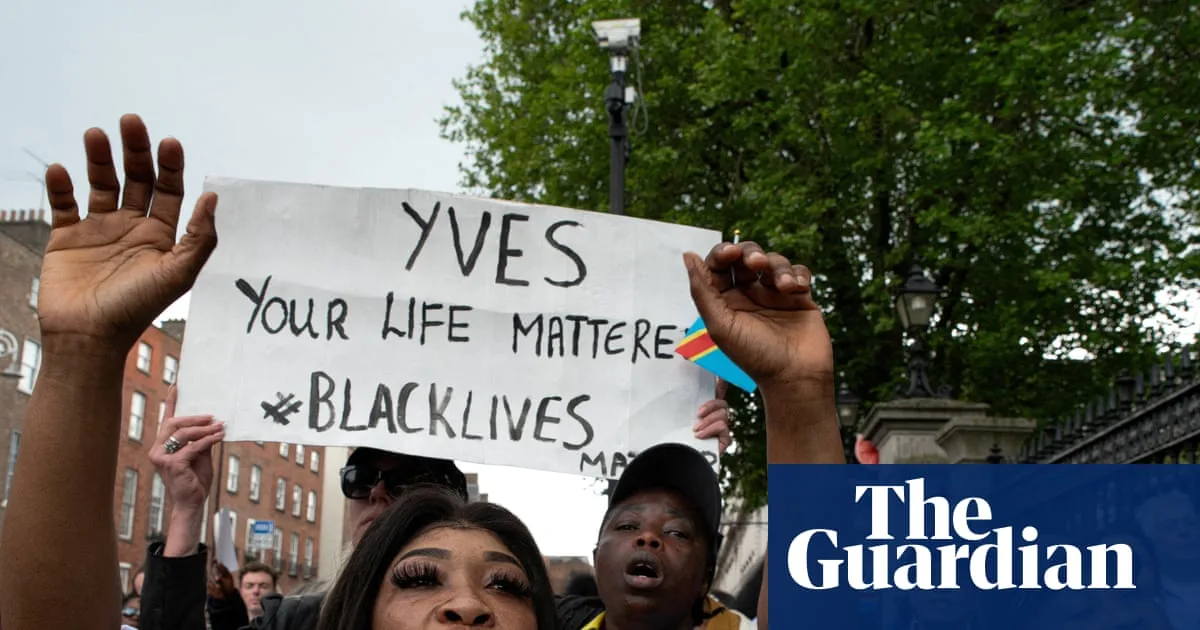
Hundreds of protesters have taken to the streets in Ireland following the death of Yves Sakila, a 35-year-old Congolese man who died after being restrained by security guards in Dublin. The incident, which occurred on 15 May, has drawn comparisons to the murder of George Floyd in the United States, as video footage showed a guard kneeling on Sakila's neck. Police are investigating, and Sakila's family has requested a second postmortem after the first proved inconclusive.
Members of Ireland's Congolese community say they now live in fear of rising hostility. Kembetia Bissa, who fled the Democratic Republic of the Congo in 2003, described a recent incident on a tram where a white man moved away from him. “We are actually scared now,” said Bissa, who runs the Congolese Community in Ireland Facebook group. “We are scared that they should start to target us in our homes, on the street.”
The death has prompted a wider reckoning over race and racism in Ireland. Days before Sakila's death, former taoiseach Bertie Ahern was secretly filmed saying Africans were a concern for immigration. Far-right agitators have amplified narratives blaming immigrants for crime, housing shortages, and the cost of living crisis. In recent years, mobs have attacked refugee shelters and targeted foreigners.
Bissa attributed xenophobia to rapid demographic change and a failure to integrate newcomers. The Congolese community, estimated at around 8,000, has more than doubled since the 2022 census. Between 2012 and 2022, over 400,000 people arrived from abroad, and one-fifth of Ireland's population was born elsewhere.
Despite the backlash, protesters continue to march and hold vigils for Sakila, demanding justice and an end to racial violence. “Did he think he was putting his knees on the neck of a dog, an animal, or a human being?” Bissa asked, highlighting the dehumanisation faced by people of colour.