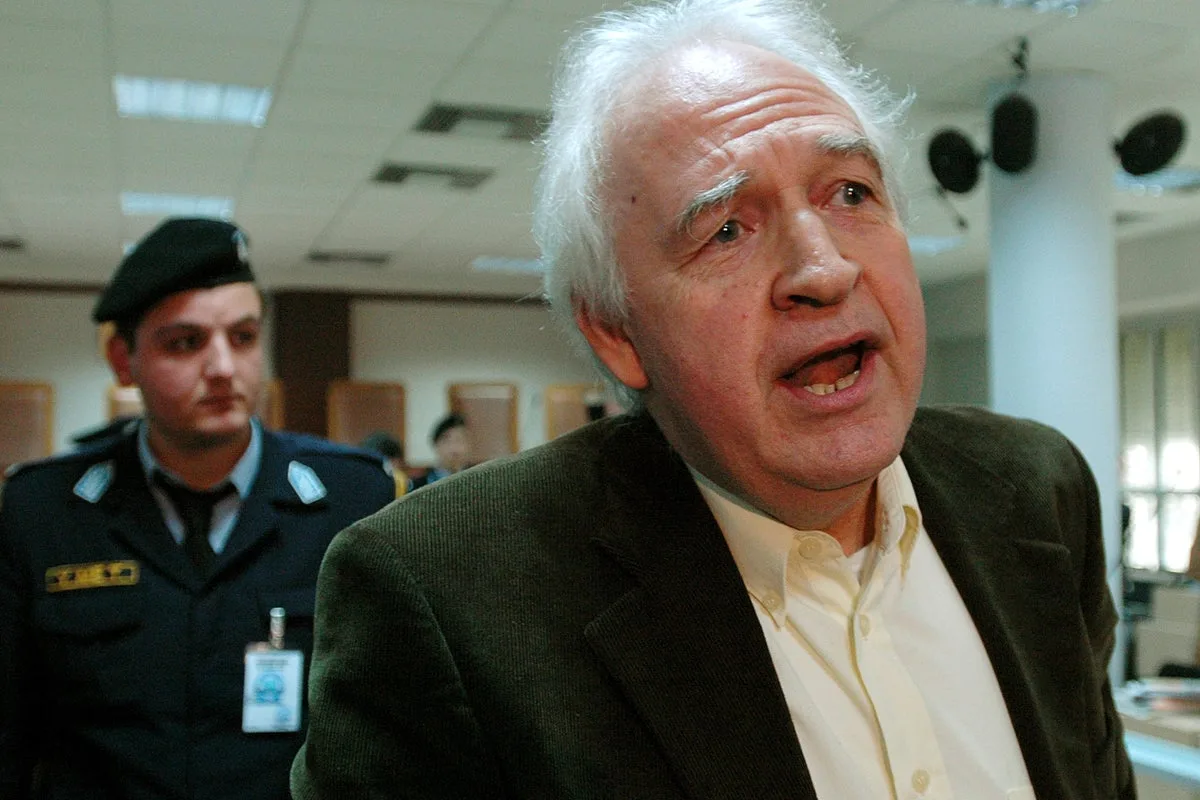
Alexandros Giotopoulos, the 82-year-old convicted leader of the Greek far-left militant group November 17, has been released from a maximum-security prison in Athens. The group was responsible for 23 killings, including those of industrialists, diplomats, and a CIA station chief. Giotopoulos was serving 17 life sentences plus 25 years for orchestrating multiple murders, bombings, and robberies.
A judicial panel approved his conditional release on grounds of advanced age, deteriorating health, and good behaviour during his incarceration. However, the decision is now being reexamined by a senior prosecutor at Greece’s Supreme Court, who could seek to challenge it.
November 17 evaded authorities for more than 25 years, carrying out bombings, assassinations, and bank robberies. The group’s first recorded attack was the 1975 fatal shooting of Richard Welch, the CIA station chief in Greece. Its strict secrecy unraveled after a botched bombing in 2002 left one member seriously injured, leading investigators to uncover the group’s operations and membership.

Giotopoulos, born in Paris and living under an assumed identity for years, has denied all charges, claiming co-defendants were pressured into false accusations. Authorities noted he completed university correspondence courses while in prison and complied with furlough terms. Three of the 15 original November 17 members convicted remain in prison.